How to Break Free From Shame: 3 Effective Strategies
Chronic Shame and Self-Criticism: 3 Evidence-Based Approaches That Help
Chronic shame and self-criticism can feel like constant, invisible weights—undermining confidence, relationships, and overall well-being. Yet with the right therapeutic approach, these patterns can be softened, managed, and even transformed.
Understanding the mechanisms behind shame and self-criticism is essential to meaningful change. While insight is helpful, research and clinical experience consistently show that healing happens through a combination of emotional safety, compassionate practices, and experiential change—not just thinking differently.
What Are Chronic Shame and Self-Criticism?
• Shame is the painful belief that “I am inherently flawed” or “I am not enough.”
• Self-criticism is the internalized voice that constantly judges, punishes, or belittles oneself.
These patterns often develop in childhood, influenced by:
• Attachment disruptions
• Criticism from caregivers or peers
• Trauma or repeated invalidation
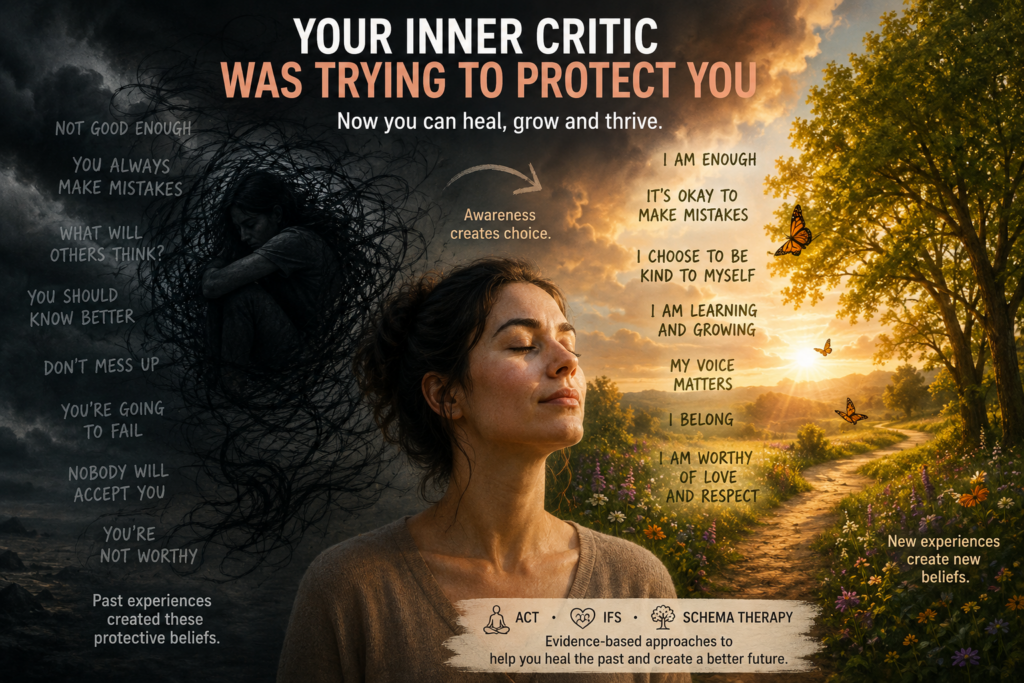
Over time, they become self-perpetuating. The inner critic feels “protective,” but instead of keeping us safe, it triggers anxiety, depression, social withdrawal, and emotional overwhelm.
Why Standard Cognitive Approaches Aren’t Enough
Many people try to reason with their inner critic or challenge shame thoughts with logic. While helpful sometimes, this approach is often limited because:
• Shame is body-based as well as cognitive
• Chronic self-criticism is maintained by nervous system responses, not just thoughts
• Resistance to self-compassion can trigger more threat activation
Effective intervention requires addressing the emotional, physiological, and relational dimensions of shame.
Three Evidence-Based Interventions That Work
1. Compassion-Focused Therapy (CFT)
Best for: Deep, pervasive shame and harsh self-criticism
CFT was designed specifically to target the threat-focused inner critic and activate the soothing, affiliative system in the brain.
Key techniques include:
• Cultivating a compassionate self through imagery, voice, and posture
• Soothing rhythm breathing to reduce physiological distress
• Writing compassionate letters to oneself
• Understanding self-criticism as a protective, albeit misguided, response
Benefits:
• Reduces shame intensity
• Improves self-soothing and emotional regulation
• Supports resilience in the face of failure or rejection
2. Parts-Based Therapy (Internal Family Systems / Schema-Informed Approaches)
Best for: People who feel “stuck” despite knowing better
Self-criticism often serves as a protective part. Parts-based therapies help clients observe and unblend from the critic, creating space for the vulnerable self to emerge.
Key techniques include:
• Mapping internal parts: critic, vulnerable child, protector
• Dialoguing with self-critical parts without judgment
• Building a trusting “Self” to lead internal systems
• Integrating compassion for all parts of the internal system
Benefits:
• Decreases inner conflict
• Strengthens emotional safety
• Promotes sustainable self-acceptance
• Particularly effective for trauma- and attachment-related shame
3. Behavioural Exposure to Self-Compassion (ACT-Informed)
Best for: Clients who fear self-compassion will feel “weak” or “undeserved”
Some clients avoid compassionate acts because it triggers shame or guilt. Acceptance and Commitment Therapy (ACT)–informed approaches practice self-compassion behaviourally, even when uncomfortable, allowing emotional and cognitive shifts to follow.
Key techniques include:
• Noticing avoidance and self-critical rules (“I must punish myself to improve”)
• Practicing compassionate behaviours gradually
• Cognitive defusion to separate identity from self-critical thoughts
• Aligning actions with values even when shame arises
Benefits:
• Weakens the inner critic’s influence
• Increases psychological flexibility
• Improves emotion regulation over time
• Encourages meaningful, value-driven action despite internal discomfort
Integrating These Approaches
Chronic shame is multi-layered: cognitive, emotional, physiological, and relational. The most effective treatment addresses each layer:
• CFT: Builds safety and self-soothing
• Parts-Based Work: Resolves internal conflict and relational patterns
• ACT-Informed Self-Compassion: Changes behaviour, reinforces practice
Together, they create a holistic path from self-attack to self-acceptance, supporting long-term mental health.
Moving Forward: Healing Shame With Support
Shame is rarely healed alone. Working with a therapist can help you:
• Safely explore internal parts and self-critical patterns
• Practice self-compassion in ways that feel authentic
• Develop strategies for anxiety, emotional overwhelm, and self-regulation
If chronic shame or self-criticism is affecting your life, professional guidance can make the difference. You can learn more about self-regulation strategies and support for anxiety on our dedicated pages, or connect directly through our Contact page to explore individualized support.
Remember: Healing doesn’t require perfect self-compassion—it requires practice, patience, and safety. You can meet your inner critic with curiosity and care, and gradually reclaim emotional freedom.
References:
Dolezal L, Gibson M. Beyond a trauma-informed approach and towards shame-sensitive practice. Humanit Soc Sci Commun. 2022 Jun 24;9:214.
Prepared by Dr. Jennifer Barbera, PhD, Registered Psychologist
Dr. Jennifer Barbera PhD, C. Psych is a licensed psychologist with over 25 years of counselling experience. She has extensive clinical expertise supporting individuals and couples with anxiety, trauma, depression, addiction, and relationship challenges. Her work combines evidence-based approaches with practical strategies to help clients build resilience and improve well-being.