How to Find Effective Therapy for PTSD Hyperarousal in Ontario
How PTSD Affects Mood and Arousal: Effective Therapy in Ontario
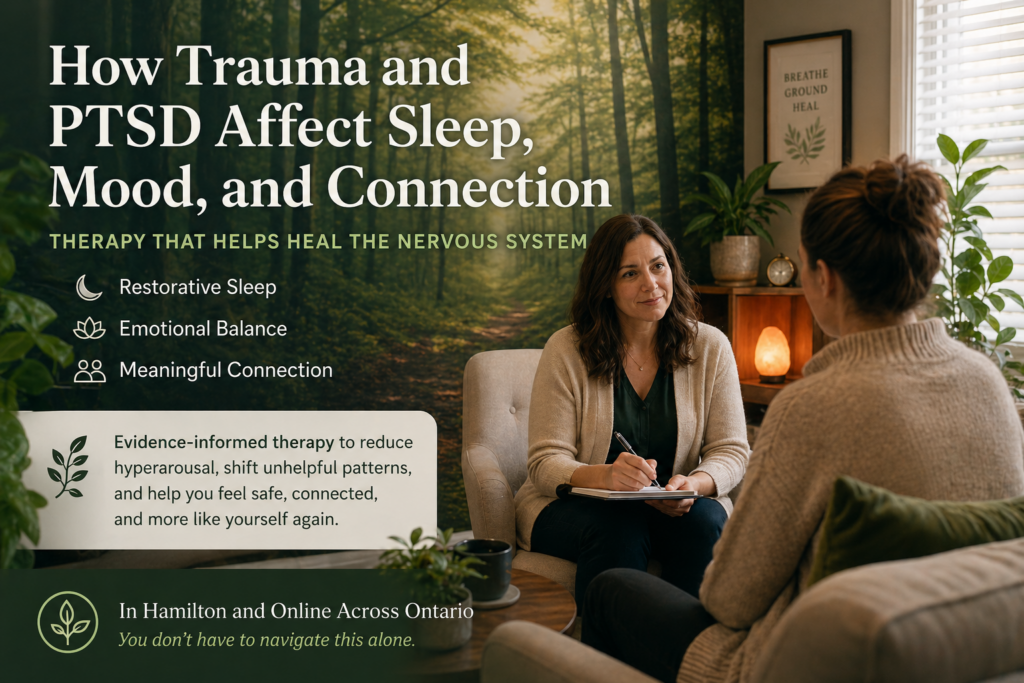
Trauma does not simply live in memory—it reshapes how the body, brain, and nervous system function. For many individuals living with post-traumatic stress, the impact shows up most clearly in disrupted sleep, shifting mood, and difficulty maintaining connection with others. These changes are not random; they reflect predictable patterns rooted in how trauma affects the nervous system.
If you are experiencing these challenges in Hamilton or anywhere in Ontario, it is important to understand that meaningful recovery typically requires more than general support. Targeted, evidence-based therapy can directly address the mechanisms that keep symptoms going and help restore a sense of safety, stability, and connection.
Understanding PTSD Symptom Clusters
Post-Traumatic Stress Disorder (PTSD) is commonly understood through four core symptom clusters. These clusters help explain why trauma affects so many areas of life simultaneously.
Intrusion symptoms involve unwanted re-experiencing of the trauma, such as distressing memories, nightmares, or flashbacks. These experiences can feel immediate and intense, as though the event is happening again in the present.
Avoidance symptoms involve efforts to stay away from reminders of the trauma. This can include avoiding certain places, conversations, thoughts, or even emotions. While avoidance may reduce distress in the short term, it often maintains symptoms over time.
Negative alterations in mood and cognition include persistent feelings such as guilt, shame, fear, or emotional numbness. People may develop negative beliefs about themselves or others and may struggle to experience positive emotions or a sense of connection.
Alterations in arousal and reactivity—often referred to as hyperarousal—include symptoms such as irritability, sleep disturbance, exaggerated startle response, difficulty concentrating, and constant vigilance for threat.
Although all symptom clusters in PTSD matter, hyperarousal is often the engine that keeps the system “stuck.” It is closely tied to changes in the nervous system that affect sleep, mood regulation, and the ability to feel safe with others.
How Trauma Disrupts Sleep
Sleep is one of the most commonly affected areas in PTSD. Many individuals experience difficulty falling asleep, frequent waking, restless sleep, or trauma-related nightmares.
This is not simply a “thinking problem.” The nervous system remains in a state of activation, as if it must stay alert for danger. Even in safe environments, the body may resist fully powering down.
Hyperarousal plays a central role in maintaining sleep disruption caused by trauma. When the system is on high alert, it becomes difficult to transition into the deeper stages of sleep. Small noises or internal sensations can trigger waking. Over time, this creates a cycle of sleep deprivation, which further intensifies emotional reactivity and reduces resilience.
How Trauma Affects Mood
Trauma-related changes in mood are often misunderstood as purely psychological, but they are deeply physiological.
A chronically activated nervous system can lead to:
* Increased irritability or anger
* Heightened anxiety or panic
* Emotional numbing or shutdown
* Rapid mood shifts
When the system is frequently in a fight-or-flight state, the brain prioritizes threat detection over emotional regulation. This makes it harder to access calm, joy, or even neutrality.
At the same time, prolonged activation can lead to exhaustion and collapse, which may look like depression or disconnection. Many individuals find themselves oscillating between feeling overwhelmed and feeling numb.
How Trauma Impacts Connection
Connection requires a sense of safety. When the nervous system is scanning for danger, even neutral or positive social interactions can feel threatening or overwhelming.
This can lead to:
* Withdrawing from relationships
* Difficulty trusting others
* Feeling emotionally distant or “shut down”
* Reacting strongly to perceived rejection or conflict
Hypervigilance can make it hard to relax around others, while emotional numbing can make it difficult to feel close, even when connection is desired. This combination often leaves people feeling isolated and misunderstood.
The Role of Hyperarousal and Nervous System Changes
To understand why these patterns persist, it is essential to look at the nervous system.
Trauma can lead to lasting changes in how the brain and body respond to perceived threat. The stress response system becomes sensitized, meaning it activates more quickly and takes longer to settle.
This can include:
* A lowered threshold for detecting threat
* Increased baseline tension in the body
* Heightened startle response
* Persistent hypervigilance
In many ways, the system behaves as though the danger is still present. This is not a conscious choice—it is a learned survival response that has not yet been updated.
Referring to this as a kind of “nervous system injury” can be helpful. Just as a physical injury requires targeted rehabilitation, these physiological patterns require specific therapeutic approaches to shift your nervous system back to baseline.
Why Supportive Therapy Alone Is Often Not Enough to Treat Trauma
Supportive therapy can provide validation, empathy, and a space to talk. These are valuable elements of care—but on their own, they often do not directly change the underlying mechanisms of PTSD.
If avoidance patterns remain in place, the nervous system does not learn that previously feared situations are now safe. If hyperarousal is not addressed, the body continues to operate in a state of threat. If the parts of the self that are carrying fear remain unprocessed, symptoms tend to persist.
This is why more targeted, structured approaches are typically needed.
How CBT, ACT, and IFS Can Help
A combination of Cognitive Behavioural Therapy (CBT), Acceptance and Commitment Therapy (ACT), and Internal Family Systems (IFS) can be particularly effective because each approach targets a different layer of the problem.
CBT helps identify and shift patterns of avoidance and behaviour that maintain symptoms. For example, gradually approaching feared situations or internal experiences allows the nervous system to learn that they are no longer dangerous. CBT also supports more balanced thinking patterns, which can further reduce fear and reactivity.
ACT builds on this by helping individuals relate differently to their internal experiences. Rather than trying to eliminate distressing thoughts or feelings, ACT focuses on reducing struggle and increasing psychological flexibility. This can be especially helpful for breaking cycles of avoidance and helping individuals re-engage with meaningful aspects of life and moving towards enhancing resiliency.
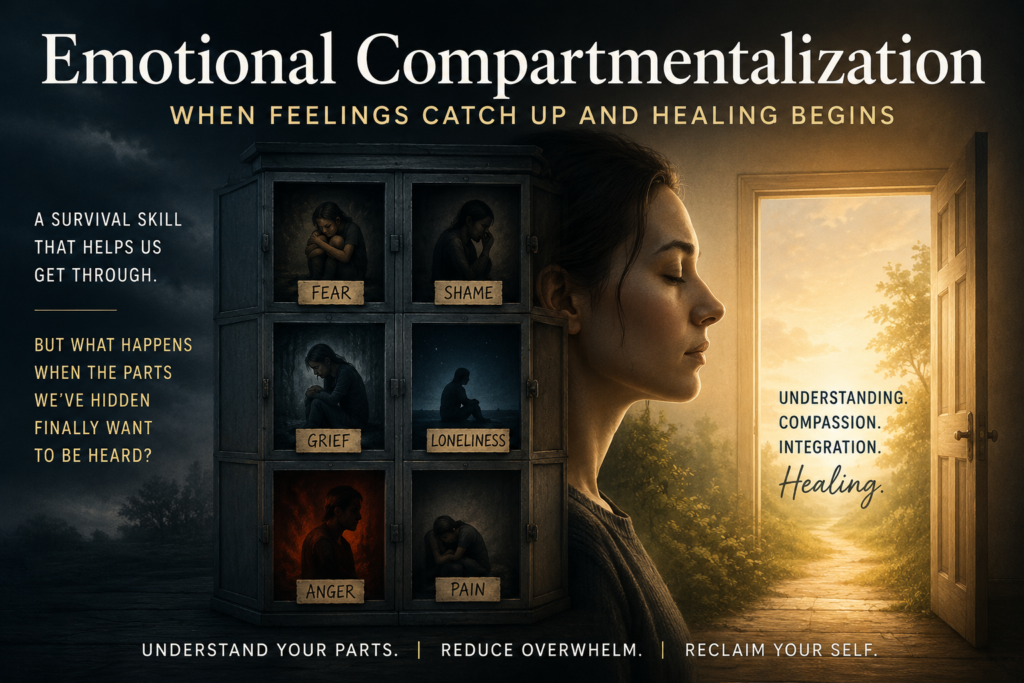
IFS works at a deeper, experiential level by addressing the “parts” of the system that are carrying trauma. In many individuals with PTSD, there is a part that remains hypervigilant—constantly scanning for danger and trying to prevent harm.
This hypervigilant part is not the problem; it is attempting to protect. However, it may be operating based on outdated information.
Through IFS, individuals can build a relationship with this part, understand its role, and help it update its beliefs about current safety. As this part begins to trust that the present is different from the past, the intensity of hyperarousal can decrease. The part of self that is also carrying unresolved feelings from what occurred can also be helped to unburden in order to reduce intrusion symptoms (called “flooding”).
Addressing Hypervigilance Directly
When therapy effectively targets hyperarousal and the underlying protective parts of the system, individuals often notice meaningful shifts in the symptoms that initially brought them to treatment.
Sleep may improve as the nervous system learns it is safe to rest. The body can begin to release chronic tension. The exaggerated startle response may decrease. Hypervigilance can soften, allowing for greater presence and engagement in daily life.
These changes do not happen overnight, but they are achievable with the right approach.
Therapy Options in Hamilton and Across Ontario
In Hamilton and across Ontario, individuals can access therapy in person or through a secure virtual platform. Working with a clinician who understands both the psychological and physiological aspects of trauma is essential. All of the clinicians at Dr. Barbera C. psych have training and are experienced in assisting with trauma using a variety of approaches such as CBT, ACT and IFS. Some clinicians are also EMDR trained.
Treatment that integrates behavioural strategies, acceptance-based work, and parts-based approaches can offer a more comprehensive path to recovery than any single modality alone. CONTACT US for more information or to get started.
Moving Toward Recovery
Trauma can reshape how you sleep, how you feel, and how you connect—but these patterns do not have to be permanent.
With targeted, evidence-based therapy, it is possible to retrain the nervous system, reduce hyperarousal, and reconnect with a sense of safety in your body and in your relationships.
Recovery is not about erasing the past. It is about helping your system recognize that the danger is no longer happening and allowing your life to expand again.
Contact Us Today
If you are struggling with the effects of trauma or PTSD—including disrupted sleep, mood changes, or difficulty feeling connected—specialized therapy can help.
At Dr. Barbera C. Psych & Associates, we offer evidence-informed, integrative therapy in Hamilton and online across Ontario, tailored to address the underlying mechanisms of trauma.
CONTACT US today to book a consultation and begin the process of restoring balance, safety, and connection in your life.
References
American Psychiatric Association. (2022). Diagnostic and statistical manual of mental disorders (5th ed., text rev.). Author.
Craske, M. G., Treanor, M., Conway, C. C., Zbozinek, T., & Vervliet, B. (2014). Maximizing exposure therapy: An inhibitory learning approach. Behaviour Research and Therapy, 58, 10–23.
Hayes, S. C., Strosahl, K. D., & Wilson, K. G. (2012). Acceptance and commitment therapy: The process and practice of mindful change (2nd ed.). Guilford Press.
Schwartz, R. C. (2021). No bad parts: Healing trauma and restoring wholeness with the internal family systems model. Sounds True.
Prepared by Dr. Jennifer Barbera, PhD, Registered Psychologist
Dr. Jennifer Barbera PhD, C. Psych is a licensed psychologist with over 25 years of counselling experience. She has extensive clinical expertise supporting individuals and couples with anxiety, trauma, depression, addiction, and relationship challenges. Her work combines evidence-based approaches with practical strategies to help clients build resilience and improve well-being.