Why Your Brain Reacts First: The Power of Schemas
Learn how lower brain systems activate before conscious thought, how schemas guide reactions, and why schema assessment creates lasting psychological change.
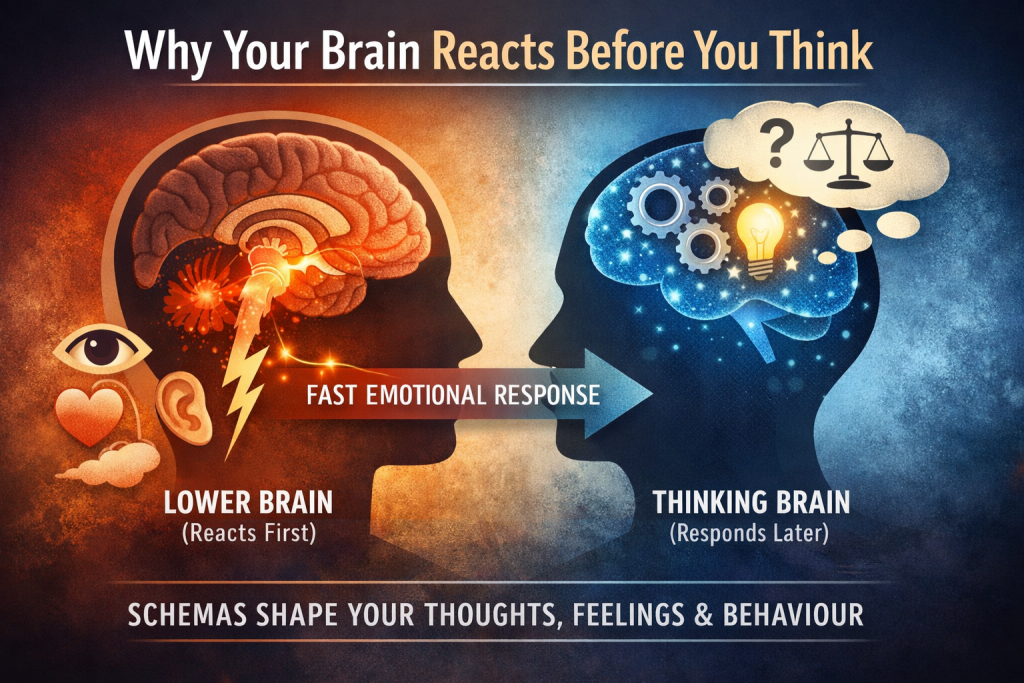
Why Your Brain Reacts Before You Think
Many people are frustrated by how quickly they react—snapping, shutting down, over-explaining, or panicking—before they’ve had a chance to think things through. This is not a personal failure or a lack of insight. It is how the human brain is designed to work.
Modern neuroscience and psychology consistently show that lower brain structures activate first in response to situations, long before the logical, reflective parts of the brain fully come online (Damsiao et. al., 1991). Understanding this sequence is essential for more meaningful therapeutic change.
The Lower Brain Gets There First
When something happens—an argument, a tone of voice, a look of disappointment—your brain does not begin with rational analysis. Instead, sensory information is rapidly processed through evolutionarily older brain systems responsible for survival, emotion, and threat detection.
Dr. Bruce Perry describes this clearly:
“All sensory input (physical sensations, smells, taste, sights, sounds) is first processed in the lower areas of the brain; the lower brain gets first dibs. This means that before any new experience has a chance to be considered by the higher, ‘thinking’ part of the brain, the lower brain has already interpreted and responded to it” (Perry, p. 141).
This explains why people often feel something strongly before they know why.
Research by Bein & Niv (2025) supports this sequencing, showing that emotional and motivational systems influence perception and response very early in processing, shaping how later cognitive appraisal unfolds. In other words, by the time you are “thinking,” your nervous system has already taken a position.
Emotion Guides Reason, Not the Other Way Around
Antonio Damasio’s work further challenges the myth that humans are primarily rational decision-makers. In his somatic marker hypothesis, Damasio et al. (1991) demonstrates that emotional signals—rooted in bodily and limbic processes—guide decision-making automatically and often outside of conscious awareness.
Rather than interfering with logic, these emotional markers precede and shape reasoning. When these markers are based on past learning or unresolved emotional patterns, they can push behaviour in directions that no longer fit present-day reality.
This is where schemas come in.
Schemas: The Lens That Shapes Thoughts, Feelings, and Behaviour
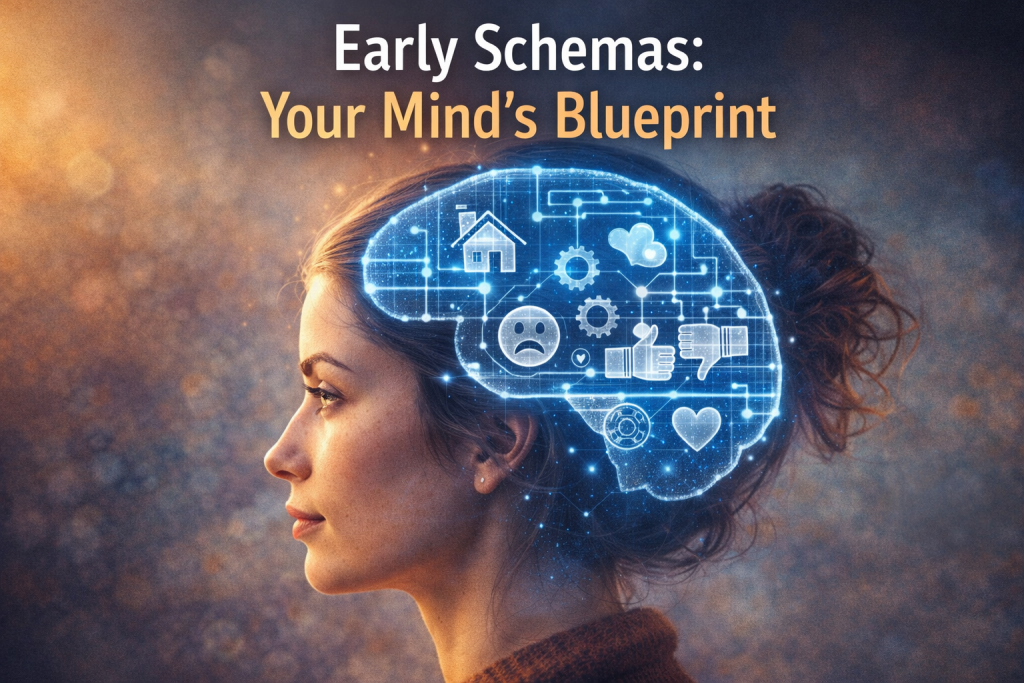
Schemas are deeply ingrained patterns that develop early in life to help us make sense of the world and stay safe. Once formed, they operate largely outside awareness and guide:
• What we notice and ignore
• How we interpret situations
• What emotions are activated
• Which behaviours feel automatic or “necessary”
Because schemas are tightly linked to lower brain activation, they are triggered before conscious thought, influencing the story we tell ourselves and the actions we take.
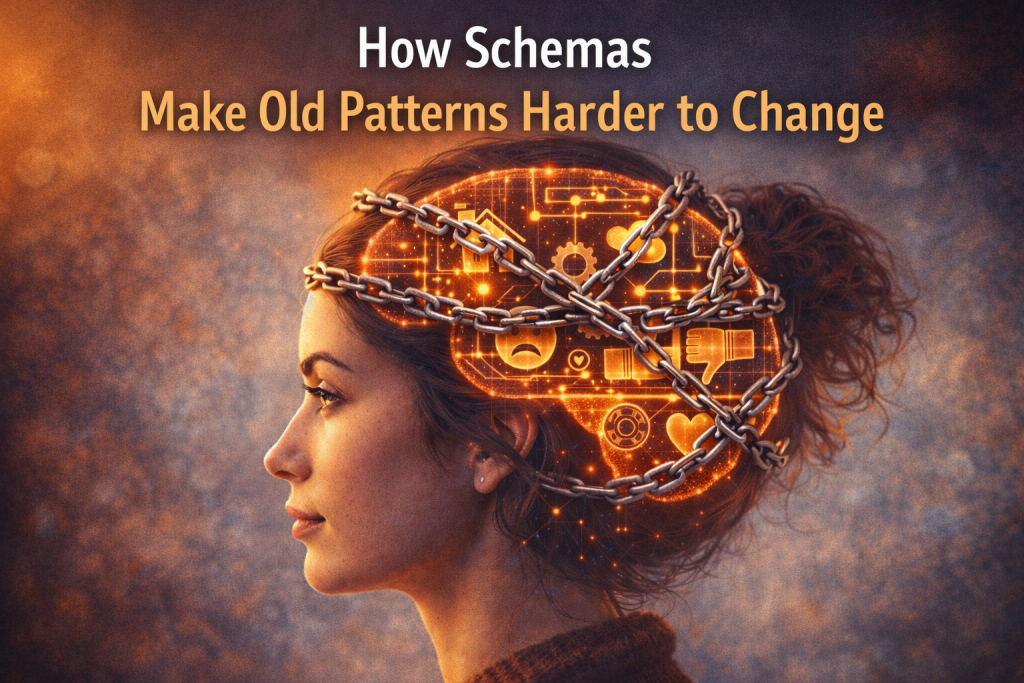
This is why insight alone often isn’t enough to achieve meaningful change. If a schema is activated, the body and emotional brain are already driving the response.
Why Schema Assessment Changes Everything
A thorough assessment of core schemas helps bring these automatic patterns into awareness. When you can name your schemas, you become more likely to:
• Notice early signs of activation (body sensations, urges, emotional shifts)
• Pause before default reactions take over
• Engage the higher brain with greater flexibility
• Choose responses rather than relive old patterns
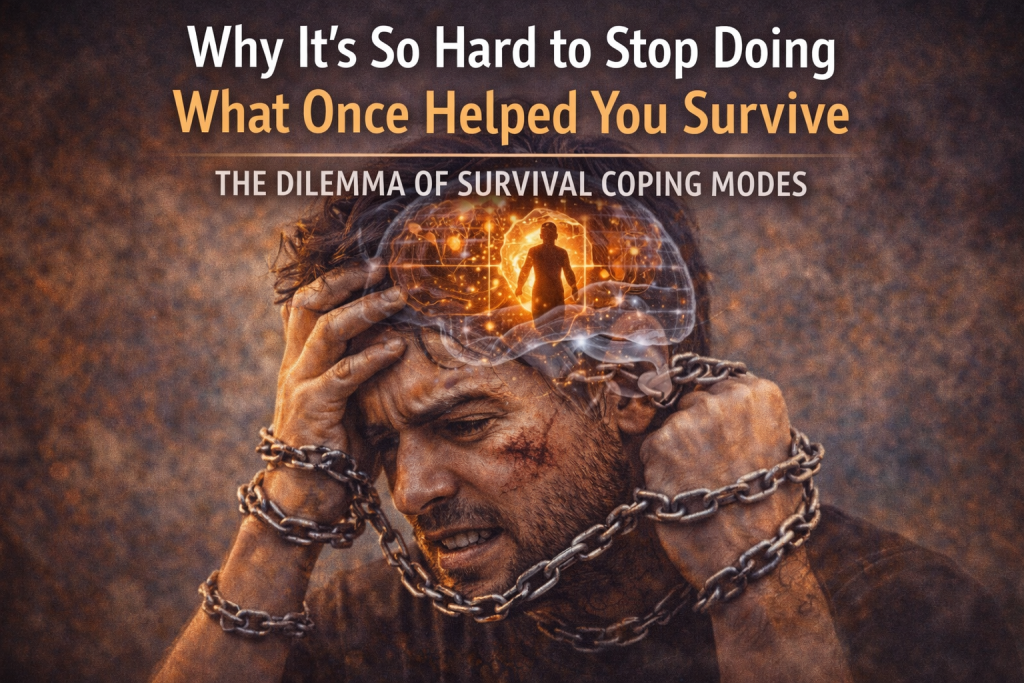
Schema awareness creates a crucial bridge between lower brain activation and higher brain choice. Instead of being hijacked by survival responses that once made sense, you can update your reactions based on what makes sense now.
This is where meaningful and lasting change begins—not by fighting symptoms, but by understanding the systems that generate them.
From Automatic Reaction to Flexible Response
Change does not come from forcing yourself to “think differently” in the heat of the moment. It comes from recognizing how quickly the lower brain interprets experience and learning to work with that process, not against it.
When schemas are identified, tracked, and compassionately challenged, the nervous system learns that it no longer has to respond as if the past is repeating itself. Over time, this creates more emotional regulation, healthier relationships, and a stronger sense of agency.
If you are ready to understand your patterns at their roots and create change that is more lasting, we invite you to contact us today to begin that work. If you want to know the emotional programs that are guiding you- we offer assessment of your core maladaptive schemas.
References:
Bein, O., Niv, Y. Schemas, reinforcement learning and the medial prefrontal cortex. Nat. Rev. Neurosci. 26, 141–157 (2025).
Damasio, A.R., Tranel, D., & Damasio, H. (1991). Somatic markers and the guidance of behavior: Theory and preliminary testing. In Frontal Lobe Function and Dysfunction.
Perry, B. D., & Winfrey, O. (2021). What Happened to You? Conversations on trauma, resilience, and healing. Flatiron Books.
Prepared by Dr. Jennifer Barbera, PhD, Registered Psychologist
Dr. Jennifer Barbera PhD, C. Psych is a licensed psychologist with over 25 years of counselling experience. She has extensive clinical expertise supporting individuals and couples with anxiety, trauma, depression, addiction, and relationship challenges. Her work combines evidence-based approaches with practical strategies to help clients build resilience and improve well-being.