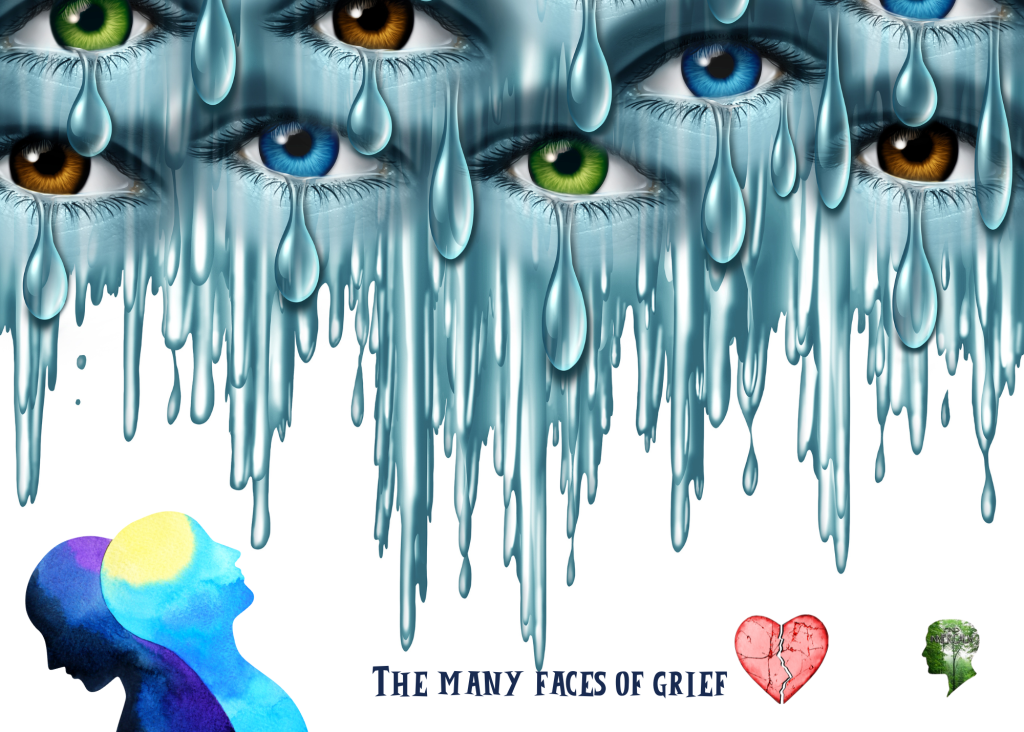

Grief Counselling in Ontario: What Actually Helps After Loss
Grief is one of the most universal human experiences, yet it is also one of the most misunderstood. Many people are told that grief simply takes time, that it follows…

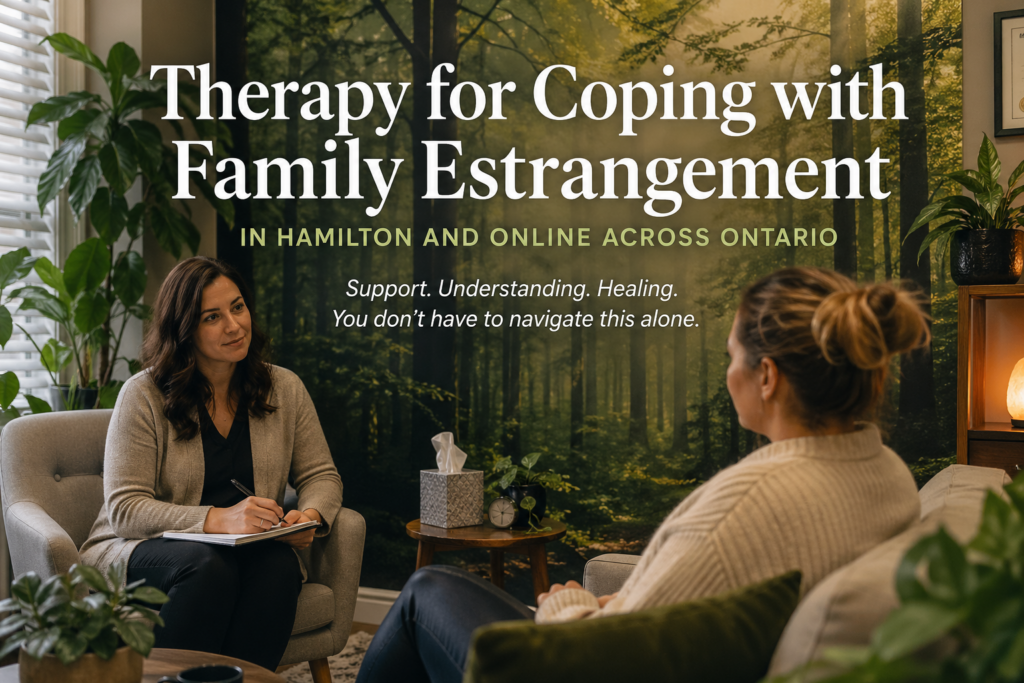
Family estrangement is one of the most painful and complex relational experiences a person can face. Whether it involves an adult child distancing from a parent, a parent losing contact with a child, or a rupture between siblings, estrangement often carries a form of grief that is ongoing, unresolved, and difficult to explain to others. For individuals in Hamilton and across Ontario, therapy can provide a structured and compassionate space to work through this experience and begin to heal.
Family estrangement refers to the intentional or unintentional breakdown of a relationship between family members, resulting in reduced or no contact. This can occur gradually or suddenly and is often the outcome of long-standing relational strain, unmet emotional needs, value conflicts, or experiences of hurt that were never repaired.
Estrangement can take many forms. Adult children may distance themselves from parents due to past trauma, invalidation, or boundary violations. Parents may experience estrangement when adult children withdraw, sometimes without clear explanation. Sibling estrangement may arise following conflict, perceived betrayal, or differences that become difficult to reconcile over time.
Although estrangement is often hidden due to stigma, research suggests it is more common than many assume. Studies indicate that a substantial proportion of adults report being estranged from at least one family member, highlighting the need for greater understanding and support (Agllias, 2017; Blake, 2017).
One of the core reasons estrangement is so distressing is that it involves what is known as ambiguous loss. This concept, developed by Pauline Boss, refers to losses that lack clarity or closure. In estrangement, the person is still alive, yet psychologically absent. There is no clear ending point, no shared acknowledgement of the loss, and often no opportunity for resolution. This creates a unique kind of emotional limbo that can be difficult to process (Boss, 2006).
Estrangement also generates complex and often conflicting emotional responses. Individuals may feel grief, anger, guilt, longing, relief, and confusion—sometimes all at once. Even when estrangement is necessary for emotional safety or well-being, the loss of the relationship can still be deeply painful. This emotional complexity can make it harder to talk about the experience and to feel understood by others (Agllias, 2017).
Another challenge is that estrangement can prolong grief. Unlike bereavement, where there is a defined loss, estrangement leaves open the possibility of reconnection. This uncertainty can lead to ongoing rumination, hope, and emotional revisiting of past interactions. As a result, the grieving process may feel stuck or cyclical, with limited sense of closure.
Estrangement can also disrupt a person’s sense of identity and belonging. Family relationships often shape how individuals see themselves and their place in the world. When those relationships are severed, people may struggle with questions about identity, roles, and connection. This can contribute to feelings of isolation, particularly when others do not recognize estrangement as a legitimate and significant loss.
There is increasing recognition that family estrangement is either becoming more common or, at minimum, more openly discussed. Cultural shifts toward prioritizing mental health, boundaries, and individual well-being have contributed to greater willingness to distance from relationships that are experienced as harmful or unsustainable.
At the same time, this shift has created a gap in social understanding. There are fewer clear societal scripts for how to navigate estrangement compared to other losses, leaving many individuals feeling unsupported or unsure how to move forward (Blake, 2017).
Therapy can be especially helpful because estrangement is not just a relational issue—it is also a grief process, an emotional adjustment, and often a reflection of deeper attachment patterns.
One of the most important roles of therapy is to support the processing of complex grief. A therapist can help you identify and make space for the full range of emotions you may be experiencing, without pressure to resolve them quickly or in a particular way. This process helps shift grief from something overwhelming and unstructured into something that can be understood and integrated.
Therapy also supports meaning-making. Many individuals feel stuck in questions about why the estrangement happened or whether it could have been prevented. Through therapy, it becomes possible to explore relational patterns, contextual factors, and personal experiences in a way that fosters clarity rather than self-blame.
Guilt and self-doubt are also common in estrangement, particularly for those who initiated distance or who feel they “should” have done more to repair the relationship. Therapy can help differentiate responsibility, challenge unhelpful beliefs, and build a more compassionate and balanced perspective.
Another key area of focus is boundary development. Whether estrangement continues, shifts into limited contact, or moves toward potential reconciliation, having clear and healthy boundaries is essential. Therapy provides practical and emotional support for identifying limits and maintaining them in a way that aligns with your values.
Finally, therapy supports identity reconstruction and reconnection. Healing from estrangement often involves building a sense of belonging outside of the original family system. This may include strengthening friendships, developing chosen family, and reconnecting with personal values and goals.
In addition to individual therapy, some people find it helpful to connect with others who have experienced estrangement. One well-known resource is Stand Alone, an organization that offers resources, education, and community support for adults who are estranged from their families. While based in the UK, its online materials and virtual community supports are accessible internationally and can help reduce the sense of isolation that often accompanies estrangement.
Peer support spaces like this can complement therapy by providing shared understanding and normalizing the experience.
Individuals in Hamilton and across Ontario can access therapy in a variety of formats, including in-person sessions and secure virtual therapy. Working with a clinician who understands complex grief, and attachment dynamics can make a meaningful difference in how effectively this experience is processed.
Family estrangement is not a simple or easily resolved experience. It challenges core assumptions about connection, identity, and belonging. However, it is possible to move toward healing, even in the absence of reconciliation.
With the right support, individuals can process their grief, reduce emotional distress, and build lives that feel meaningful and connected in new ways.
If you are coping with family estrangement—whether from a parent, adult child, or another close family member—therapy can help you navigate the emotional complexity and begin to find a sense of stability and meaning again.
At Dr. Barbera C. Psych & Associates, we provide thoughtful, evidence-informed therapy in Hamilton and online across Ontario.
CONTACT US today to book a consultation and take the first step toward healing, clarity, and reconnection with yourself.
References
Agllias, K. (2017). Missing family: The adult child’s experience of parental estrangement. Journal of Social Work Practice, 32(1), 59–72.
Blake, L. (2017). Parents and children who are estranged in adulthood: A review and discussion of the literature. Journal of Family Theory & Review, 9(4), 521–536.
Boss, P. (2006). Loss, trauma, and resilience: Therapeutic work with ambiguous loss. W. W. Norton & Company.
Conti, R. P. (2015). Family Estrangement: Establishing a Prevalence Rate. Journal of Psychology and Behavioral Science. December 2015, Vol. 3, No. 2, pp. 28-35
Prepared by Dr. Jennifer Barbera, PhD, Registered Psychologist
Dr. Jennifer Barbera PhD, C. Psych is a licensed psychologist with over 25 years of counselling experience. She has extensive clinical expertise supporting individuals and couples with anxiety, trauma, depression, addiction, and relationship challenges. Her work combines evidence-based approaches with practical strategies to help clients build resilience and improve well-being.