How to Find Therapy in Ontario that Helps Stop Stress From Harming Your Health
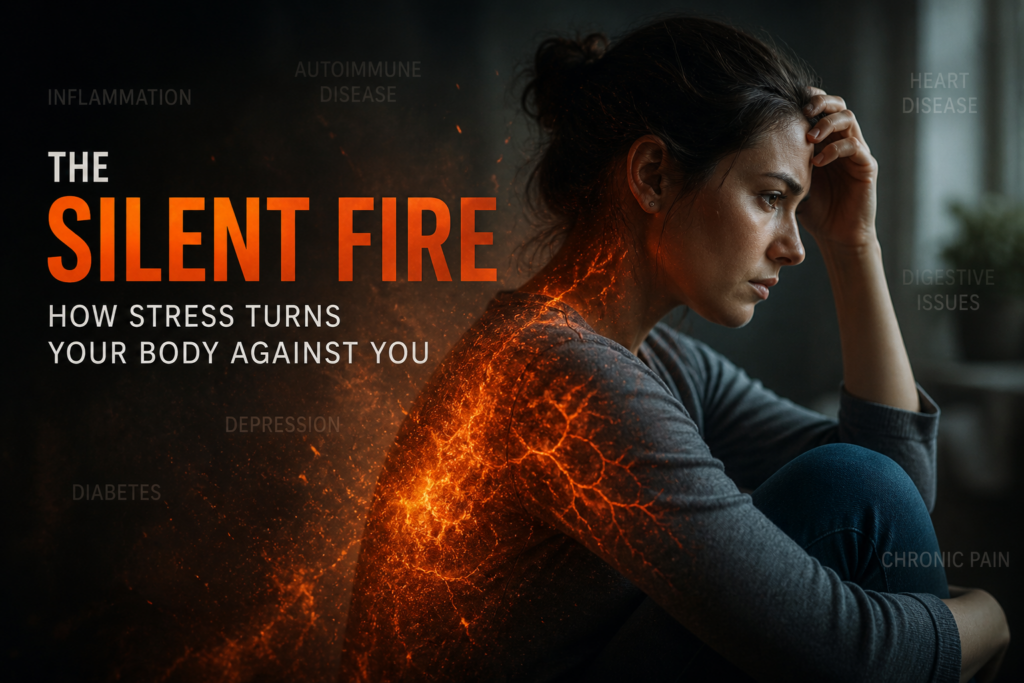
For many people in Ontario searching for answers about chronic stress and its impact on health, the concern starts with symptoms—fatigue, poor sleep, tension—but the deeper issue is what ongoing stress is doing beneath the surface.
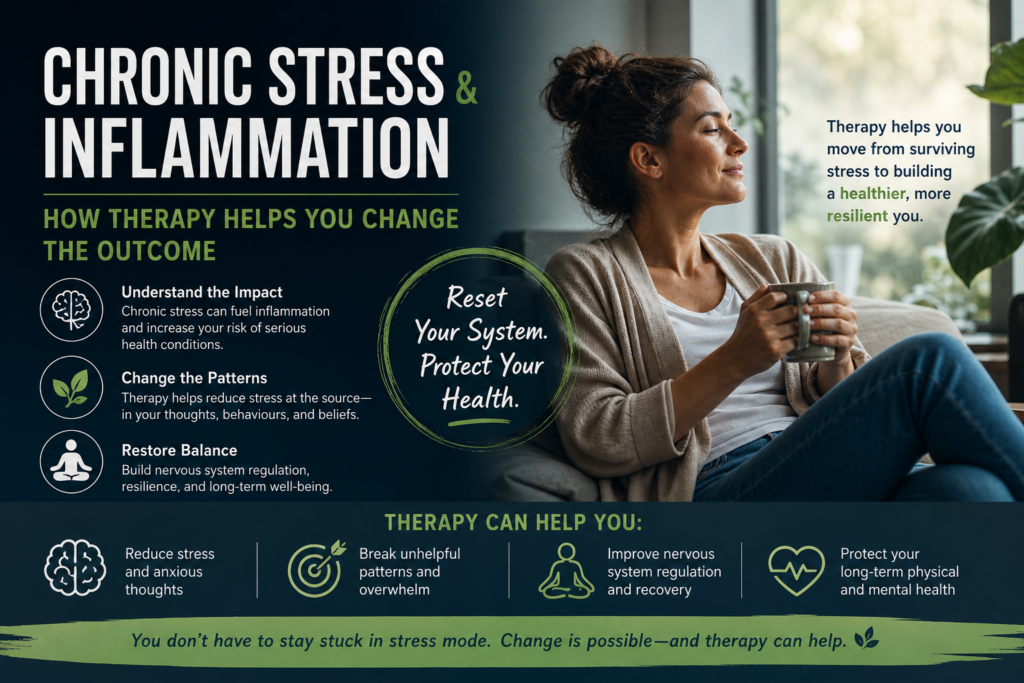
Chronic stress doesn’t just affect how you feel day to day; it contributes to inflammation, disrupts the nervous system, and increases the risk of conditions like heart disease, anxiety, and burnout. If your body rarely returns to a true state of rest, those effects can quietly build over time.
It builds quietly—beneath your awareness—while you keep functioning, showing up, pushing through. And if your nervous system rarely returns to baseline, that quiet process can become the backdrop of your daily life.
Here’s the shift most people never make: understanding stress isn’t enough to change it.
Real protection comes from changing how your system responds and recovers—and that’s exactly where therapy becomes a powerful, evidence-informed intervention.
The Real Problem Isn’t Stress — It’s What Happens After
Your body is built for stress.
Short bursts of activation can be adaptive. But your system is designed for a rhythm:
activation → recovery → baseline
When that rhythm breaks down, stress becomes biological.
Chronic psychosocial stress is consistently linked to persistent low-grade inflammation, even when stress hormones appear within normal ranges (Rohleder, 2012). Over time, this inflammatory load contributes to a wide range of health risks, including cardiovascular disease, metabolic disruption, and mood disorders (Black & Garbutt, 2002; Slavich & Irwin, 2014).
The issue isn’t that your system turns on.
It’s that it doesn’t reliably turn off.
Why “Trying to Relax” Doesn’t Work
If you’ve ever told yourself to “relax” and nothing changed, you’ve already discovered this:
Chronic stress is not just a mindset problem.
It’s a pattern across your nervous system, your thoughts, and your behaviours.
This pattern is often maintained by:
* Automatic, threat-based thinking
* Behavioural overdrive (overworking, overgiving)
* Emotional avoidance
* Deep-rooted schemas (core beliefs about yourself and the world)
Without addressing these layers, stress simply reactivates—again and again.
How Therapy Interrupts the Stress–Inflammation Cycle
Effective therapy doesn’t just reduce stress in the moment.
It changes your baseline over time—and that has direct physiological consequences.
1. Cognitive Behavioural Therapy (CBT): Reducing Stress at the Source
CBT targets the thinking patterns that amplify stress:
* Catastrophizing
* Perfectionistic thinking
* Chronic self-pressure
By modifying these patterns, CBT reduces unnecessary activation of the stress response system.
CBT also targets behaviour:
* Reducing overcommitment
* Increasing pacing and recovery
* Interrupting avoidance cycles
These changes are not just psychological—they reduce the repeated activation that drives inflammatory processes over time (Slavich & Irwin, 2014).
2. Acceptance and Commitment Therapy (ACT): Reducing Internal Struggle
ACT takes a different—but equally powerful—approach.
Instead of trying to eliminate stress or difficult thoughts, ACT helps you:
* Step back from thoughts (cognitive defusion)
* Stop fighting internal experiences
* Act in alignment with values, even in the presence of discomfort
Why does this matter biologically?
Because chronic stress is often maintained by internal resistance—a constant effort to control or suppress internal experiences. This ongoing struggle can sustain physiological activation.
ACT reduces that internal friction by developing acceptance skills, allowing the nervous system to down-regulate more effectively.
3. Nervous System Regulation: Restoring the Missing Phase
At the centre of all of this is one critical capacity:
Your ability to return to baseline.
The parasympathetic nervous system—particularly via vagal pathways—plays a central role in regulating inflammation and restoring physiological balance (Black & Garbutt, 2002).
Therapy helps strengthen this system through:
* Interoceptive awareness (learning to read your body’s signals)
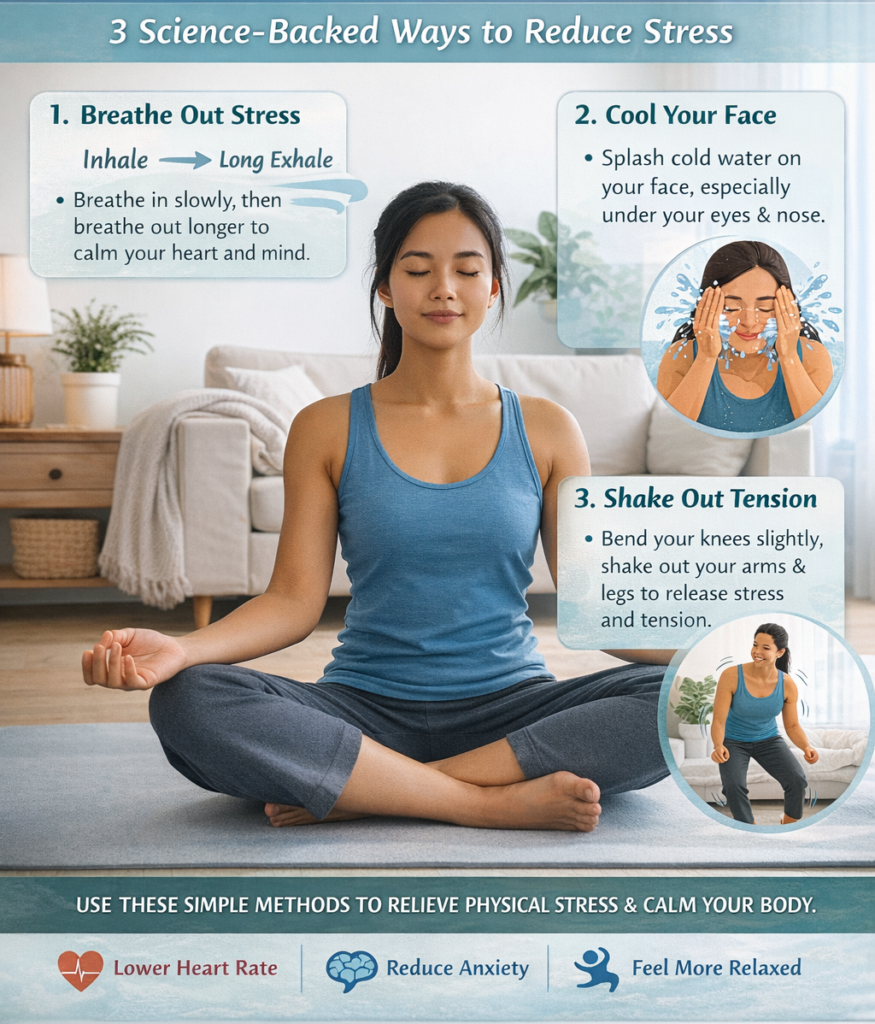
* Breath and pacing strategies
* Boundary-setting to reduce chronic load
* Increasing tolerance for rest and stillness
Over time, this supports:
* Reduced inflammatory signalling
* Improved immune regulation
* Greater physiological resilience
This is not about “relaxing more.”
It’s about retraining your baseline.
The Hidden Barrier: Schemas That Keep You Stuck
Schemas are very important to consider. Here’s where many people—especially high-functioning individuals—get blocked.
You can learn the tools.
You can understand the science.
But if certain schemas are active, they quietly override change.
One of the most common?
Unrelenting Standards (Perfectionism)
This schema drives beliefs like:
* “I should always be doing more”
* “Rest is unproductive”
* “If I slow down, I fall behind”
It fuels:
* Chronic overwork
* Inability to disengage
* Persistent internal pressure
And it keeps your nervous system in a state of ongoing activation.
If this schema isn’t addressed directly, stress-reduction strategies often fail—not because they don’t work, but because something deeper is driving the system.
To learn more, read How to Address Burnout By Addressing Perfectionism.
Connecting the Dots: Awareness to Action
At this point, you may recognize the pattern:
* Always a little “on”
* Difficulty fully relaxing
* A sense that your system never resets
This isn’t a lack of willpower.
It’s a learned and reinforced pattern across mind and body.
And it is changeable.
A More Strategic Way Forward
Therapy helps you move from general awareness to targeted change by:
1. Assessing your baseline
Are you actually recovering between stressors?
2. Identifying your drivers
Thought patterns, behaviours, and schemas maintaining activation
3. Building targeted interventions
Tailored to your nervous system and lifestyle
4. Tracking real change
In reactivity, recovery time, and overall physiological load
Suggested Next Reads:
To deepen this work read:
* From Burnout to Balance → understanding how recovery is rebuilt
* Is This Stress or Anxiety? → clarifying your internal experience
* Preventing Burnout in Ontario → practical prevention strategies
These are not separate issues—they’re interconnected expressions of the same underlying system.
The Bottom Line
Chronic stress doesn’t just affect how you feel.
It changes how your mind and body functions—quietly, cumulatively, and often invisibly.
But with the right therapeutic approach, you can:
* Reduce baseline activation
* Restore recovery cycles
* Lower inflammatory load
* Protect your long-term health
A Healthier Way Forward
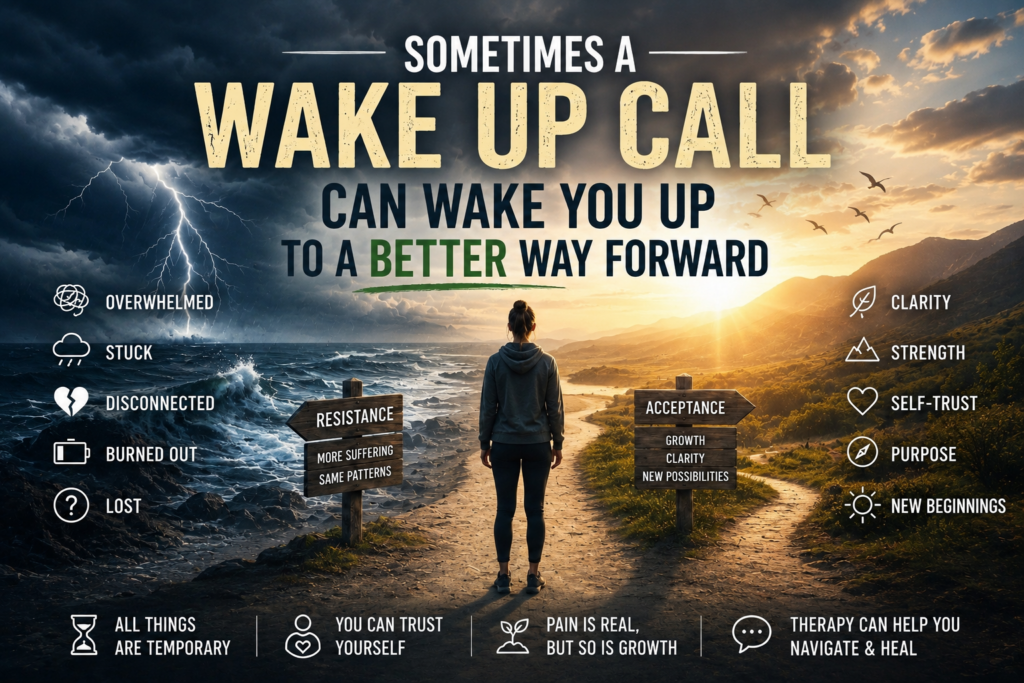
If you’re recognizing this pattern in yourself, don’t stop at insight.
Because this is where most people pause—and where change actually needs to begin.
Therapy offers a structured, evidence-informed way to:
* Understand your specific stress profile
* Identify what’s keeping your system activated
* Build a plan that restores regulation and resilience
If you’re ready to move beyond managing stress and start resetting your nervous system, this is the point to take that next step. CONTACT US today to discuss options, or book a consultation.
References
Black, P. H., & Garbutt, L. D. (2002). Stress, inflammation and cardiovascular disease. Journal of Psychosomatic Research, 52(1), 1–23.
Rohleder, N. (2012). Stress system regulation of chronic low-grade inflammation. Advances in Neuroimmune Biology, 3(3–4), 265–276.
Slavich, G. M., & Irwin, M. R. (2014). From stress to inflammation and major depressive disorder: A social signal transduction theory of depression. Psychological Bulletin, 140(3), 774–815.
Haykin, H., & Rolls, A. (2021). The neuroimmune response during stress: A physiological perspective. Immunity, 54(9), 1933–1947.
Prepared by Dr. Jennifer Barbera, PhD, Registered Psychologist
Dr. Jennifer Barbera PhD, C. Psych is a licensed psychologist with over 25 years of counselling experience. She has extensive clinical expertise supporting individuals and couples with anxiety, trauma, depression, addiction, and relationship challenges. Her work combines evidence-based approaches with practical strategies to help clients build resilience and improve well-being.