How to Find Effective Trauma and PTSD Treatment in Ontario: A Step-by-Step Guide
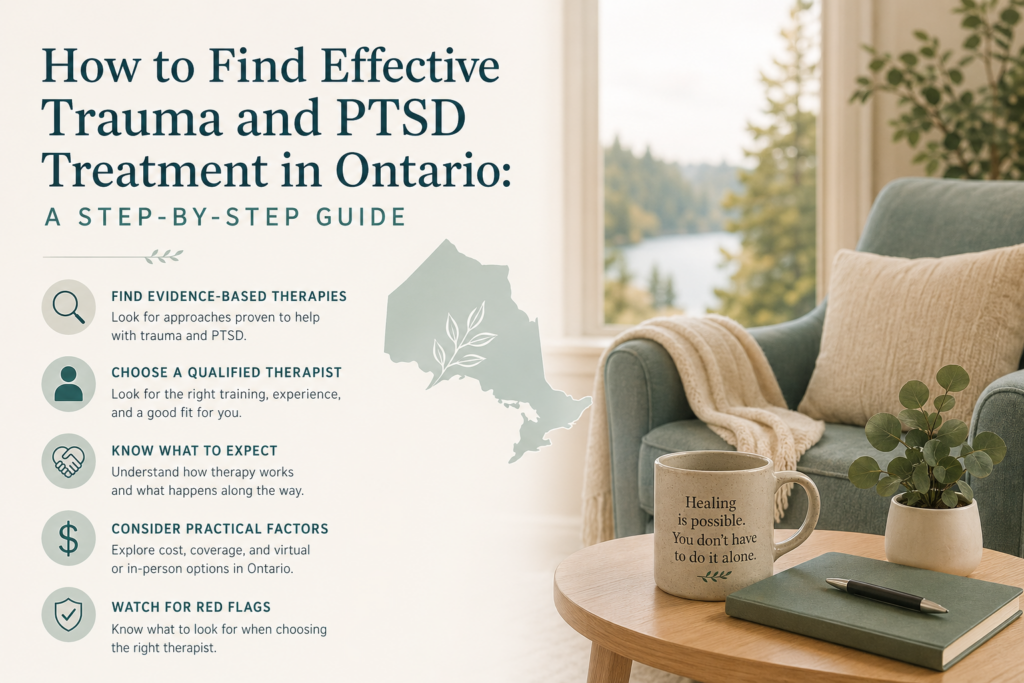
Finding the right help for trauma or post-traumatic stress disorder (PTSD) can feel overwhelming—especially when you’re already dealing with symptoms like anxiety, emotional numbness, sleep disruption, or hypervigilance. In Ontario, there are many therapy options available, but not all are equally effective for trauma. This guide walks you through how to identify evidence-based care, choose a qualified therapist, and take practical steps towards healing and recovery.
Understanding Trauma and PTSD
Trauma refers to the psychological impact of experiencing or witnessing distressing events such as abuse, neglect, violence, accidents or loss. While many people recover over time, others develop persistent symptoms that may meet criteria for PTSD. These can include intrusive memories, avoidance, negative shifts in mood and thinking, and heightened arousal (American Psychiatric Association, 2013).
Importantly, trauma doesn’t always look like what people expect. Emotional numbness, detachment, irritability, or difficulty concentrating are common and often overlooked signs (Lanius et al., 2010). Recognizing your symptoms is the first step in seeking appropriate treatment.
Step 1: Look for Evidence-Based Trauma Therapies
Not all therapy is designed to treat trauma. General talk therapy can be helpful, but research consistently shows that specific, structured approaches tend to be more effective for PTSD.
Here are some of the most supported treatments:
Trauma-Focused Cognitive Behavioural Therapy (TF-CBT)
TF-CBT is one of the most well-established treatments for trauma and PTSD, integrating approaches such as exposure-based techniques and cognitive processing. It helps individuals gradually face trauma-related memories and reduce avoidance, while also identifying and shifting unhelpful beliefs—such as guilt, shame, or ongoing hypervigilance. Extensive research supports TF-CBT as an effective first-line treatment for PTSD (Cusack et al., 2016; Foa et al., 2007; Resick et al., 2017).
Eye Movement Desensitization and Reprocessing (EMDR)
EMDR involves recalling distressing memories while engaging in bilateral stimulation (such as guided eye movements), which supports adaptive processing of traumatic experiences. It is widely endorsed in clinical guidelines and has strong empirical support (Shapiro, 2017).
Schema Therapy
Schema therapy focuses on long-standing patterns or “schemas” that often develop from early adverse experiences. In trauma work, it helps individuals understand how these patterns shape current emotional responses, relationships, and coping strategies, and supports the development of healthier ways of relating to oneself and others (Young et al., 2003).
Acceptance and Commitment Therapy (ACT)
ACT emphasizes psychological flexibility—helping individuals relate differently to distressing thoughts and emotions rather than trying to eliminate them. For trauma, this can reduce avoidance and support meaningful engagement in life despite ongoing internal experiences (Hayes et al., 2012).
Internal Family Systems (IFS)
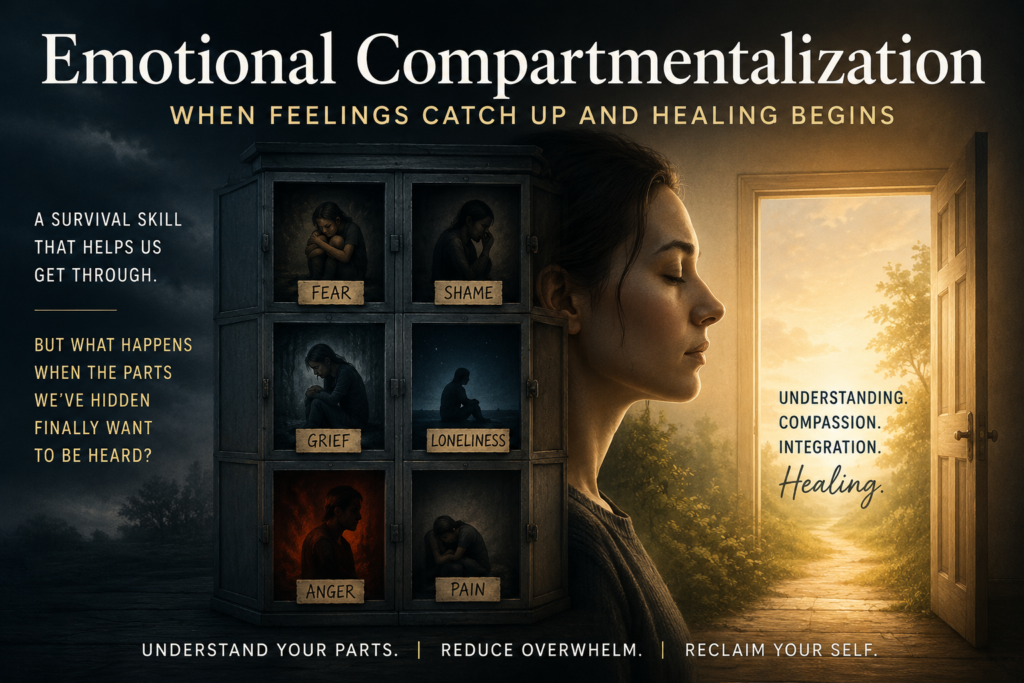
IFS is a parts-based approach that helps individuals understand and work with different “parts” of themselves—such as protective or wounded aspects that may have developed in response to trauma. It aims to foster self-compassion and internal balance, which can be particularly helpful for complex or developmental trauma (Schwartz, 2021).
A strong therapist should be able to clearly explain why they use a particular approach and how it fits your specific symptoms and goals.
Step 2: Choose a Qualified Therapist in Ontario
In Ontario, psychotherapy services are regulated. Look for professionals registered with recognized colleges, such as:
* College of Registered Psychotherapists of Ontario (CRPO)
* College of Psychologists of Ontario
* Ontario College of Social Workers and Social Service Workers
Psychologists are able to diagnose and treat trauma and tend to have more extensive training (e.g., a PhD level psychologist has 10 years of university compared to 6 years).
Beyond credentials, consider the therapist’s specialization in trauma. Many therapists list trauma as an area of interest, but fewer have advanced training in evidence-based trauma treatments such as EMDR or advanced university level CBT.
You can ask direct questions like:
* What trauma-specific training have you completed?
* Which approaches do you use for PTSD?
* How do you tailor treatment for symptoms like dissociation or emotional numbness?
Clear, confident answers usually signal real expertise.
Step 3: Understand What Therapy Will Actually Feel Like
One reason people hesitate to start trauma therapy is uncertainty about the process. There’s a common fear that therapy will mean reliving painful experiences in overwhelming detail.
In reality, effective trauma therapy is paced and collaborative. Early sessions typically focus on building safety, developing coping skills, and understanding your symptoms. Processing traumatic memories happens gradually and only when you’re ready (Cloitre et al., 2012). A skilled clinician will first treat a person’s phobia of their trauma memories and feelings.
You should feel:
* Respected and not rushed
* In control of the pace
* Supported in learning tools to manage distress
If therapy feels chaotic, overly intense, not challenging enough or lacks structure, it may not be the right fit.
Step 4: Consider Practical Factors in Ontario
Cost and Coverage
Therapy in Ontario is often not covered by OHIP unless accessed through hospitals or specific programs. However, many extended health insurance plans cover services provided by registered psychotherapists, psychologists, or social workers.
Session fees typically range from $180 to $250, depending on the provider’s credentials and experience. Psychological services at Dr. Barbera C. Psych & Associates cost $225 (with some reduced fee spaces sometimes available).
Virtual vs In-Person Therapy
Virtual therapy has become widely available across Ontario and is supported by research as an effective format for PTSD treatment (Morland et al., 2015). It can improve access, especially if you live outside major urban centres.
That said, some individuals prefer in-person sessions, particularly when working through complex trauma. The choice often comes down to comfort, privacy, and logistical needs.
Step 5: Watch for Red Flags
Not all therapy is helpful—and in some cases, it can slow progress. Be cautious if a therapist:
* Cannot clearly explain their approach to trauma
* Focuses only on venting or supportive discussions without direction or goals
* Pushes you to discuss traumatic events before you feel ready
* Dismisses or minimizes your symptoms
* Lacks training in trauma-specific methods
Effective therapy should feel purposeful, not aimless.
Step 6: Use Local Signals to Find the Right Fit
When searching for trauma or PTSD treatment in Ontario, include location-specific terms such as your city (e.g., Hamilton, Burlington, Mississauga, Toronto). This helps you find therapists who are familiar with local resources and can provide relevant referrals if needed. Above all else, prioritize finding a practice with advanced training and experience with trauma and PTSD.
At Dr. Barbera C. Psych and Associates, most services are directed by Dr. Jennifer Barbera C. Psych who has a PhD in psychology, and has over 25 years experience providing counselling for trauma and loss. Trauma and PTSD is a primary area of focus in our psychology practice.
Moving Toward Healing
Seeking therapy for trauma is a meaningful step, but it’s not just about starting—it’s about starting well. The right combination of evidence-based treatment, a skilled therapist, and a clear plan can significantly improve outcomes.
Recovery from trauma is not about erasing what happened. It’s about reducing the intensity of symptoms, rebuilding a sense of safety, and regaining the ability to engage fully in your life. CONTACT US today to learn more or schedule an appointment.
Frequently Asked Questions
How do I know if I have PTSD or just stress?
PTSD involves a specific cluster of symptoms lasting more than a month, including intrusive memories, avoidance, mood changes, and hyperarousal. A qualified mental health professional can provide an accurate assessment (American Psychiatric Association, 2013).
What type of therapy is best for trauma?
Trauma-focused therapies such as TF-CBT, EMDR, CPT, and Prolonged Exposure have the strongest evidence base. The best choice depends on your symptoms, preferences, and history (Cusack et al., 2016). A clinician well trained in a variety of modalities may be most helpful so that treatment can be better tailored to your specific needs and preferences.
How long does trauma therapy take?
This varies. Some structured treatments last 8–20 sessions, while more complex trauma may require longer-term work. Progress depends on factors like symptom severity and consistency of sessions.
Is virtual trauma therapy effective?
Yes. Research shows that virtual delivery of trauma-focused therapies can be as effective as in-person treatment for many individuals (Morland et al., 2015).
Can trauma therapy make symptoms worse at first?
Some temporary discomfort can occur when addressing difficult memories, but therapy should not feel overwhelming or destabilizing. A well-trained therapist will pace the work carefully to minimize distress and draw from approaches such as DBT and IFS to help modulate distress.
Do I need a referral to see a trauma therapist in Ontario?
No. You can contact most private therapists directly. However, some publicly funded programs or hospital-based services may require a referral.
References
American Psychiatric Association. (2013). Diagnostic and statistical manual of mental disorders (5th ed.). Author.
Cloitre, M., Courtois, C. A., Charuvastra, A., Carapezza, R., Stolbach, B. C., & Green, B. L. (2012). Treatment of complex PTSD: Results of the ISTSS expert clinician survey. Journal of Traumatic Stress, 25(6), 615–627.
Cusack, K., Jonas, D. E., Forneris, C. A., Wines, C., Sonis, J., Middleton, J. C., … Weil, A. (2016). Psychological treatments for adults with posttraumatic stress disorder: A systematic review and meta-analysis. Clinical Psychology Review, 43, 128–141.
Foa, E. B., Hembree, E. A., & Rothbaum, B. O. (2007). Prolonged exposure therapy for PTSD: Emotional processing of traumatic experiences. Oxford University Press.
Lanius, R. A., Vermetten, E., & Pain, C. (2010). The impact of early life trauma on health and disease: The hidden epidemic. Cambridge University Press.
Morland, L. A., Mackintosh, M. A., Glassman, L. H., Wells, S. Y., Thorp, S. R., & Rauch, S. A. M. (2015). Home-based delivery of variable length prolonged exposure therapy: A comparison of clinical efficacy between service modalities. Depression and Anxiety, 32(11), 857–864.
Resick, P. A., Monson, C. M., & Chard, K. M. (2017). Cognitive processing therapy for PTSD: A comprehensive manual. Guilford Press.
Shapiro, F. (2017). Eye movement desensitization and reprocessing (EMDR) therapy (3rd ed.). Guilford Press.
van der Kolk, B. A. (2014). The body keeps the score: Brain, mind, and body in the healing of trauma. Viking.
Prepared by Dr. Jennifer Barbera, PhD, Registered Psychologist
Dr. Jennifer Barbera PhD, C. Psych is a licensed psychologist with over 25 years of counselling experience. She has extensive clinical expertise supporting individuals and couples with anxiety, trauma, depression, addiction, and relationship challenges. Her work combines evidence-based approaches with practical strategies to help clients build resilience and improve well-being.