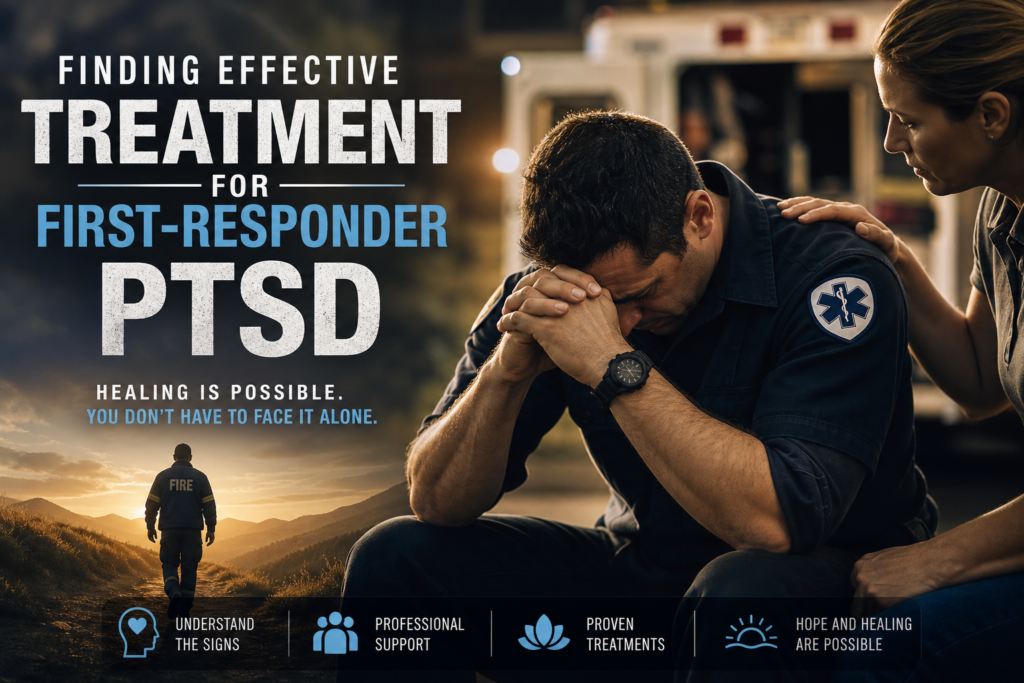
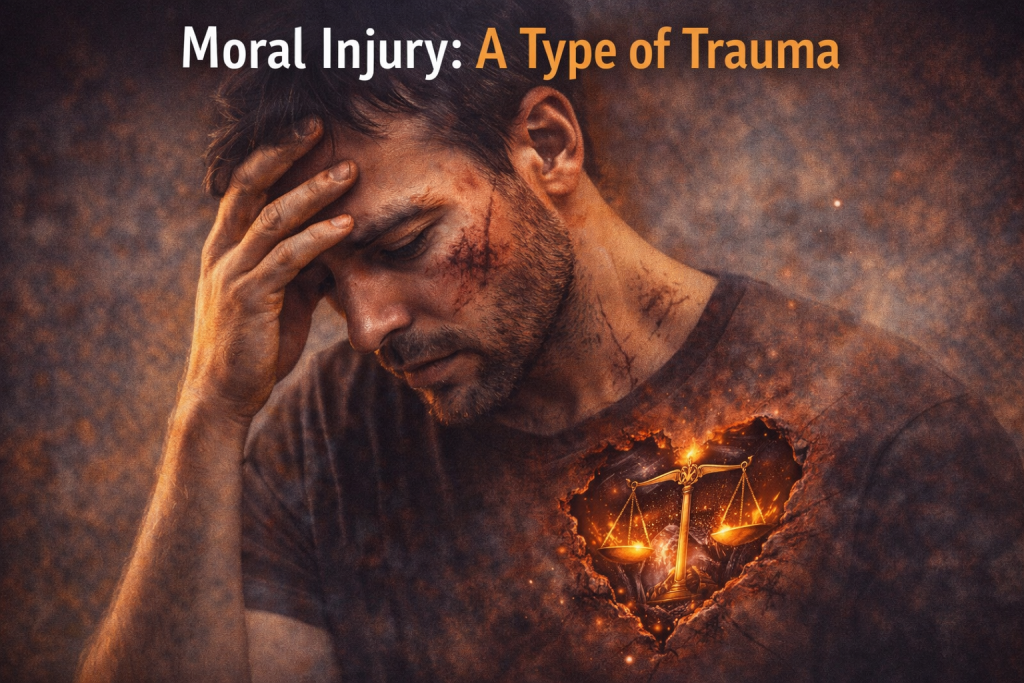
If you’re a first responder struggling after what you’ve seen, heard, or experienced on the job—you’re not alone. And just as important, there’s nothing weak about the way you’re feeling. You are human, and first responder work has unique challenges that need to be acknowledged.
Police officers, firefighters, paramedics, dispatchers, and other emergency personnel step into situations most people will never face. You’re trained to handle chaos, to stay focused when others can’t—but that doesn’t mean those experiences don’t stay with you. Over time, the accumulation of critical incidents can start to take a toll—on your sleep, your mood, your relationships, and your ability to feel like yourself again.
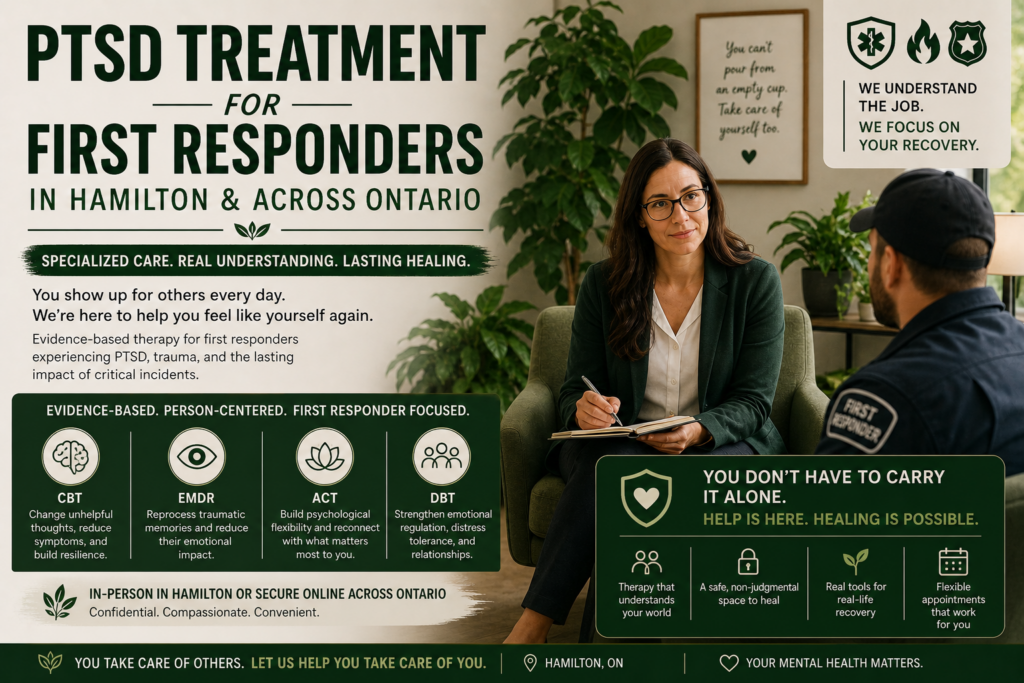
If you’re searching for PTSD treatment for first responders in Hamilton or anywhere in Ontario, the key is not just finding any therapist—it’s finding the right kind of treatment, from someone who understands the levity of your work as a first responder.
Why First Responders Are at Higher Risk for PTSD
First responder work is fundamentally different from most other professions. It involves unique challenges such as:
* Repeated exposure to traumatic events (not just one unexpected incident)
* High-stakes decision-making under pressure
* Responsibility for others’ lives
* Organizational cultures that often discourage vulnerability
Research shows that repeated exposure to traumatic incidents—rather than a single event—is a major contributor to PTSD in first responders (Papazoglou, 2017). Over time, even highly resilient individuals can experience cumulative psychological impact.
In fact, Canadian research highlights significantly elevated rates of mental health challenges—including PTSD, depression, and anxiety—among first responders compared to the general population (Szeto et al., 2019).
This isn’t about resilience failing. It’s about exposure exceeding what the nervous system can process without support.
PTSD vs. Burnout vs. Work-Related Stress
One of the biggest barriers to getting help is mislabeling what you’re going through.
Let’s be clear—PTSD, Stress and Burnout are not the same thing:
Work-Related Stress
* Feeling overwhelmed or pressured
* Improves with rest or time off
* Doesn’t fundamentally change how you experience safety
Burnout
* Emotional exhaustion
* Cynicism or detachment from work
* Reduced sense of effectiveness
PTSD (Post-Traumatic Stress Disorder)
* Intrusive memories or flashbacks
* Nightmares or disrupted sleep
* Hypervigilance (always “on edge”)
* Avoidance of reminders
* Emotional numbness or disconnection
PTSD is not just “too much stress.” It’s a trauma-based condition involving changes in how the brain processes threat and memory (Cheng et al., 2018). Intrusion symptoms can be especially distressing and disruptive.
If your system feels stuck in high alert—even when you’re safe—that’s not burnout. That state of enduring hypervigilance is something deeper, and it deserves targeted treatment.
Why Specialized Treatment for First Responders Matters
Here’s where many people get stuck: they seek help, but the therapist doesn’t fully understand the job or its impact on nervous system injury.
That matters more than you might think.
First responders often:
* Normalize extreme experiences
* Minimize their own distress
* Struggle to trust clinicians who “don’t get it”
* Need treatment adapted to operational realities
Research suggests that first responders benefit from tailored treatment approaches that account for the unique nature of their work and identity (Cheng et al., 2018).
In practical terms, this means:
* You don’t have to over-explain your experiences
* The clinician understands the culture and demands of the job
* Treatment moves at a pace that respects your readiness
* The focus is not just symptom reduction—but functional recovery
When therapy aligns with your lived reality, outcomes improve.
What Effective PTSD Treatment Actually Looks Like
There isn’t a single “magic” therapy for PTSD. The strongest approach is one that is flexible, evidence-based, and tailored to you.
Research consistently shows that several psychological therapies can significantly reduce PTSD symptoms in first responders, especially when delivered by trained clinicians (Roberts et al., 2022).
Here are the most effective approaches—and why they matter:
Cognitive Behavioural Therapy (CBT)
CBT is one of the most well-researched treatments for PTSD and is particularly effective for first responders.
It helps you:
* Identify and shift unhelpful thought patterns
* Process traumatic memories in a structured way
* Reduce avoidance and regain control
Studies show that CBT is often more effective than other interventions (especially supportive counselling) for reducing PTSD symptoms in first responders (Roberts et al., 2022).
Eye Movement Desensitization and Reprocessing (EMDR)
EMDR focuses on helping the brain reprocess traumatic memories so they no longer feel as intense or overwhelming.
Research suggests EMDR can reduce trauma-related symptoms in first responders, though outcomes can vary depending on how it is delivered (Wilson et al., 2018).
This approach can be particularly helpful if:
* Talking about the trauma feels too overwhelming
* You feel “stuck” despite insight
Acceptance and Commitment Therapy (ACT)
ACT helps you:
* Reduce the struggle against painful thoughts and emotions
* Reconnect with values and meaning
* Move forward, even with difficult internal experiences
For first responders, ACT can be especially useful in addressing identity shifts and loss of purpose.
Dialectical Behaviour Therapy (DBT)
DBT builds skills in:
* Emotional regulation
* Distress tolerance
* Interpersonal effectiveness
This is particularly helpful when PTSD is combined with:
* Intense emotional swings
* Relationship strain
* Difficulty managing reactions under stress
Why a Flexible, Integrated Approach Works Best
No single therapy works for everyone. The most effective PTSD treatment often involves drawing from multiple evidence-based approaches, depending on your needs, your readiness, and your goals.
Research shows that a range of psychological interventions—including CBT and EMDR—can reduce PTSD, anxiety, and depression in first responders when applied thoughtfully (Roberts et al., 2022).
A skilled clinician doesn’t force you into one model—they adapt the treatment to you.
Finding PTSD Treatment in Hamilton or Online in Ontario
If you’re searching for first responder PTSD treatment in Hamilton, you have options—but not all services are equal.
Here’s what to look for:
1. Experience with First Responders
Not general trauma. Not general therapy.
You want someone who understands your world.
2. Evidence-Based Modalities
CBT, EMDR, ACT, and DBT should all be part of the clinician’s or practice’s toolkit.
3. A psychology practice that can diagnose when needed (especially if symptoms could impact your ability to work)
4. Clear Treatment Plan
You should know:
* What you’re working toward
* How progress will be measured
* What the process will look like
5. Psychological Safety
You need to feel:
* Respected
* Understood
* Not judged
6. Flexible Access (In-Person or Virtual)
Many first responders prefer online therapy across Ontario for privacy and convenience.
What Reaching Out Actually Means
Let’s address the part most people avoid.
Reaching out doesn’t mean:
* You’re broken
* You can’t handle the job
* You have to relive everything all at once
It means:
* You’re taking control
* You’re addressing what’s been building
* You’re giving yourself a real chance to feel better
And importantly—you don’t have to be at your worst to start.
A Better Way Forward
If you’re a first responder searching for PTSD treatment in Hamilton or Ontario, here’s the truth:
You’ve handled situations most people couldn’t imagine.
But handling them doesn’t mean they didn’t affect you.
The right treatment—delivered by someone who understands your work and uses evidence-based approaches—can help you:
* Sleep better
* Feel more present
* Reduce the constant sense of alert
* Reconnect with your life outside the job
You don’t need to stay stuck in survival mode.
And you don’t have to figure it out alone.
CONTACT US today to learn more or book an appointment.
References
Cheng, M. K. F., Joseph, J., & Ferguson, D. (2018). A cognitive behavioral model of first responder posttraumatic stress disorder. Journal of Cognitive Psychotherapy, 32(3), 184–191.
Papazoglou, K. (2017). Examining the psychophysiological efficacy of CBT treatment for first responders diagnosed with PTSD. SAGE Open, 7(3).
Roberts, N. P., et al. (2022). The effectiveness of psychological interventions for reducing PTSD and psychological distress in first responders: A systematic review and meta-analysis. PLoS One.
Szeto, A., Dobson, K. S., & Knaak, S. (2019). The road to mental readiness for first responders: A meta-analysis of program outcomes. Canadian Journal of Psychiatry, 64(1_suppl)*.
Wilson, G., Farrell, D., Barron, I., Hutchins, J., Whybrow, D., & Kiernan, M. D. (2018). Eye movement desensitization and reprocessing for the treatment of trauma in first responders: A systematic review. European Journal of Psychotraumatology.
Prepared by Dr. Jennifer Barbera, PhD, Registered Psychologist
Dr. Jennifer Barbera PhD, C. Psych is a licensed psychologist with over 25 years of counselling experience. She has extensive clinical expertise supporting individuals and couples with anxiety, trauma, depression, addiction, and relationship challenges. Her work combines evidence-based approaches with practical strategies to help clients build resilience and improve well-being.[/vc_column_text][/vc_column][/vc_row]