How to Navigate Life Transitions and Crisis: Finding Help in Ontario
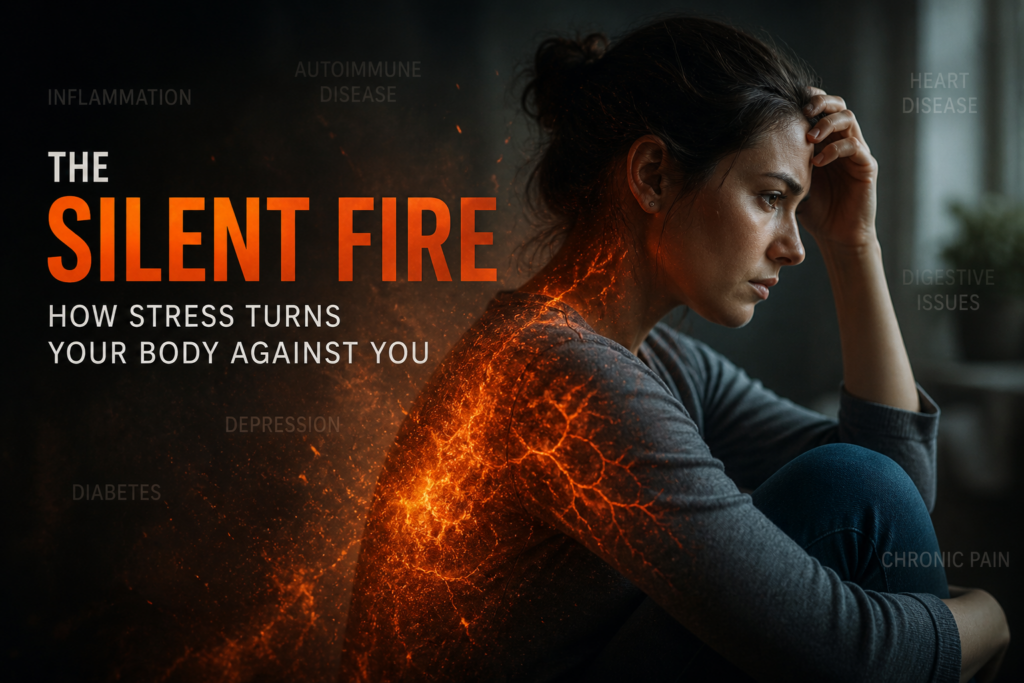
There are moments in life that divide everything into “before” and “after.” A relationship ends. A panic attack appears out of nowhere. A health scare changes priorities. A career collapses. A betrayal exposes harsh truths. These experiences can feel deeply destabilizing, and in the moment, most people do not experience them as opportunities. They experience them as only as pain.
Yet psychology has increasingly recognized an important truth: many people eventually look back on their most difficult chapters as catalysts for profound growth. This does not mean suffering is inherently good, nor does it mean trauma should be romanticized. It means that human beings possess a remarkable capacity to rebuild meaning, deepen self-awareness, and reorganize their lives after periods of crisis.
The reality is that sometimes life delivers a wake-up call that makes us realize that we have been disconnected from ourselves for a very long time.
Research on posttraumatic growth suggests that adversity can lead to increased resilience, deeper relationships, greater appreciation for life, and stronger personal meaning (Mangelsdorf & Eid, 2015; Tedeschi & Calhoun, 2004). While not everyone experiences growth after hardship, many people discover strengths, clarity, and courage they did not know they possessed until life forced them to confront difficult realities.
The Breaking Point or the Turning Point
When people enter crisis, they often believe they are falling apart. In some ways, they are. But psychologically, that breakdown can also become a meaningful reorganization.
Many individuals spend years operating on autopilot. They tolerate unhealthy relationships, suppress emotions, ignore exhaustion, avoid difficult truths, or live according to expectations that do not actually align with who they are. Then eventually something breaks through the surface. Anxiety becomes impossible to ignore. Depression deepens. Burnout takes over. A major loss occurs.
The crisis becomes impossible to outrun.
Psychologists who study meaning-making have found that stressful events often disrupt a person’s core assumptions about themselves and the world. This disruption can create profound distress, but it can also create the conditions necessary for transformation (Cameron et al., 2022).
Growth frequently begins when old ways of living no longer work.
This is one reason major life stressors sometimes become turning points. A person who once avoided vulnerability may finally begin therapy. Someone trapped in people-pleasing patterns may begin setting boundaries for the first time. Another person may realize they have spent years disconnected from purpose, creativity, or authentic relationships.
The painful event itself is not the gift. The willingness to engage with reality honestly afterward is where growth becomes possible.
CONTACT US today for an appointment.
All Things Are Temporary
One of the most difficult aspects of emotional suffering is the illusion that it will last forever.
When people are overwhelmed, the nervous system narrows focus toward immediate danger and distress. The mind begins telling permanent stories about temporary states:
“This will never get better.”
“I’ll always feel this way.”
“My life is ruined.”
But emotions are inherently dynamic. Human beings are designed to adapt. Even intense grief, fear, shame, or uncertainty shifts over time.
Acceptance and Commitment Therapy (ACT) emphasizes the importance of psychological flexibility: the ability to experience painful thoughts and emotions without becoming completely dominated by them (Hayes et al., 2006). Research has shown that increased psychological flexibility is associated with greater resilience, lower emotional distress, and improved quality of life.
The key insight is not that pain disappears quickly. It is that pain changes when we stop fighting reality itself.
People often suffer twice: first from the painful event, and second from the exhausting attempt to resist what has already happened.
Acceptance does not mean liking hardship. It does not mean passivity or surrendering values. It means acknowledging reality clearly enough that energy can be directed toward adaptation rather than denial or fighting what already is.
Resistance says:
“This cannot be happening.”
Acceptance says:
“This is happening. Now what?”
That shift is enormous.
Acceptance Versus Resistance
Few concepts in psychology are more transformative than the distinction between acceptance and resistance.
When people resist emotional pain, they often unintentionally intensify it. They numb themselves, avoid difficult conversations, overwork, isolate, lash out, or become consumed by rumination. Experiential avoidance — the attempt to escape internal discomfort — tends to increase suffering over time rather than reduce it.
Acceptance creates space.
It allows emotions to move instead of becoming psychologically trapped.
It allows grief to be grief instead of becoming shame about grief.
It allows anxiety to become information instead of identity.
It allows uncertainty to exist without demanding immediate control.
Many people discover that the moment they stop asking, “How do I make this feeling disappear?” and begin asking, “How do I carry this experience while still living meaningfully?” their relationship with suffering fundamentally changes.
This is the heart of resilience.
Resilience is not emotional numbness. It is not pretending everything is fine. It is the growing confidence that you can experience difficulty without losing yourself completely.
Learning to Trust Yourself Again
One of the greatest casualties of stressful experiences is often self-trust.
People begin doubting their judgment, emotional strength, or ability to cope. Crisis can make individuals feel psychologically unsafe within their own lives.
But resilience is built through evidence.
Each difficult day survived becomes evidence.
Each boundary set becomes evidence.
Each uncomfortable emotion tolerated without avoidance becomes evidence.
Each honest conversation becomes evidence.
Over time, people begin developing a quieter and more stable form of confidence — not confidence that life will always go smoothly, but confidence that they can face reality when it does not.
Research consistently shows that meaning, social support, and adaptive coping strongly predict posttraumatic growth and resilience following adversity (Boullion et al., 2020). In other words, healing is not just about reducing symptoms. It is about rebuilding a meaningful relationship with yourself, others, and life itself.
Sometimes the deepest growth comes from discovering:
“I can handle far more than I believed.”
The Opportunity Hidden Inside Crisis
There is an uncomfortable truth many people eventually recognize: major stress often exposes problems that already existed beneath the surface.
A crisis may reveal unhealthy relationships, chronic self-neglect, unresolved trauma, perfectionism, emotional avoidance, or lives built around external validation. While painful, this exposure can also become clarifying.
Psychological growth often requires dismantling outdated schemas and assumptions before healthier ones can emerge.
As researchers studying posttraumatic growth note, adversity can create opportunities for people to reassess priorities, strengthen relationships, deepen spirituality or meaning, and discover new possibilities for life (Tedeschi & Calhoun, 2004; Mangelsdorf & Eid, 2015).
This does not erase suffering. It places suffering within a larger story.
The wake-up call becomes meaningful when it interrupts unconscious living.
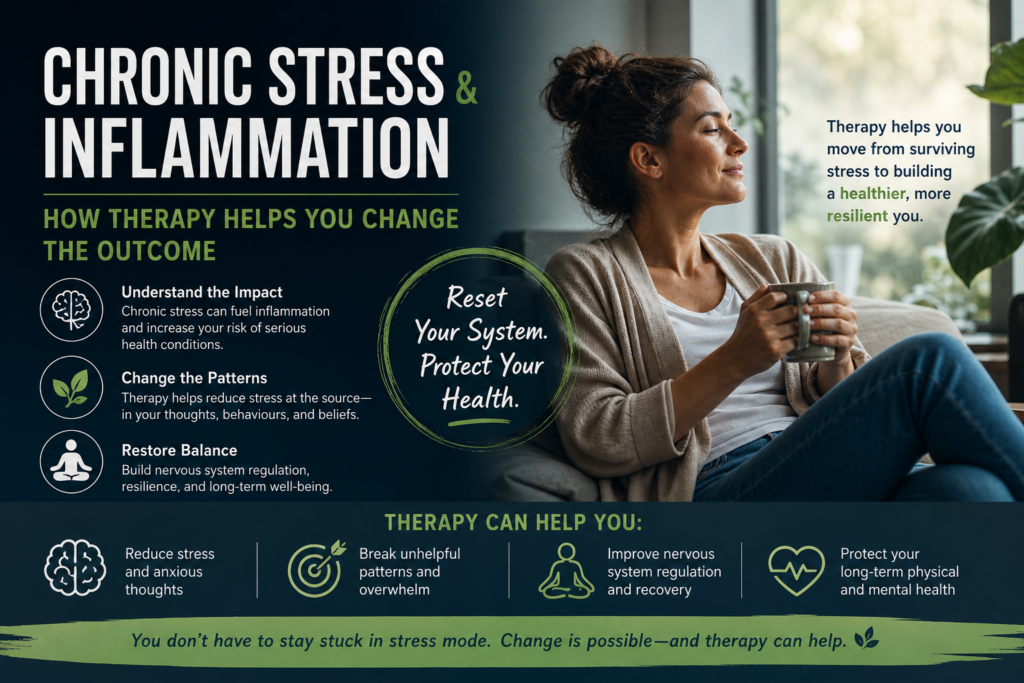
How Therapy Can Help
Therapy can play a critical role in helping people navigate stressful and transformative periods of life.
A skilled therapist does more than reduce symptoms. Therapy can help individuals:
* Develop emotional regulation skills
* Increase psychological flexibility
* Identify patterns of avoidance or resistance
* Process grief, fear, shame, or trauma safely
* Reconnect with personal values
* Build self-trust and resilience
* Create meaning from painful experiences
* Strengthen relationships and communication
Importantly, therapy provides something many people lack during difficult times: a consistent space to slow down and reflect honestly and without judgement.
Research has shown that therapeutic interventions, including cognitive behavioural therapy and ACT-based approaches, can support optimism, resilience, and posttraumatic growth following adversity (Knaevelsrud et al., 2010).
People often seek therapy because they want the pain to stop immediately. But many eventually discover something more valuable: they begin changing the way they relate to themselves, their emotions, and their lives.
That shift can alter the trajectory of an entire future.
A Better Way Forward
A wake-up call rarely feels inspiring while it is happening. It usually feels terrifying, unfair, exhausting, or disorienting.
But difficult events or life chapters often force important questions to the surface:
What matters most?
What am I avoiding?
What kind of life am I actually building?
Who am I beneath survival mode?
Growth does not mean becoming grateful for suffering. It means refusing to let suffering be meaningless.
Sometimes the most important realization is not that life became easy again.
It is realizing that even in uncertainty, grief, or fear, you are capable of meeting life with openness, honesty, and courage.
And often, that is where real change begins.
CONTACT US today to learn more about our therapy services or to set up an appointment.
References
Boullion, G. Q., Pavlacic, J. M., Schulenberg, S. E., Buchanan, E. M., & Steger, M. F. (2020). Meaning, social support, and resilience as predictors of posttraumatic growth: A study of the Louisiana flooding of August 2016. American Journal of Orthopsychiatry, 90(5), 578–585.
Cameron, E. C., Kalayjian, A., Toussaint, L., Cunningham, F. J., & Jacquin, K. M. (2022). Meaning-making predicts forgiveness as an indicator of posttraumatic growth with a stronger effect for natural disasters. Journal of Humanistic Psychology, 66(2), 1–22.
Hayes, S. C., Luoma, J. B., Bond, F. W., Masuda, A., & Lillis, J. (2006). Acceptance and commitment therapy: Model, processes and outcomes. Behaviour Research and Therapy, 44(1), 1–25.
Knaevelsrud, C., Liedl, A., & Maercker, A. (2010). Posttraumatic growth, optimism and openness as outcomes of a cognitive-behavioural intervention for posttraumatic stress reactions. Journal of Health Psychology, 15(7), 1030–1038.
Mangelsdorf, J., & Eid, M. (2015). What makes a thriver? Unifying the concepts of posttraumatic and postecstatic growth. Frontiers in Psychology, 6, 813.
Tedeschi, R. G., & Calhoun, L. G. (2004). Posttraumatic growth: Conceptual foundations and empirical evidence. Psychological Inquiry, 15(1), 1–18.
Prepared by Dr. Jennifer Barbera, PhD, Registered Psychologist
Dr. Jennifer Barbera PhD, C. Psych is a licensed psychologist with over 25 years of counselling experience. She has extensive clinical expertise supporting individuals and couples with anxiety, trauma, depression, addiction, and relationship challenges. Her work combines evidence-based approaches with practical strategies to help clients build resilience and improve well-being.