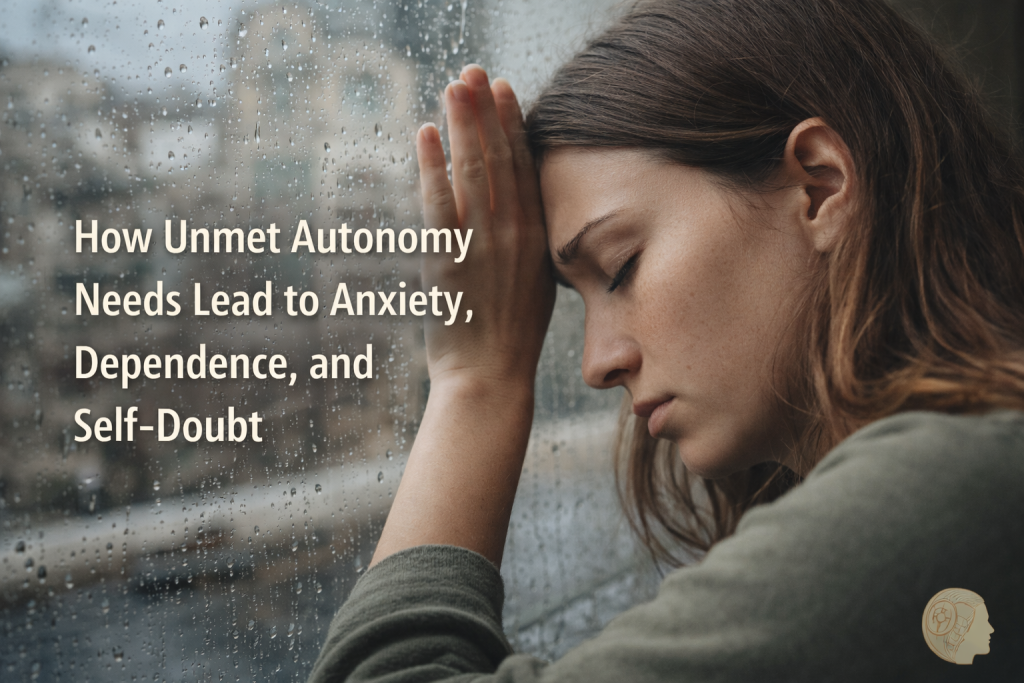
How to Reduce Self-Doubt and Anxiety with Schema Work
When Autonomy, Confidence, and Identity Are Undermined:
A core emotional need in childhood is the development of autonomy, competence, and a stable sense of identity. This need allows a child to experience themselves as capable, separate, and able to navigate the world with growing confidence. When this need is consistently unmet, specific early maladaptive schemas can form, shaping how a person relates to themselves, others, and perceived danger throughout adulthood.
This article explores:
• The factors that interfere with the development of autonomy, confidence, and identity
• How unmet needs give rise to schemas such as Dependence/Incompetence, Vulnerability to Harm, Enmeshment, and Failure
• How these schemas show up differently depending on the coping modes a person relies on and tend to contribute to anxiety symptoms
Factors That Prevent the Development of Autonomy, Confidence, and Identity
Autonomy does not develop in isolation. It emerges when caregivers provide supportive encouragement, appropriate limits, and room for exploration, while still offering emotional safety. Several relational patterns can disrupt this process.
1. Overprotection and Excessive Control
When caregivers consistently communicate that the world is dangerous or that the child cannot cope on their own, the child may internalize the belief:
“I am not capable without someone else.”
Even well-intentioned protection can prevent a child from learning through experience that they can manage challenges, tolerate uncertainty, and recover from mistakes.
2. Enmeshment and Blurred Emotional Boundaries
In enmeshed relationships, a child may be emotionally fused with a caregiver, often feeling responsible for the caregiver’s emotional well-being. Individuality, separateness, and personal preferences may be subtly discouraged or guilt-inducing.
The child learns:
“Being myself threatens connection.”
3. Chronic Anxiety in the Caregiving Environment
When caregivers are highly anxious, catastrophic, or hypervigilant themselves, children absorb the sense that danger is always imminent. Even without overt trauma, the nervous system learns to stay on alert.
This creates a template for scanning the environment for threat long after childhood ends, often leading to general anxiety.
4. Undermining or Inconsistent Feedback
Repeated messages—explicit or implicit—that a child is “not good enough,” “not as capable as others,” or “likely to fail” interfere with confidence formation. Over time, this can crystallize into a belief of inherent inadequacy.
The Schemas That Form When These Needs Are Unmet
When autonomy, competence, and identity are compromised, several schemas commonly develop.
Dependence / Incompetence
A belief that one cannot handle everyday responsibilities or decisions independently- some called self-trust.
Internal experience:
• Doubt in one’s judgment
• Strong reliance on reassurance
• Fear of being alone or unsupported
Vulnerability to Harm or Illness
A persistent sense that catastrophe—medical, emotional, financial, or relational—is likely and imminent.
Internal experience:
• Hypervigilance
• Catastrophic thinking
• Chronic anxiety or worry
Enmeshment / Undeveloped Self
A weak or unclear sense of identity, often organized around others’ needs, moods, or expectations.
Internal experience:
• Difficulty knowing one’s preferences
• Guilt when asserting independence
• Fear of separation or individuation
Failure
A deep belief of being fundamentally inadequate or less capable than peers.
Internal experience:
• Shame
• Avoidance of challenges
• Chronic self-comparison
How These Schemas Lead to Different Behaviours: The Role of Coping Modes
Schemas do not operate in isolation. They express themselves through coping modes—automatic patterns of responding designed to reduce emotional pain. The same schema can lead to very different behaviors depending on the dominant mode.
1. Surrender Coping
The person unconsciously accepts the schema as true and lives accordingly.
Examples:
• Over-reliance on partners, friends, or authority figures for decisions
• Staying in controlling or overly protective relationships
• Avoiding independence or responsibility
Internal narrative:
“I can’t do this on my own.”
2. Avoidant Coping
The person attempts to avoid activating the schema altogether.
Examples:
• Avoiding situations that require independence or risk
• Procrastination or withdrawal from challenges
• Emotional numbing or distraction
Internal narrative:
“If I don’t try, I can’t fail or feel overwhelmed.”
3. Overcompensatory Coping
The person acts in opposition to the schema in an effort to escape its pain.
Examples:
• Pushing extreme self-reliance while secretly feeling anxious
• Controlling environments or people to reduce perceived danger
• Perfectionism or relentless achievement to counter feelings of failure
Internal narrative:
“If I stay in control, nothing bad will happen.”
The Anxiety Link: Hypervigilance as a Learned Survival Strategy
When the Vulnerability to Harm schema is active, many people experience a hypervigilant internal “scanner”—a part of the mind constantly assessing for threat. This is not a flaw; it is a learned survival response.
Over time, however, this scanning can:
• Keep the nervous system in a chronic state of activation
• Contribute to generalized anxiety
• Reinforce dependence on reassurance or avoidance
Importantly, the anxiety is not random—it is organized around early unmet needs for safety, confidence, and trust in one’s own capacity.
Why These Patterns Are So Persistent
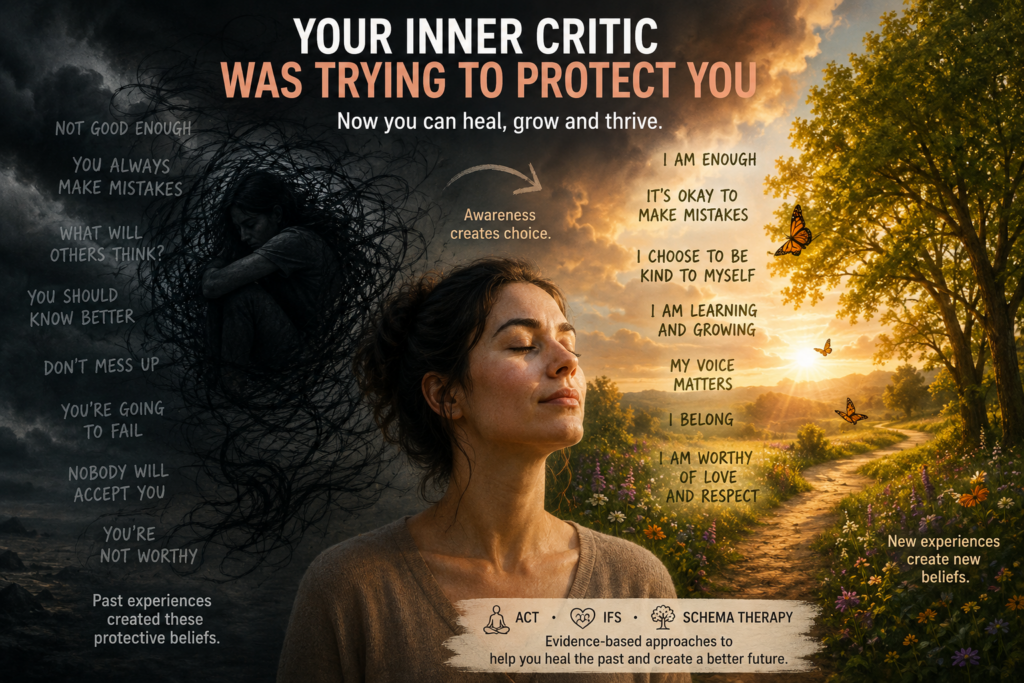
These schemas and coping modes formed early, often before language, and were reinforced repeatedly in relationships that mattered. They are not conscious choices. They are protective strategies that once made sense.
Healing does not come from “trying harder” to be independent or confident. It comes from:
• Recognizing these patterns with compassion
• Differentiating past danger from present reality
• Gradually strengthening an internal sense of competence and self-trust
Closing Perspective
Difficulties with dependence, anxiety, enmeshment, or self-doubt are not signs of weakness. They are signals of needs that were not adequately met, and of systems that adapted as best they could.
With awareness, supportive relationships, and targeted therapeutic work, these schemas can soften—and new experiences of autonomy, confidence, and identity can be built, often for the first time. If you are interested in learning more, contact us for an appointment.
Prepared by Dr. Jennifer Barbera, PhD, Registered Psychologist
Dr. Jennifer Barbera PhD, C. Psych is a licensed psychologist with over 25 years of counselling experience. She has extensive clinical expertise supporting individuals and couples with anxiety, trauma, depression, addiction, and relationship challenges. Her work combines evidence-based approaches with practical strategies to help clients build resilience and improve well-being.