How to Find Therapy in Ontario That Gets to the Root of Your Challenges
Many people in Ontario seek therapy hoping to relieve symptoms such as anxiety, low mood, difficulty concentrating, or challenges in relationships. However, mental health concerns rarely fit neatly into a single diagnostic category. Symptoms often overlap, interact with past experiences, and are influenced by lifestyle factors such as sleep, diet, exercise, and meaningful daily activity. Personality traits and unresolved emotional experiences can further complicate the picture. Effective therapy in Ontario focuses on identifying and addressing the root causes of these challenges, rather than simply managing surface-level symptoms or providing only supportive counselling.
The Importance of Differential Diagnosis
A cornerstone of effective therapy is accurate differential diagnosis, which involves distinguishing between conditions that share similar symptoms. For example, difficulty with attention and focus could indicate ADHD, depression, anxiety, sleep disruption, or chronic stress. Misdiagnosis can lead to ineffective treatment and prolong suffering (First, 2014). Clinicians with extensive training in psychopathology and assessment methods are better able to discern patterns, understand symptom function, and target the underlying causes of distress (Meyer & Quenzer, 2018).
Differential diagnosis is particularly critical when multiple conditions co-occur. Comorbidities such as anxiety and depression, or ADHD with mood dysregulation, can obscure the underlying mechanisms driving a person’s difficulties. Experienced clinicians look beyond surface symptoms to consider developmental history, personality traits, cognitive styles, and emotional patterns, ensuring interventions are both accurate and effective.
Parts-Based Approaches and Symptom Function
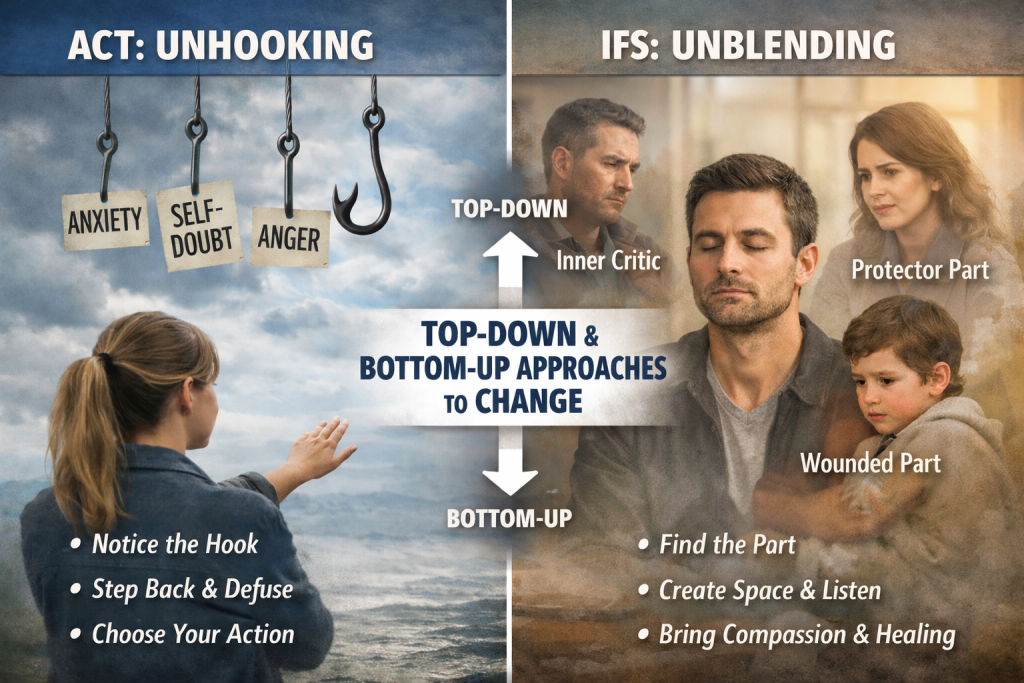
Understanding the function of symptoms is an essential aspect of therapy for complex mental health challenges. Symptoms are often adaptive responses to past stress or unmet needs rather than purely problematic behaviours. Parts-based approaches, such as Internal Family Systems (IFS), conceptualize emotional states as distinct “parts” that developed to protect the individual from psychological or emotional harm (Schwartz, 1995). For example, self-critical thoughts may represent a part intended to prevent failure or maintain safety, even if it contributes to distress in the present.
Exploring the purpose of each part allows therapy to focus on integration and collaboration within the internal system, rather than suppression. This reframing reduces shame and encourages clients to develop new strategies to meet their needs in healthier ways, ultimately addressing the root causes of distress rather than only relieving symptoms.
Early Maladaptive Schemas and Root Causes
A critical component of getting to the root of psychological challenges is identifying early maladaptive schemas. These are deeply held beliefs and patterns that develop during childhood or as a response to adverse experiences. Schemas shape how individuals perceive themselves, others, and the world. Common examples include beliefs such as “I am unworthy”, “Others cannot be trusted”, or “I must avoid conflict at all costs” (Young, Klosko, & Weishaar, 2003). These schemas influence thoughts, emotions, and behaviours across a lifetime, often perpetuating difficulties in self-worth, emotional regulation, and relationships.
Therapy that focuses on schemas helps clients identify patterns that contribute to ongoing distress. By recognising these deeply ingrained beliefs, clients can begin to challenge and modify them, replacing rigid or maladaptive assumptions with more flexible, constructive frameworks. Schema-focused interventions work hand-in-hand with differential diagnosis and parts-based approaches, allowing therapists to uncover the underlying causes of recurring patterns and symptoms.
Foundational Factors: Lifestyle, Sleep, Diet, and Meaningful Activity
Therapy effectiveness is enhanced when foundational aspects of well-being are addressed alongside symptom-focused interventions. Sleep is particularly critical; chronic sleep disruption affects mood regulation, cognitive performance, and stress resilience (Walker, 2017). Improving sleep hygiene, including consistent schedules, light exposure, and routines, is often a key first step in therapy.
Nutrition and exercise have measurable effects on emotional regulation and cognitive function. Diets rich in omega-3 fatty acids, whole foods, and balanced macronutrients support mental health, while regular physical activity improves mood and reduces anxiety (Marx W et. Al., 2017). Therapy that incorporates guidance on lifestyle factors provides clients with tangible tools to strengthen their foundation for recovery.
Engagement in meaningful activity is also essential for well-being. Activities that align with personal values, whether work, volunteering, creative pursuits, or education, foster a sense of competence, purpose, and identity (Ryff & Singer, 2008). Helping clients identify and integrate meaningful activity into daily life enhances the impact of therapy and supports long-term mental health.
Personality Traits and Emotional Regulation
Personality traits influence how individuals interpret experiences, respond to stress, and connect with others. For instance, high neuroticism may heighten sensitivity to negative stimuli, while low conscientiousness may challenge goal-directed behaviour and organisation (Widiger & Costa, 2013). Therapy that incorporates understanding of personality patterns allows for interventions that are tailored to the individual, enhancing emotional regulation, self-awareness, and relational functioning.
Personality interacts with schemas and parts-based dynamics to shape behaviour and emotion. By addressing these interactions, therapy helps clients gain insight into persistent challenges and develop strategies that align with both their inherent tendencies and personal goals.
Integrated Therapy in Practice
Effective therapy in Ontario integrates multiple approaches to address the complexity of mental health challenges. Clinicians combine thorough assessment, differential diagnosis, parts-based understanding of symptoms, and schema-focused interventions. Foundational lifestyle factors, personality traits, and unresolved past experiences are incorporated, providing a holistic framework that targets both the symptoms and their underlying causes.
This integrated approach ensures that therapy is tailored to the individual, addressing the root causes of distress and facilitating sustainable growth. Clients often report improvements not only in symptoms but also in self-understanding, relational satisfaction, emotional regulation, and overall quality of life. By focusing on the core drivers of psychological difficulties, therapy moves beyond short-term symptom relief to meaningful, lasting change.
Take the Next Step Toward Meaningful Change
If you’ve been struggling with anxiety, low mood, trauma, difficulty focusing, or patterns that feel hard to break, you don’t have to navigate it alone. The right therapy can help you uncover the underlying causes of your challenges, address early maladaptive schemas, and develop strategies that support lasting emotional well-being.
Our team of experienced mental health professionals in Ontario is committed to helping you understand the root of your difficulties and work toward meaningful, sustainable change. Whether you prefer in-person sessions, online therapy, or a combination, we tailor each approach to your unique needs, focusing on lifestyle foundations, emotional regulation, and personal growth.
Take the first step today. CONTACT US to schedule a consultation and start exploring a path to improved clarity, balance, and confidence in your life. Change is possible when therapy goes beyond the surface — let’s get to the root together.
References
American Psychiatric Association. (2013). Diagnostic and Statistical Manual of Mental Disorders (5th ed.).
First, M. B. (2014). Structured Clinical Interview for DSM Disorders (SCID). American Psychiatric Publishing.
Marx W, Moseley G, Berk M, Jacka F (2017). Nutritional psychiatry: the present state of the evidence. Proc Nutr Soc. Nov;76(4):427-436.
Meyer, J. S., & Quenzer, L. F. (2018). Psychopharmacology: Drugs, the Brain, and Behaviour. Sinauer Associates.
Ryff, C. D., & Singer, B. (2008). Know thyself and become what you are: A eudaimonic approach to psychological well-being. Journal of Happiness Studies, 9(1), 13–39.
Schwartz, R. C. (1995). Internal Family Systems Therapy. Guilford Press.
Walker, M. (2017). Why We Sleep: The New Science of Sleep and Dreams. Scribner.
Widiger, T. A., & Costa, P. T. (2013). Personality Disorders and the Five-Factor Model of Personality (3rd ed.). American Psychological Association.
Young, J. E., Klosko, J. S., & Weishaar, M. E. (2003). Schema Therapy: A Practitioner’s Guide. Guilford Press.
Prepared by Dr. Jennifer Barbera, PhD, Registered Psychologist
Dr. Jennifer Barbera PhD, C. Psych is a licensed psychologist with over 25 years of counselling experience. She has extensive clinical expertise supporting individuals and couples with anxiety, trauma, depression, addiction, and relationship challenges. Her work combines evidence-based approaches with practical strategies to help clients build resilience and improve well-being.