From Burnout to Balance: Practical Daily Habits for High Achievers
Explore practical, evidence-based daily habits for high achievers that reduce burnout by integrating ACT, schema awareness, and sustainable performance strategies.
Why High Achievers End Up in Overdrive
Many high achievers take pride in efficiency, productivity, and performance. Yet the very qualities that lead to success can also fuel chronic stress and burnout when internalized expectations go unexamined.
Burnout is a state of physical, emotional, and mental exhaustion that develops after prolonged exposure to stress—especially when demands consistently outweigh your capacity to cope. It typically shows up as three core experiences: feeling drained and depleted, becoming increasingly detached or cynical about your work or responsibilities, and noticing a drop in effectiveness or sense of accomplishment.
Unlike everyday stress, which can feel intense but temporary, burnout is more chronic—it builds over time and often signals that something in your workload, expectations, or coping patterns needs to change, not just push through harder.
Research shows that perfectionism—especially self-oriented and rigid standards—is consistently linked with psychological distress and burnout symptoms (Hill et al., 2010; Smith et al., 2016). When internal drivers stem from an unrelenting standards schema, the nervous system remains activated, making rest and recovery difficult (Young et al., 2003).
If you’re wondering whether your burnout is subtle, you might also find it helpful to review our previous post on Signs of High-Functioning Burnout to see how burnout can manifest even when performance appears strong.
The Role of ACT and Schema Awareness
Acceptance and Commitment Therapy (ACT) encourages psychological flexibility: noticing difficult thoughts and feelings while acting in alignment with personal values (Hayes et al., 2006). Combining ACT with schema awareness helps high achievers identify internalized rules, such as “I must always perform at my best,” without letting those rules dictate every action.
For more context on understanding burnout itself, check our guide on Battling Burnout: What It Is and How to Overcome It which explains what burnout is and ways to help overcome it.
Daily Habits to Build Balance
Below are practical, research-backed habits grounded in ACT and schema work. These are designed to reduce the impact of overdrive and cultivate sustainable performance.
1. Start With a Values Check-In
Every morning, take 3–5 minutes to ask: What matters most today? This is not about tasks—it’s about personal values. Research indicates that clarity about values predicts greater well-being and less burnout (Gloster et al., 2020). Anchoring actions in meaningful values transforms daily choices from pressure-driven to purpose-driven.
Practice: Write 2–3 core values (e.g., connection, creativity, growth) and one concrete action that aligns with each.
2. Notice Your “Should” Thoughts
High achievers often think:
• “I should be doing more.”
• “If I slow down, someone will notice.”
• “Anything less than perfect is unacceptable.”
Schema theory identifies these as unrelenting standards messages, which can dominate daily life (Young et al., 2003). ACT teaches you to observe these thoughts without automatically acting on them.
Practice: Label them as “here’s a perfectionism message” and return focus to your chosen values-driven actions.
3. Take a Midday Pause
Even short breaks reduce fatigue and improve emotional regulation (Trougakos et al., 2008).
Practice: Schedule a 2–3 minute pause each day to:
• Take slow, mindful breaths
• Notice current feelings
• Ground yourself in your body (feet on the floor, shoulders relaxed)
For a detailed step-by-step routine, see our Step-by-Step Guide to Burnout Recovery.
4. Redefine “Good Enough”
Perfectionistic standards expand workload and erode satisfaction (Smith et al., 2016). Instead, practice contextual priorities: assess what level of effort is appropriate for each task relative to its importance.
Practice: Ask before starting:
Does this require excellent, good, or sufficient effort?
Stick to that intention and notice the difference in stress and productivity.
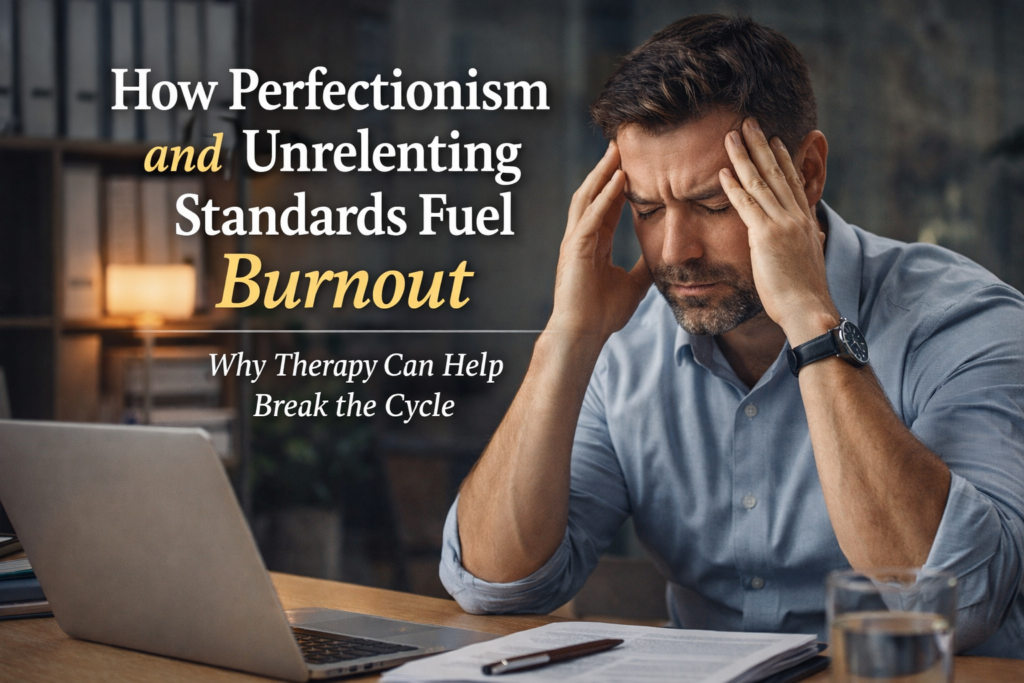
For more guidance, read our other post Reducing Burnout by Addressing Perfectionism which dives deeper into challenging unrelenting standards.
5. Evening Reflection With Compassion
End-of-day reviews often highlight what was left undone, fueling stress. Instead, use a compassionate reflection:
• What worked well today?
• What was stressful?
• What did I learn about my values or limits?
Schema awareness helps you separate internalized rules from reality, fostering flexibility and self-compassion.
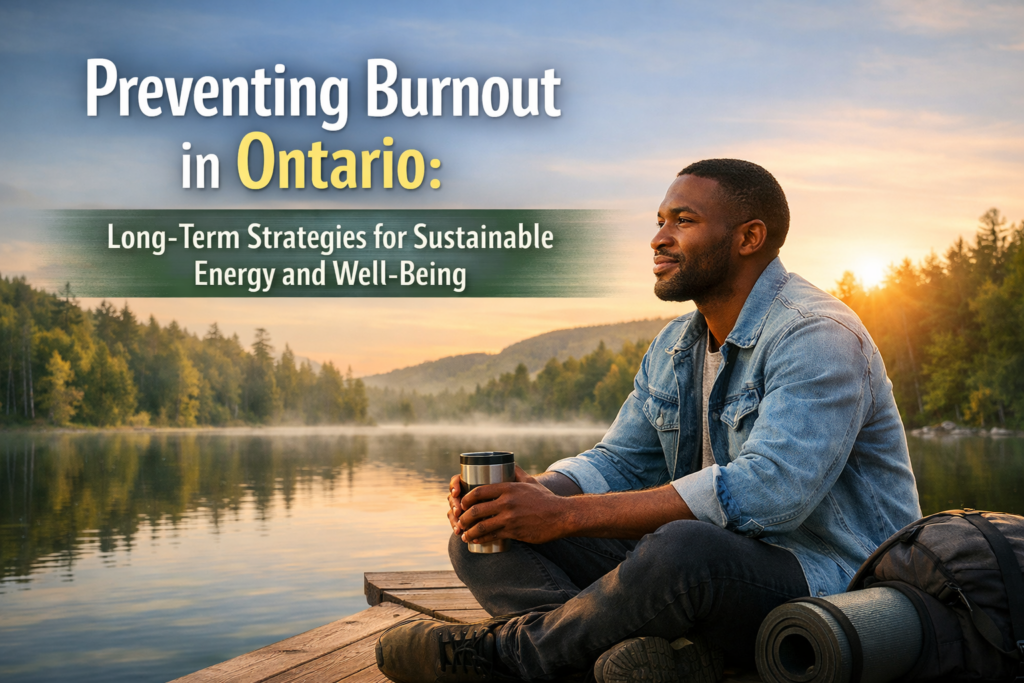
If you want to prevent burnout before it escalates, see our post on Preventing Burnout for proactive strategies.
When Habits Aren’t Enough
Daily habits help, but deep patterns may require support. Schema-focused and ACT-based therapy can help explore internalized perfectionistic beliefs and develop sustainable strategies to prevent burnout.
If you live in Ontario and need guidance, our Burnout Help in Ontario post explains how to access local support and therapy tailored for high achievers.
High achievement does not have to mean constant overdrive. By integrating values awareness, schema recognition, and mindful daily habits, you can shift from stress-driven productivity to sustainable performance.
Growth doesn’t require perfection—flexibility, awareness, and intentional action are key. CONTACT US for skilled compassionate guidance on shifting internal dynamics and daily habits to help reduce stress and burnout for a more balanced way forward.
References
Gloster, A. T., Klotsche, J., Chaker, S., Heinzel, S., Fernández-Castilla, B., & Smits, J. A. J. (2020). Psychological flexibility as a malleable public health target: Evidence from a representative sample. Journal of Contextual Behavioral Science, 15, 178–185.
Hayes, S. C., Strosahl, K. D., & Wilson, K. G. (2006). Acceptance and commitment therapy: An experiential approach to behavior change. Guilford Press.
Hill, A. P., Hall, H. K., & Appleton, P. R. (2010). Perfectionism and burnout in competitive athletes: Mediating role of coping strategies. The Sport Psychologist, 24(1), 12–34.
Smith MM, Vidovic V, Sherry SB, Stewart SH, Saklofske DH. Are perfectionism dimensions risk factors for anxiety symptoms? A meta-analysis of 11 longitudinal studies. Anxiety Stress Coping. 2018 Jan;31(1):4-20.
Trougakos, J. P., Hideg, I., & Cheng, B. H. (2008). Lunch breaks unsatisfied: The role of autonomy and recovery experiences. Journal of Applied Psychology, 93(5), 1195–1203.
Young, J. E., Klosko, J. S., & Weishaar, M. E. (2003). Schema therapy: A practitioner’s guide. Guilford Press.
Prepared by Dr. Jennifer Barbera, PhD, Registered Psychologist
Dr. Jennifer Barbera PhD, C. Psych is a licensed psychologist with over 25 years of counselling experience. She has extensive clinical expertise supporting individuals and couples with anxiety, trauma, depression, addiction, and relationship challenges. Her work combines evidence-based approaches with practical strategies to help clients build resilience and improve well-being.