When the Body Stresses, the Body Responds: 3 Science‑Backed Ways to Calm Your Nervous System
We all know stress. It might start in your mind — thinking about exams, relationships, work, or the future — but before long, your body participates too. Faster heart rate, tense muscles, shallow breathing and that restless “wired but tired” feeling: these are all signs of physiological arousal driven by the stress response.
Thankfully, research shows there are simple, body‑based strategies that lower physiological arousal, or anxiety, and help your nervous system settle into a calmer, more restorative state.
Today we look at three evidence‑supported approaches that you can start using right now.
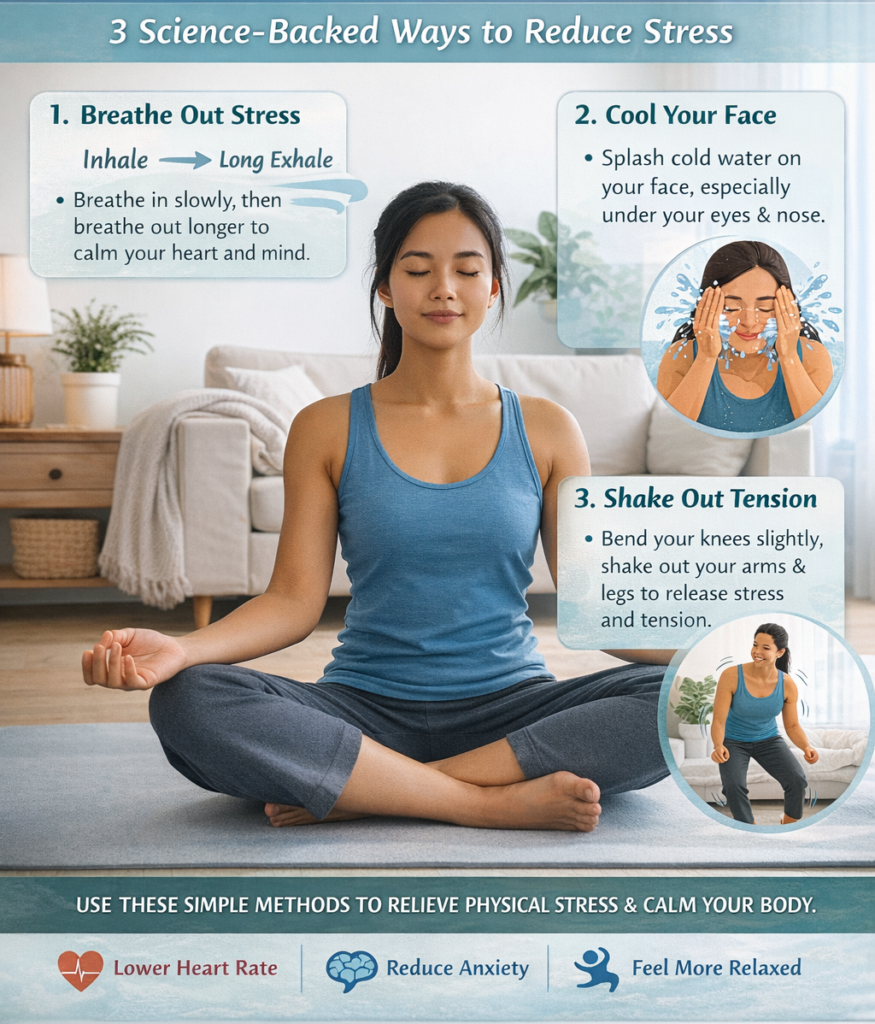
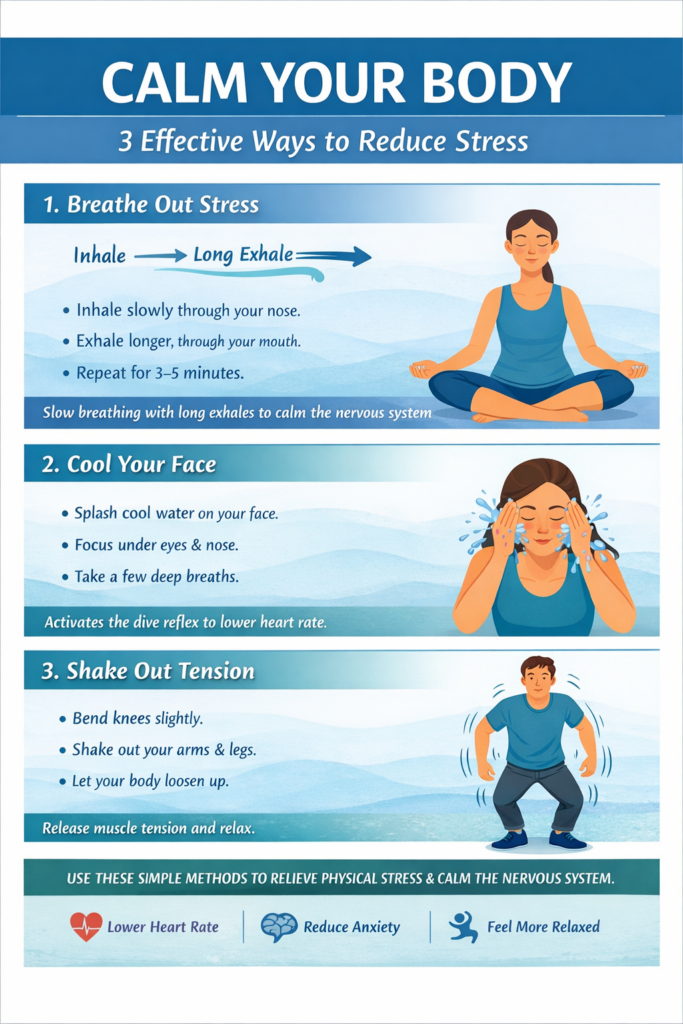
1. Slow, Conscious Breathing with Longer Exhales
When we’re stressed, our breathing often shifts: it becomes shallow, fast, and irregular. One of the most consistently supported tools for calming the nervous system is slow, intentional breathing — especially with a strong emphasis on the exhale.
A research trial tested a pattern known as cyclic sighing, which involves slow inhalations followed by longer exhalations. Participants who practised this daily for several weeks showed significant reductions in physiological arousal — such as lowered respiratory rate — and improved mood compared with a mindfulness meditation control group.
This kind of breathing stimulates the parasympathetic nervous system, the part of your autonomic nervous system associated with relaxation and recovery, and helps counteract the body’s stress responses.
How to try this:
• Sit or lie comfortably.
• Inhale slowly through your nose.
• Exhale gently but longer than the inhale.
• Repeat for a few minutes, noticing the relaxation that follows.
2. Splashing Cool Water on Your Face — Triggering the Dive Reflex
It might sound almost too simple, but there’s real science behind the classic “cool face splash” for calming yourself down. When cold water touches the face — especially around the eyes and bridge of the nose — it triggers what physiologists call the mammalian dive reflex.
This reflex slows the heart rate and shifts blood flow towards the vital organs, activating the same calming nervous system pathways as submersion in water. This is why swimmers and divers experience bradycardia (slowed heart rate) upon entering cold water.
In everyday life, a few splashes of cool water on the upper face can produce measurable reductions in heart rate and autonomic arousal, giving you a quick reset when stress rises.
How to try this:
• Splash cool (not icy) water on your face, especially under the eyes and over your nasal bridge.
• Take a few slow breaths as you do this.
• Notice how your body’s tension shifts toward calm.
3. Bending, Relaxing, and Shaking to Release Tension
Tension isn’t just in your thoughts — it builds physically in muscles and connective tissues. Approaches that promote physical release and relaxation have been shown to reduce physiological indicators of stress.
Classic techniques like progressive muscle relaxation — tensing and then releasing muscle groups — reliably lower heart rate and subjective stress. Somatic movement practices that include gentle shaking, tremoring or fluid limb movements work with your body’s own proprioceptors (sensors that tell your brain where your muscles are in space) to move out of rigid stress patterns.
The underlying principle of movement that releases muscle tension is grounded in research on autonomic regulation and somatic discharge.
How to try this:
• Stand or sit comfortably.
• Bend your knees slightly and let your body feel heavy.
• Gently shake out your arms and legs, as if releasing tension out of your limbs.
• Breathe slowly and observe how your body calms.
Why Move the Body to Calm the Brain?
All three approaches — breathwork, face cooling, and gentle movement — tap into different physiological pathways that regulate the balance between the sympathetic nervous system (responsible for “fight‑or‑flight”) and the parasympathetic system (responsible for “rest‑and‑digest”). When we activate calming pathways through intentional body‑based actions, we reduce the biological signs of chronic stress and give the nervous system a chance to reset and recover.
These strategies are not about escaping stress, but about shifting your body’s response to it — because stress lives in the body as much as in the mind.
For more assistance with learning ways to reduce stress, anxiety and panic Contact Us today.
References
Gooden, B. A. (1994). Cardiovascular adjustments during human diving. Undersea & Hyperbaric Medicine, 21(6), 641–658.
-Review summarizing evidence that cold facial stimulation activates the mammalian dive reflex, reducing heart rate and autonomic arousal.
Rosenbaum, D., & Cohen, H. (2010). Regulation of autonomic responses to stress through movement and respiration. Journal of Bodywork and Movement Therapies, 14(2), 147–154.
-Article reviewing evidence that gentle movement and neuromuscular relaxation practices decrease sympathetic arousal and increase parasympathetic activity.
Zaccaro, A., Piarulli, A., Laurino, M., Garbella, E., Menicucci, D., Neri, B., & Gemignani, A. (2018). How breath‑control can change your life: A systematic review on psychophysiological correlates of slow breathing. Frontiers in Human Neuroscience, 12, 353.
—Systematic review showing slow, exhale‑focused breathing techniques reduce physiological arousal and improve mood.
Prepared by Dr. Jennifer Barbera, PhD, Registered Psychologist
Dr. Jennifer Barbera PhD, C. Psych is a licensed psychologist with over 25 years of counselling experience. She has extensive clinical expertise supporting individuals and couples with anxiety, trauma, depression, addiction, and relationship challenges. Her work combines evidence-based approaches with practical strategies to help clients build resilience and improve well-being.