How to Fight Fair in a Relationship: Therapist Approved Ways to Handle Conflict
Learn how to fight fairly with your partner using healthy communication skills that reduce harm, strengthen trust, and help resolve conflict constructively.
Why Learning to Fight Fair Matters
Conflict is a normal part of every relationship. Even couples who deeply care about each other will disagree at times. What separates healthy relationships from unhealthy ones is not the absence of conflict, but how partners handle disagreements.
When conflict becomes personal, disrespectful, or emotionally overwhelming, it can damage trust and connection. However, when couples learn to fight fairly, disagreements can actually lead to deeper understanding and stronger relationships.
Healthy conflict is about expressing concerns clearly while protecting the dignity and emotional safety of both partners. The following strategies can help couples navigate disagreements in a respectful and constructive way.
Avoid Saying Hurtful Things in the Heat of the Moment
During arguments, emotions can rise quickly. In those moments, people sometimes say things they later regret. Words spoken in anger can leave lasting emotional wounds even if the conflict itself eventually resolves.
One of the most important principles of fair fighting is protecting the relationship even during disagreement. This means avoiding insults, sarcasm, character attacks, or comments intended to hurt the other person.
Before speaking, ask yourself whether what you are about to say will move the conversation toward resolution or simply escalate the conflict. When emotions are too intense, taking a short break can prevent damage that may take much longer to repair.
Use “I” Statements Instead of Blame
How we phrase our concerns significantly influences how our partner responds. Statements that begin with “you” often sound like accusations and can trigger defensiveness.
For example:
“You never listen to me.”
This kind of statement focuses on blame and may lead the other person to argue rather than listen.
Instead, try “I” statements, which communicate feelings without attacking the other person.
For example:
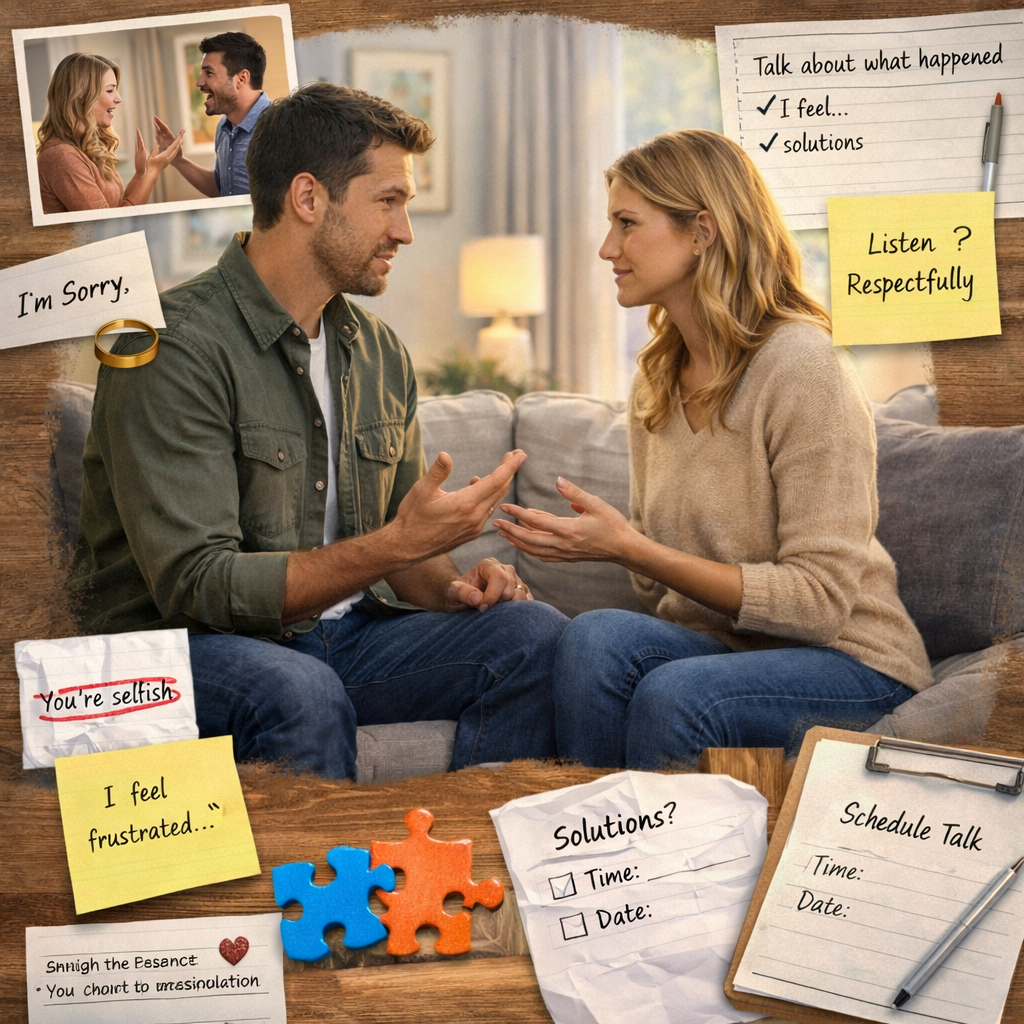
“I feel frustrated when I don’t feel heard during our conversations.”
“I” statements help keep the focus on your experience rather than assigning fault. This makes it easier for your partner to remain open and engaged.
Keep Your Tone Calm and Neutral
Communication is not only about the words we use but also about the tone in which we deliver them. Even valid concerns can sound hostile if expressed with anger or contempt.
A helpful guideline is to speak with the same emotional tone you might use when saying something neutral, such as “please pass the salt.” This does not mean suppressing your feelings; it simply means communicating them without escalating the emotional intensity.
Keeping your tone steady helps prevent the conversation from spiralling into a heated argument and makes it easier for both partners to remain thoughtful and respectful.
Listen Without Interrupting
Respectful communication requires both speaking and listening. When one partner interrupts, dismisses, or talks over the other, the conversation often becomes a competition rather than an attempt to understand.
Listening respectfully means allowing your partner to express their thoughts fully before responding. Even if you disagree with their perspective, acknowledging their feelings demonstrates care and respect.
You might say things such as:
“I hear that you felt ignored earlier.”
“It sounds like that situation was really frustrating for you.”
Acknowledging your partner’s feelings does not mean you agree with their interpretation—it simply shows that you value their experience.
Schedule Time to Talk After an Argument
When emotions run high during a disagreement, it can be difficult to resolve the issue immediately. After things have calmed down, it can be helpful to schedule a time to revisit the conversation.
During this discussion, take turns explaining why you felt upset or angry while the other person listens without interrupting. This structured approach allows both partners to feel heard and reduces the chance of the conversation becoming chaotic.
Taking turns encourages fairness and ensures that each person’s perspective is given equal attention.
Avoid Triggering or Hurtful Language
Every relationship develops its own sensitive areas over time. Certain words, phrases, or jokes may have caused pain in the past and can easily reignite conflict if repeated.
Healthy communication involves being mindful of these sensitivities and intentionally avoiding language that you know has been hurtful or triggering for your partner before.
Respect means not using known vulnerabilities as ammunition during an argument.
Stay Focused on the Current Issue
When disagreements occur, it can be tempting to bring up past arguments as evidence to support your position. However, resurrecting old conflicts often overwhelms the conversation and prevents progress.
Fair fighting involves staying focused on the issue at hand. Address the current concern rather than building a case based on past grievances.
Keeping the conversation grounded in the present allows couples to solve problems instead of reliving them.
Don’t Give Advice Unless It’s Requested
Sometimes when partners share frustrations, the other person immediately jumps into problem-solving mode. While the intention may be helpful, unsolicited advice can sometimes feel dismissive.
Before offering suggestions, consider asking:
“Would you like advice, or do you just want me to listen?”
This simple question communicates respect and allows your partner to decide what kind of support they need in that moment.
Apologize After Conflict
Repairing the relationship after a disagreement is essential. One of the most powerful ways to rebuild connection is through a sincere apology.
Apologizing requires humility and emotional courage. When you recognize that something you said or did was hurtful, acknowledge it clearly and directly.
A helpful guideline is to keep apologies simple and sincere. Avoid long explanations or justifications that may sound defensive.
For example:
“What I did was not OK, and I’m sorry.”
Simple, direct apologies demonstrate accountability and often make it easier for both partners to move forward.
Work Together on Solutions
Once both partners feel heard, the next step is to focus on solutions. Instead of debating who is right, shift the conversation toward improving the situation together.
Couples can brainstorm possible strategies for addressing the issue and agree on something to try. It can be helpful to commit to trying the new approach for a specific period, such as one week or ten days, before revisiting the conversation.
This collaborative approach turns conflict into an opportunity for growth rather than a cycle of repeated arguments.
Seek Support Before Problems Escalate
Sometimes couples find it difficult to implement healthy communication strategies on their own. If arguments frequently escalate or remain unresolved, seeking professional support can make a significant difference.
Couples therapy provides a structured and supportive environment where partners can learn communication tools, identify patterns that fuel conflict, and strengthen their emotional connection.
If you and your partner are finding it difficult to resolve conflicts respectfully or communicate effectively, we invite you to contact us today to learn how couples therapy can help you build healthier communication and protect the strength of your relationship.
References:
Ku, G., et al. (2025). Strengthening relationships: The role of quality time and perceived perspective-taking in resolving conflicts among married couples. Contemporary Family Therapy.
Weber, D. M., Lavner, J. A., & Beach, S. R. H. (2023). Couples’ communication quality differs by topic. Journal of Family Psychology, 37(6), 909–919.
Prepared by Dr. Jennifer Barbera, PhD, Registered Psychologist
Dr. Jennifer Barbera PhD, C. Psych is a licensed psychologist with over 25 years of counselling experience. She has extensive clinical expertise supporting individuals and couples with anxiety, trauma, depression, addiction, and relationship challenges. Her work combines evidence-based approaches with practical strategies to help clients build resilience and improve well-being.