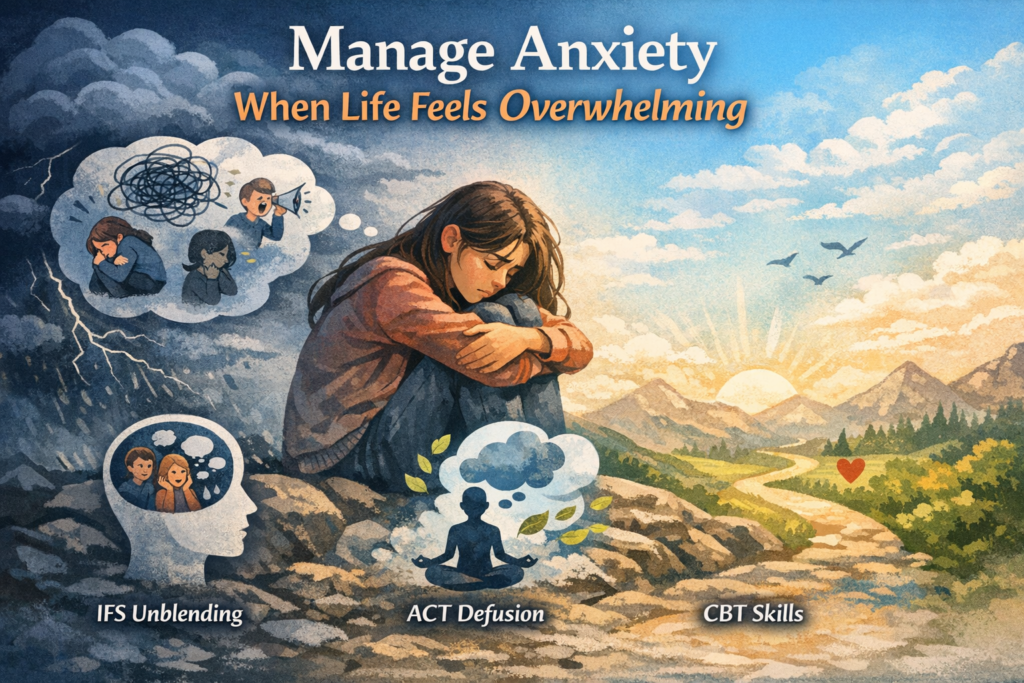
How to Manage Anxiety When Life Feels Overwhelming
Discover IFS, ACT, and CBT strategies to manage anxiety, unhook from stress, and regain emotional balance when life feels overwhelming.
Understanding Anxiety in Overwhelming Times
Life can feel chaotic, leaving you tense, distracted, and anxious. Anxiety is a normal response to stress or uncertainty, but when it persists, it can interfere with work, relationships, and overall wellbeing.
Persistent anxiety often creates a cycle: worries about the future increase tension, which in turn fuels more anxious thoughts. Learning to recognise and manage these patterns is key to regaining control.
Anxiety isn’t a sign of weakness—it’s often your brain’s way of signalling perceived danger or unresolved concerns. By approaching anxiety with curiosity and structured strategies, you can reduce its intensity, prevent it from taking over, and restore your sense of calm.
Internal Family Systems (IFS) and Unblending
Internal Family Systems (IFS) is a therapeutic model that sees our mind as made up of different “parts” or subpersonalities. These parts may include:
• Exiles: Vulnerable, anxious, or hurt parts often carrying fear, shame, or sadness.
• Managers: Protective parts that try to prevent distress or failure.
• Firefighters: Parts that react impulsively when anxiety or pain arises, e.g., distraction, avoidance, or irritability.
When anxiety feels overwhelming, it often means one part has “blended” with your core self—you feel like your anxiety is you, rather than a part of you. Unblending is the process of noticing that the anxious or self-critical part exists without letting it dominate your thoughts or behaviours.
Practical steps for unblending include:
1. Name the part: For example, “Ah, this is my anxious part noticing danger.”
2. Step back: Visualise observing the part rather than being controlled by it.
3. Offer curiosity and compassion: Ask, “What is this part trying to protect me from?”
By unblending, you create space to respond thoughtfully, rather than react automatically to anxiety. Over time, this builds a stronger sense of self and reduces the intensity of overwhelming feelings.
ACT-Based Defusion and Unhooking Skills
Acceptance and Commitment Therapy (ACT) complements IFS by teaching you to create distance from thoughts and feelings, a process called cognitive defusion. Many anxious thoughts are exaggerations, assumptions, or mental “stories.” When you treat these thoughts as facts, anxiety intensifies.
Defusion and unhooking techniques include:
• Label your thoughts: Instead of thinking “I’m failing,” try “I notice I’m having the thought that I’m failing.”
• Use metaphors or imagery: Imagine your thoughts as leaves floating down a stream or clouds passing by.
• Say thoughts in a silly voice or repeat them: This reduces their emotional power and helps you recognise them as mental events.
• Focus on values-based action: Even when anxious, choose actions aligned with your personal values, such as connecting with a friend, exercising, or completing a meaningful task.
The goal isn’t to eliminate anxiety but to prevent it from controlling your behaviour. ACT teaches that you can act meaningfully despite discomfort, which often reduces anxiety naturally.
CBT Techniques for Balanced Thinking
Cognitive Behavioural Therapy (CBT) equips you to examine and challenge distorted thinking patterns. Common cognitive distortions in anxiety include:
• Catastrophising: Assuming the worst-case scenario will happen.
• Overgeneralisation: Taking one negative event and applying it broadly (“I failed this task; I always fail”).
• Mind reading: Assuming you know what others think without evidence.
CBT strategies include:
• Cognitive restructuring: Write down anxious thoughts and evaluate evidence for and against them. Replace distortions with more balanced, realistic perspectives.
• Behavioural experiments: Test anxious predictions by taking small steps and observing outcomes. For instance, if you fear social embarrassment, try speaking up in a low-stakes setting to see if your prediction holds.
• Exposure and response prevention: Gradually face feared situations instead of avoiding them, building confidence and reducing avoidance behaviours.
Combining CBT with IFS and ACT allows you to both understand the origin of anxiety (IFS) and respond to it effectively (ACT and CBT).
A Balanced Set of Practical Daily Strategies for Managing Anxiety
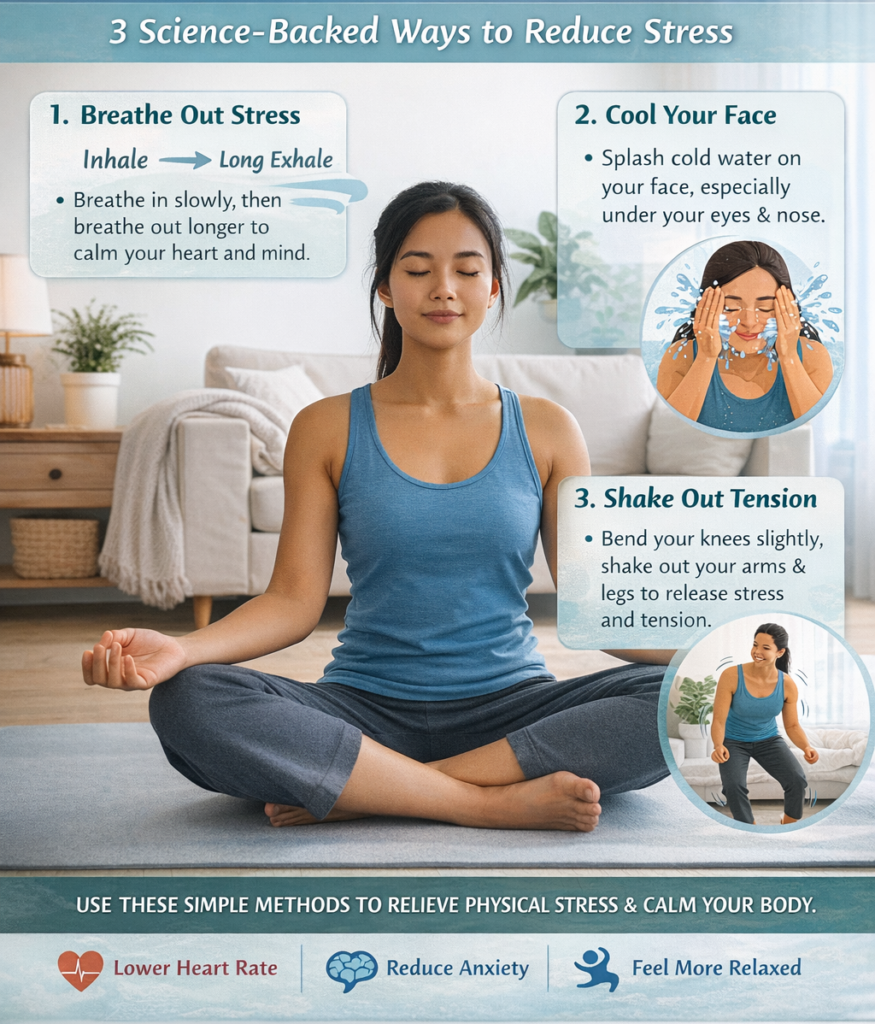
1. Mindful Breathing: Spend 3–5 minutes focusing on your breath. Techniques like box breathing (inhale 4, hold 4, exhale 4, hold 4) calm the nervous system and reduce immediate anxiety.
2. Identify and Observe Parts: Notice anxious, self-critical, or protective parts. Label and unblend from them with curiosity, asking what each part is trying to protect.
3. Defusion Exercises: When anxious thoughts appear, practise saying, “I notice I’m having the thought that…” or visualise them as clouds drifting past.
4. Value-Aligned Actions: Take small steps toward what matters most. Even tiny actions—sending a message, exercising, or completing a minor task—help you feel in control and resilient.
5. Structured Journaling: Write down anxious thoughts, identify the part speaking, and reflect: is this thought a fact, story, or distortion?
6. Scheduled Breaks: Short breaks with movement, stretching, or time in nature can reset your emotional state when overwhelmed.
7. Physical Self-Care: Adequate sleep, hydration, and nutrition support emotional regulation. Anxiety often feels worse when physical needs are unmet.
Realistic Expectations and Compassion
Managing anxiety isn’t about achieving perfection or eliminating uncomfortable feelings. Instead, it’s about building skills to respond flexibly, observe internal experiences without over-identifying, and act according to what truly matters. Progress may be gradual, but each step—no matter how small—reinforces resilience.
When to Seek Professional Support
Persistent anxiety affecting sleep, work, or relationships may benefit from professional guidance. Therapists trained in IFS, ACT, and CBT can help you:
• Unblend from anxious or self-critical parts.
• Use defusion techniques to unhook from distressing thoughts.
• Challenge cognitive distortions and develop practical coping strategies.
• Integrate skills into daily life to restore balance and confidence.
We know how overwhelming anxiety can feel, and we invite you to contact us today to explore strategies that help you regain calm, clarity, and emotional balance.
Conclusion
Life can be overwhelming, and anxiety is often an understandable response. By combining IFS unblending, ACT defusion, and CBT restructuring, you can observe your thoughts, manage anxious parts, and take meaningful actions aligned with your values. With consistent practice and compassion, anxiety can become manageable rather than controlling, allowing you to live more fully and intentionally each day.
Learn more about preventing burnout and developing resiliency for handling stress:
Signs of High Functioning Burnout (when you’re coping but not ok)
Battling Burnout: Strategies to Overcome Burnout and Thrive
Burnout Help in Ontario: A Step by Step Guide
Preventing Burnout: Long Term Strategies for Sustainable Energy and Well-being
How to Reduce Burnout by Addressing Perfectionism
From Burnout to Balance: Practical Daily Habits for High Achievers
References
Arch, J. J., Wolitzky‑Taylor, K. B., Eifert, G. H., & Craske, M. G. (2012). Longitudinal treatment mediation of traditional cognitive behavioral therapy and acceptance and commitment therapy for anxiety disorders. Behaviour Research and Therapy, 50(7–8), 469–478. https://doi.org/10.1016/j.brat.2012.04.007
Assaz, D. A., Tyndall, I., Oshiro, C. K. B., & Roche, B. (2023). A process‑based analysis of cognitive defusion in acceptance and commitment therapy. Behaviour Therapy, 54(6), 1020–1035. https://doi.org/10.1016/j.beth.2022.06.003
Buys, M. E. (2025). Exploring the evidence for Internal Family Systems therapy: a scoping review of current research, gaps, and future directions. Clinical Psychologist. https://doi.org/10.1080/13284207.2025.2533127
Prepared by Dr. Jennifer Barbera, PhD, Registered Psychologist
Dr. Jennifer Barbera PhD, C. Psych is a licensed psychologist with over 25 years of counselling experience. She has extensive clinical expertise supporting individuals and couples with anxiety, trauma, depression, addiction, and relationship challenges. Her work combines evidence-based approaches with practical strategies to help clients build resilience and improve well-being.