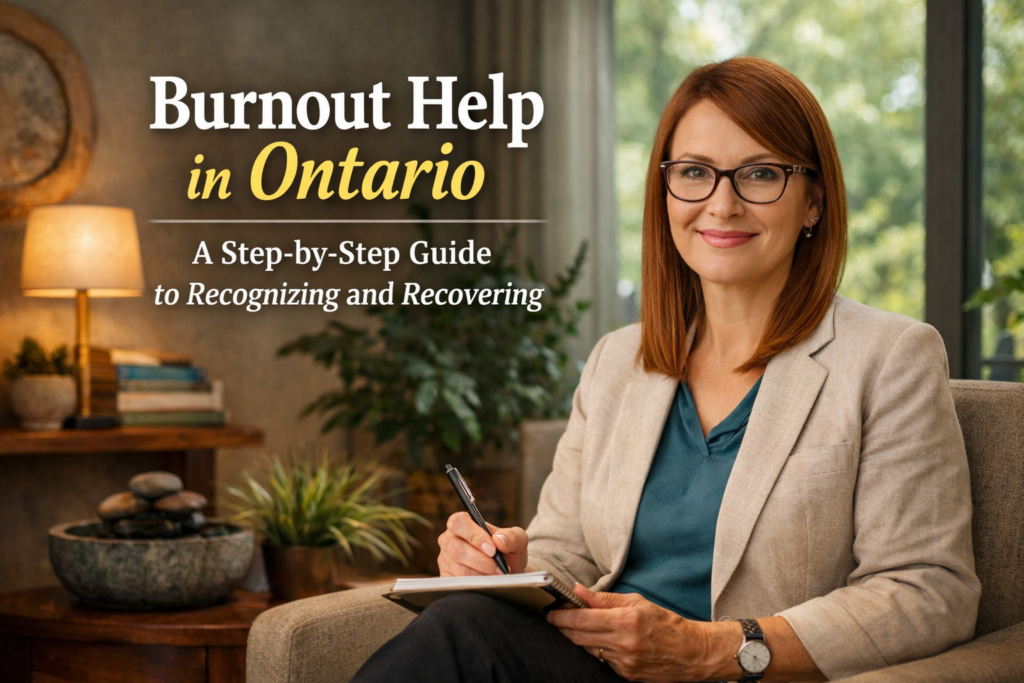
Burnout Help in Ontario: A Step-by-Step Guide for Recovery
Burnout is more than temporary fatigue—it’s a chronic state of emotional, physical, and mental exhaustion that can affect your work, relationships, and overall well-being. In Ontario, professionals, caregivers, and parents often experience burnout quietly, balancing high demands with little time for recovery.
Recognizing the signs early and taking practical steps to recover can prevent more serious consequences and help restore balance in life. This guide provides a step-by-step approach to understanding burnout and actionable strategies for recovery, grounded in research and tailored to people living in Ontario.
Recognizing the Signs
Burnout often shows up as persistent fatigue, irritability, cynicism, and a sense of reduced accomplishment. Physical symptoms can include headaches, digestive issues, sleep disturbances, and muscle tension.
Emotional signs may include detachment from work or loved ones, increased frustration, and feelings of guilt or failure.
Behavioural signs might involve procrastination, social withdrawal, or overworking as a coping mechanism (Maslach & Leiter, 2016; Schaufeli & Taris, 2014).
Emma, a 38-year-old teacher, noticed that even after weekends off, she felt drained and irritable. She avoided staff meetings and procrastinated on grading assignments. Despite working long hours, she felt she wasn’t accomplishing much. Emma started journaling her daily energy and mood levels and realized these symptoms were more than typical stress—they indicated burnout. This early recognition allowed her to seek support before the situation worsened.
Using structured self-assessment tools like the Maslach Burnout Inventory can help clarify the level of burnout and guide next steps. The MBI assesses three key dimensions of burnout: emotional exhaustion, depersonalization (cynicism), and reduced personal accomplishment. The MBI asks respondents to rate the extent to which different statements such as “I feel emotionally drained from my work” feels true.
Early recognition is crucial because burnout, if left unaddressed, can lead to more severe mental health issues, including depression and anxiety.
Understanding Your Triggers
Burnout doesn’t appear out of nowhere—it’s often the result of prolonged exposure to stress. Common triggers include high workloads, long hours, caregiving responsibilities, lack of control over tasks, and social isolation. Reflecting on stressors through journaling, keeping a stress diary, or noting energy dips throughout the day can reveal patterns that contribute to burnout (Salvagioni et al., 2017).
For example, Emma realized that her workload spikes at the end of each grading period, and she often skipped lunch breaks to keep up. Recognizing this pattern helped her plan rest periods and work on dynamics within herself that contribute to perfectionism and needing to “get everything off the list”. Awareness of triggers is the first step toward implementing meaningful changes to reduce stress and regain balance.
If this resonates, you may also want to explore the subtle signs of high-functioning burnout that can quietly build beneath patterns like the
Recovery: 10 Practical Steps
Recovery from burnout requires a structured approach. Research shows that combining cognitive-behavioural therapy (CBT), acceptance and commitment therapy (ACT), and mindfulness-based strategies can significantly reduce burnout symptoms (Awa, Plaumann, & Walter, 2010; Richardson & Rothstein, 2008).
Here are ten practical steps you can implement:
1. Identify and Challenge Negative Thoughts – Notice self-critical or hopeless thoughts and use CBT techniques to reframe them into balanced, realistic perspectives. For instance, replace “I’ll never catch up” with “I’m managing as best as I can; small steps matter.”
2. Accept Difficult Emotions – Use ACT principles to acknowledge feelings of frustration, guilt, or exhaustion without judgment. Acceptance allows you to act effectively even when emotions are intense.
3. Set Realistic Goals – Break tasks into small, achievable steps. Avoid overcommitting and prioritize the most essential tasks first.
4. Schedule Self-Care – Ensure you get adequate sleep, nutrition, and physical activity. Even 10–15 minutes of movement or mindful breathing during the day can reduce stress.
5. Develop Mindfulness Practices – Short daily mindfulness exercises help reduce rumination, increase present-moment awareness, and improve emotional regulation. Apps like Headspace or Calm can guide beginners.
6. Create Work-Life Boundaries – Set clear limits on work hours, emails, and responsibilities. Communicate these boundaries to colleagues, supervisors, and family members.
7. Engage in Values-Based Action – ACT emphasizes aligning your daily actions with personal values. Identify what matters most—whether family, learning, or creativity—and schedule activities that reflect these values.
8. Seek Social Support – Connect with friends, family, colleagues, or peer groups. Talking openly about challenges reduces isolation and provides practical advice. Local Ontario support groups (e.g., check on meetup.com) or workplace wellness programs, sometimes offer community resources.
9. Use Relaxation Techniques – Practices like deep breathing, progressive muscle relaxation, or guided imagery help reduce physical tension and improve mood. Even brief exercises between tasks can be beneficial.
10. Monitor Progress and Adjust – Regularly review your recovery plan. Track energy levels, mood, and accomplishments. Adjust strategies as needed and celebrate small successes to reinforce motivation.
By following these steps, individuals can begin to recover from burnout while building resilience to prevent recurrence. Emma implemented many of these strategies, including mindfulness exercises before work, scheduled breaks, and regular reflection, which gradually improved her energy, focus, and sense of control.
Taking Action
If you are experiencing burnout in Hamilton or anywhere in Ontario, taking action now is an important step for improving the quality of your work and personal life. Professional support can guide you through structured recovery plans tailored to your needs.
Schedule a confidential consultation—virtual or in-person—to identify stressors and implement evidence-based strategies for lasting recovery. Don’t wait until exhaustion affects your health or relationships. Book an online session, or reach out to us on our contact page to schedule in-person apt.
Frequently Asked Questions
Q1: How do I know if I have burnout or just stress?
Burnout involves chronic exhaustion, detachment, and reduced performance, while stress is typically temporary and does not usually affect your sense of accomplishment. A psychological assessment or consultation can help you determine what you are experiencing.
Q2: How long does recovery take?
Recovery varies, but structured interventions—including therapy, self-care, and lifestyle adjustments—often show measurable improvement within 6–12 weeks.
Q3: Can burnout return after recovery?
Yes. Without ongoing self-care, boundary-setting, and monitoring, burnout symptoms can reappear. Regular check-ins are recommended.
Q4: Is virtual therapy effective for burnout?
Yes. Studies show that virtual interventions are as effective as in-person therapy for reducing depression and burnout symptoms.
References
Awa, W. L., Plaumann, M., & Walter, U. (2010). Burnout prevention: A review of intervention programs. Patient Educ Couns, 78(2), 184–190.
Maslach, C., & Leiter, M. P. (2016). Understanding the burnout experience: Recent research and its implications for psychiatry. World Psychiatry, 15(2), 103–111.
Richardson, K. M., & Rothstein, H. R. (2008). Effects of occupational stress management intervention programs: A meta-analysis. J Occup Health Psychol, 13(1), 69–93.
Salvagioni, D. A. J., Melanda, F. N., Mesas, A. E., González, A. D., Gabani, F. L., & Andrade, S. M. de. (2017). Physical, psychological and occupational consequences of job burnout: A systematic review of prospective studies. PLoS ONE, 12(10), e0185781.
Schaufeli, W. B., Leiter, M. P., & Maslach, C. (2009). Burnout: 35 years of research and practice. Career Development International, 14(3), 204–220.
Schaufeli, W. B., & Taris, T. W. (2014). A meta-analysis of job burnout research: Major findings and future directions. J Organ Behav, 35(S1), S111–S135.
Schiller CE, Prim J, Bauer AE, Lux L, Lundegard LC, Kang M, Hellberg S, Thompson K, Webber T, Teklezghi A, Pettee N, Gaffney K, Hodgins G, Rahman F, Steinsiek JN, Modi A, Gaynes BN. Efficacy of Virtual Care for Depressive Disorders: Systematic Review and Meta-analysis. JMIR Ment Health. 2023 Jan 9;10:e38955. doi: 10.2196/38955. PMID: 36622747; PMCID: PMC9871881.
West, C. P., Dyrbye, L. N., Erwin, P. J., & Shanafelt, T. D. (2016). Interventions to prevent and reduce physician burnout: A systematic review and meta-analysis. Lancet, 388(10057), 2272–2281.
Prepared by Dr. Jennifer Barbera, PhD, Registered Psychologist
Dr. Jennifer Barbera PhD, C. Psych is a licensed psychologist with over 25 years of counselling experience. She has extensive clinical expertise supporting individuals and couples with anxiety, trauma, depression, addiction, and relationship challenges. Her work combines evidence-based approaches with practical strategies to help clients build resilience and improve well-being.