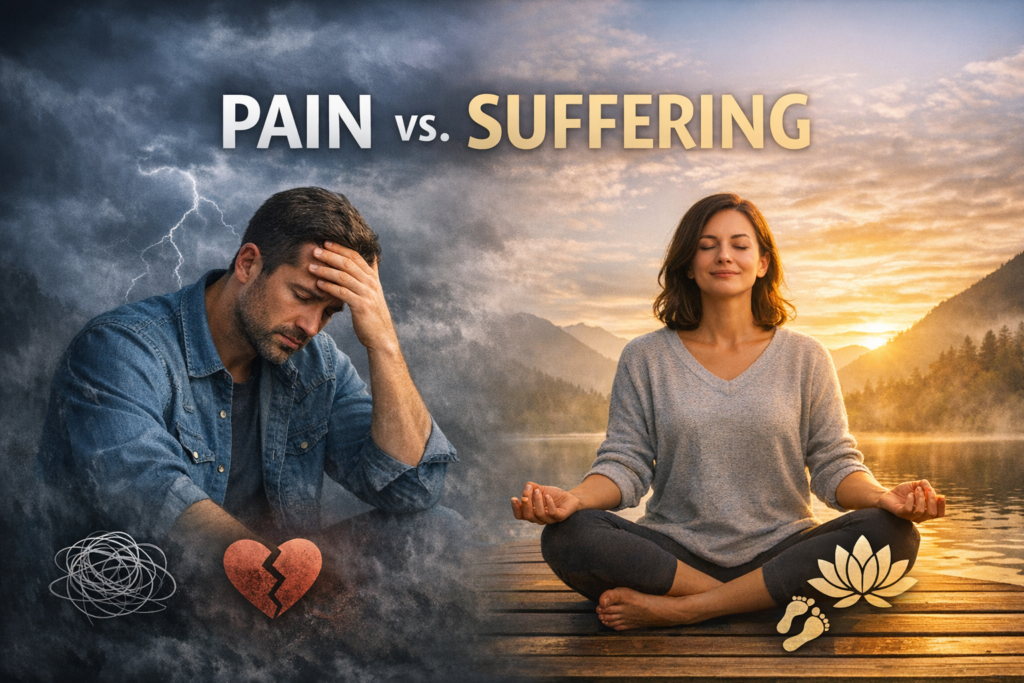
How to tell the difference between pain and suffering
Pain vs. Suffering: The Key Psychological Difference: Learn the psychological difference between pain and suffering and how Acceptance and Commitment Therapy (ACT) can help reduce suffering and build a more meaningful life.
Pain vs. Suffering: Understanding the Psychological Difference
Most people use the words pain and suffering interchangeably. In everyday conversation they often mean the same thing. From a psychological perspective, however, they refer to two very different experiences.
Understanding the difference between pain and suffering can be profoundly empowering. While pain is an unavoidable part of being human, suffering is something we can learn to reduce. Approaches such as Acceptance and Commitment Therapy (ACT) offer practical ways to change our relationship with painful experiences so they no longer dominate our lives.
In this article, we explore the psychological difference between pain and suffering, the factors that tend to intensify suffering, and how an ACT-based approach can help people move toward a richer and more meaningful life.
What Is Pain?
Pain refers to the raw experience of discomfort or distress. It may be physical, emotional, or psychological.
Examples include:
• Grief after the loss of someone important
• Anxiety before an important event
• Rejection in a relationship
• Physical injury or illness
• Disappointment when plans fall apart
Pain is a natural and unavoidable part of life. Our nervous system is designed to register threat, loss, and discomfort because these signals help us adapt, learn, and survive.
From a psychological standpoint, pain is not a sign that something is wrong with you—it is evidence that you are human.
What Is Suffering?
Suffering is what happens when we struggle against pain in ways that amplify it.
While pain is the initial experience, suffering is often created by the stories, judgments, resistance, and avoidance that follow.
For example:
Pain:
“I feel anxious about giving this presentation.”
Suffering:
“I shouldn’t feel this anxious. Something is wrong with me. If I feel this way I’m going to fail.”
Pain:
“My relationship ended.”
Suffering:
“I will always be alone. My life is ruined.”
In other words:
Pain is the event.
Suffering is the struggle with the event.
Acceptance and Commitment Therapy often summarizes this idea simply:
Pain is inevitable. Suffering is optional—not because pain disappears, but because our relationship with it can change.
Psychological Factors That Increase Suffering
Research in behavioural psychology and ACT highlights several common processes that intensify suffering.
Experiential Avoidance
One of the biggest drivers of suffering is experiential avoidance—the attempt to suppress, control, or escape unwanted thoughts and emotions.
Common forms include:
• Avoiding situations that trigger anxiety
• Suppressing painful memories
• Distracting constantly from uncomfortable emotions
• Using substances, overworking, or compulsive behaviours to numb feelings
While avoidance may provide short-term relief, it often strengthens the fear of the emotion itself, making suffering worse over time.
Cognitive Fusion
Cognitive fusion occurs when we become entangled with our thoughts, treating them as literal truths rather than mental events.
Examples include believing:
• “If I feel anxious, something terrible will happen.”
• “Because I failed once, I am a failure.”
• “If someone rejected me, I must be unlovable.”
When thoughts are fused with identity and reality, they can dramatically increase suffering.
Rumination and Worry
Repeatedly replaying painful experiences or worrying about future threats keeps the nervous system in a chronic state of distress.
Rumination often includes:
• “Why did this happen to me?”
• “What if things never get better?”
• “What if I make another mistake?”
The mind attempts to solve emotional pain through analysis, but this often traps people in cycles of suffering.
Self-Judgment and Shame
Many people add a second layer of pain by judging themselves for having painful emotions.
Examples include:
• “I shouldn’t feel this way.”
• “Other people handle this better than I do.”
• “Something is wrong with me.”
Self-criticism intensifies emotional distress and blocks self-compassion, which is one of the most powerful buffers against suffering.
Disconnection from Values
When pain causes people to withdraw from meaningful activities, life can become smaller and emptier.
Over time this can create:
• Loss of purpose
• Reduced motivation
• Social isolation
• Depression
The absence of valued living can make suffering feel endless.
How ACT Helps Reduce Suffering
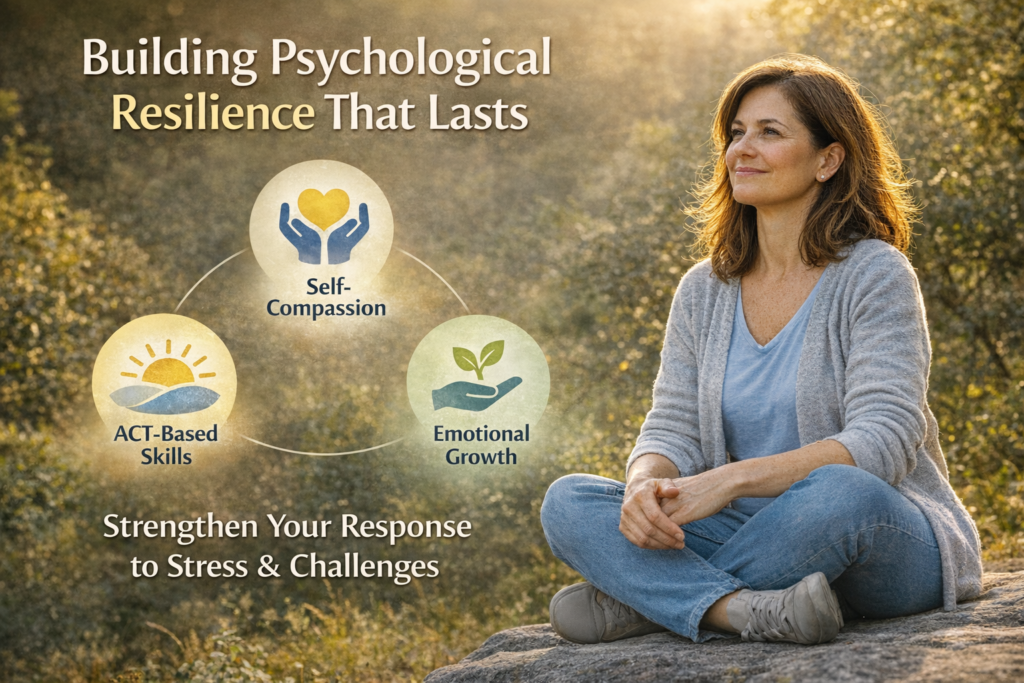
Acceptance and Commitment Therapy (ACT) focuses not on eliminating pain, but on changing how we respond to it.
Instead of fighting internal experiences, ACT helps people develop psychological flexibility—the ability to stay present, open, and engaged with life even when difficult emotions arise.
Several ACT processes are particularly effective in reducing suffering.
Acceptance
Acceptance does not mean liking or approving of painful experiences. Instead, it means making space for them without unnecessary struggle.
When people stop fighting their internal experiences, the energy previously spent on resistance becomes available for living.
Acceptance often sounds like:
• “This feeling is here right now.”
• “I can make room for this discomfort.”
• “I can carry this emotion and still move forward.”
Paradoxically, pain often becomes more manageable when we stop trying to eliminate it.
Cognitive Defusion
ACT teaches skills that help people step back from their thoughts rather than being dominated by them.
Examples include:
• Noticing thoughts as passing mental events
• Saying “I’m having the thought that…”
• Observing thoughts with curiosity rather than judgment
This creates psychological space between the person and their thinking.
When thoughts are seen as thoughts—not facts—their power to generate suffering decreases dramatically.
Mindful Awareness
Mindfulness helps people anchor attention in the present moment rather than becoming trapped in regret about the past or fear about the future.
Mindful awareness involves:
• Observing sensations, thoughts, and emotions
• Noticing experiences without immediate reaction
• Returning attention gently when the mind wanders
This practice reduces rumination and increases emotional resilience.
Values Clarification
ACT places strong emphasis on values—the qualities of life that matter most.
Examples include:
• Connection
• Compassion
• Growth
• Integrity
• Creativity
• Family
Values provide direction even when pain is present. Instead of asking, “How do I get rid of this feeling?” people begin asking, “What kind of life do I want to move toward?”
Committed Action
The final step is taking meaningful action aligned with values, even when discomfort shows up along the way.
This might include:
• Reaching out to others despite social anxiety
• Pursuing goals despite fear of failure
• Engaging in meaningful activities during periods of sadness
Life becomes guided by values rather than by attempts to avoid pain.
A Different Relationship With Pain
The goal of psychological growth is not a life without pain. That is neither realistic nor necessary.
Instead, the goal is a life that remains rich, meaningful, and connected even when pain appears.
When people learn to accept internal experiences, step back from unhelpful thoughts, and move toward what truly matters, suffering often loosens its grip.
Pain may still visit—but it no longer defines the entire story.
When Support Can Help
Changing one’s relationship with painful thoughts and emotions can be challenging to do alone. Working with a trained therapist can provide structure, guidance, and practical tools grounded in evidence-based approaches such as ACT.
If you are finding that anxiety, self-criticism, rumination, or emotional pain are interfering with the life you want to live, we invite you to contact us today to explore how therapy can help you develop the skills needed to reduce suffering and reconnect with what matters most.
References:
Kashdan TB, Rottenberg J. Psychological flexibility as a fundamental aspect of health. Clin Psychol Rev. 2010 Nov;30(7):865-78.
Prepared by Dr. Jennifer Barbera, PhD, Registered Psychologist
Dr. Jennifer Barbera PhD, C. Psych is a licensed psychologist with over 25 years of counselling experience. She has extensive clinical expertise supporting individuals and couples with anxiety, trauma, depression, addiction, and relationship challenges. Her work combines evidence-based approaches with practical strategies to help clients build resilience and improve well-being.