Why You Always Put Others First: Differences Between Subjugation & Self-Sacrifice
Learn the difference between subjugation and self-sacrifice schemas, the unmet childhood needs beneath them, and how therapy addresses guilt, people-pleasing, and assertiveness.
Subjugation vs Self-Sacrifice: Understanding the Difference
Many people who struggle with boundaries describe the same pattern: “I always put others first.” But underneath that pattern, the psychology can be very different.
Two common early maladaptive schemas in schema therapy — subjugation and self-sacrifice — both involve neglecting your own needs. Yet they are driven by different emotional forces, rooted in different unmet needs, and require different treatment approaches.
Understanding the distinction is not just theoretical. It changes how we intervene, what we validate, and where we focus therapeutic work.
What Is the Subjugation Schema?
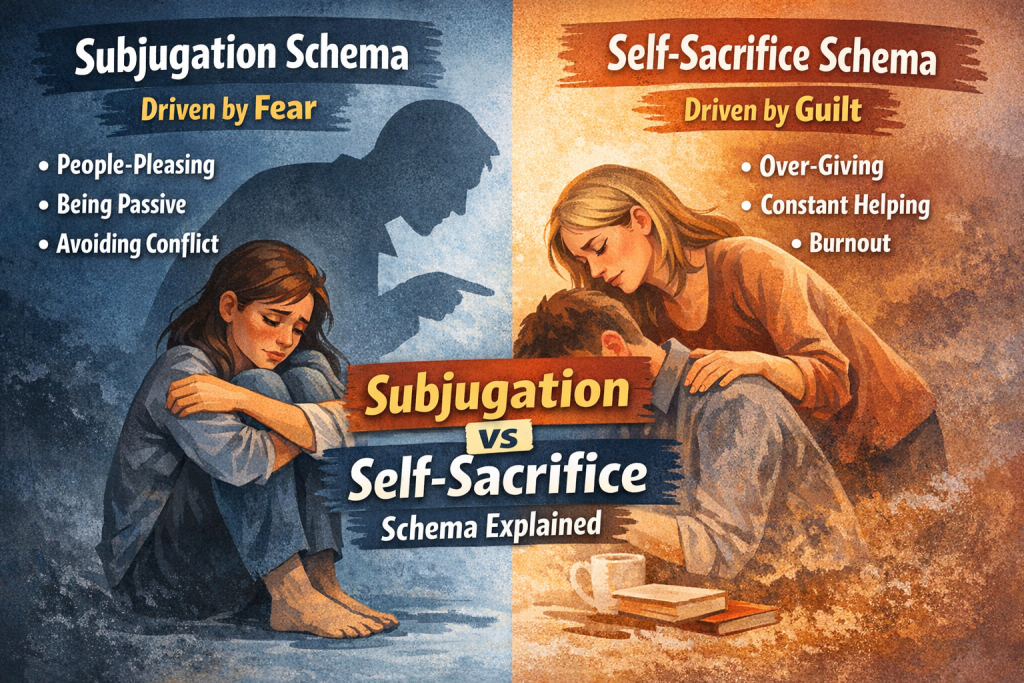
Subjugation is the belief that your needs, feelings, and preferences must be suppressed in order to avoid negative consequences.
At its core, the message is:
“If I assert myself, something bad will happen.”
This schema typically develops in environments where:
• Caregivers were controlling, authoritarian, or emotionally volatile
• Expressing disagreement led to punishment or withdrawal
• Anger from others felt overwhelming or unsafe
• The child learned that compliance was necessary for survival
The Unmet Needs Beneath Subjugation
Subjugation is usually rooted in unmet needs for:
• Secure attachment
• Emotional safety
• Autonomy and self-expression
• Protection from anger or retaliation
The child adapts by suppressing their own will in order to maintain connection and reduce threat.
What Subjugation Looks Like in Adult “Parts”
From a parts-based lens, subjugation often shows up as:
• A passive, compliant part
• A conflict-avoidant people-pleaser
• A fearful part that anticipates anger or rejection
• A hidden resentful part that rarely gets expressed
People may:
• Agree automatically
• Avoid stating preferences
• Feel anxious before difficult conversations
• Experience chronic tension or bottled-up anger
The emotional driver here is fear, not guilt. The nervous system often remains on alert, scanning for signs of disapproval.
What Is the Self-Sacrifice Schema?
Self-sacrifice is the belief that other people’s needs are more important than your own.
The core message becomes:
“If I don’t take care of everyone else, I am selfish or bad.”
This schema often develops when:
• A child was parentified or emotionally relied upon
• A caregiver was fragile, ill, or overwhelmed
• Love was earned through helpfulness or maturity
• The child learned to monitor and soothe others constantly
The Unmet Needs Beneath Self-Sacrifice
Self-sacrifice is typically rooted in unmet needs for:
• Care and nurturance
• Being allowed to be dependent
• Emotional attunement
• Freedom from excessive responsibility
The child adapts by becoming the helper — sometimes long before they were developmentally ready.
What Self-Sacrifice Looks Like in Adult “Parts”
In adulthood, this schema often appears as:
• A compulsive caretaker part
• An over-functioning rescuer
• A hyper-responsible, guilt-driven part
• A depleted or burned-out inner child
People may:
• Struggle to say no
• Feel guilty resting
• Take responsibility for others’ emotions
• Experience exhaustion and resentment
The emotional driver here is guilt, not fear. The distress comes from feeling morally wrong or selfish when prioritizing oneself.
The Core Difference: Fear vs Guilt
While both schemas involve putting others first, the psychological engine underneath is different.
Subjugation is driven by fear of consequences.
Self-sacrifice is driven by guilt about not helping.
A helpful clinical question is:
If you said no, what feels worse — that they might be upset with you, or that you would feel like a bad person?
The answer often clarifies the dominant schema.
Implications for Treatment
This distinction significantly shapes therapeutic work and is part of why more advanced skilled help is important- to make sure your therapy focuses on addressed the actual underlying dynamics contributing to low assertivness or people pleasing.
Treating Subjugation
When subjugation is primary, therapy often focuses on:
• Assertiveness training
• Gradual exposure to conflict
• Accessing and validating anger
• Strengthening autonomy
• Reworking beliefs about retaliation and rejection
Clients benefit from practising small acts of self-expression and learning that disagreement does not equal abandonment. Nervous system regulation is often important here, especially if anger historically felt dangerous.
Treating Self-Sacrifice
When self-sacrifice is dominant, therapy often emphasizes:
• Guilt tolerance
• Redefining responsibility
• Self-compassion practices
• Rebalancing caregiving patterns
• Challenging beliefs about selfishness
Assertiveness alone is rarely enough. Without addressing guilt, the person may set boundaries temporarily but feel overwhelming emotional discomfort afterwards.
Treatment helps individuals separate their worth from their usefulness.
Why This Matters
If we misidentify the schema, we risk targeting the wrong mechanism.
Encouraging self-care without addressing fear can feel unsafe for someone with subjugation. Teaching assertiveness without addressing guilt can feel morally wrong for someone with self-sacrifice.
Effective therapy honours the protective function of these patterns. These were once intelligent survival strategies. They deserve understanding before they are changed.
Over time, clients can develop a healthier adult part that:
• Values mutuality over compliance
• Balances care for others with care for self
• Expresses needs directly and respectfully
• Tolerates both guilt and disagreement
Final Thoughts
Subjugation and self-sacrifice may look similar on the surface, but they arise from different unmet needs and are fuelled by different emotions.
One says: “Stay small so you stay safe.”
The other says: “Give more so you stay good.”
Therapy helps you outgrow both — not by becoming selfish or confrontational — but by becoming balanced, grounded, and able to hold your own needs alongside others’. If you are interested in learning more about how to work on this within yourself, contact us.
References:
Baroncelli CMC, Lodder P, van der Lee M, Bachrach N. The role of enmeshment and undeveloped self, subjugation and self-sacrifice in childhood trauma and attachment related problems: The relationship with self-concept clarity. Acta Psychol (Amst). 2025 Apr;254:104839.
Prepared by Dr. Jennifer Barbera, PhD, Registered Psychologist
Dr. Jennifer Barbera PhD, C. Psych is a licensed psychologist with over 25 years of counselling experience. She has extensive clinical expertise supporting individuals and couples with anxiety, trauma, depression, addiction, and relationship challenges. Her work combines evidence-based approaches with practical strategies to help clients build resilience and improve well-being.