Learn what the nervous system is, how trauma dysregulates it, and how therapy helps reset your nervous system to a calmer, safer baseline. What the Nervous System Is and Why…
Self-compassion is the practice of responding to your own pain, mistakes, and struggles with kindness rather than criticism. Instead of judging yourself for being imperfect or having difficult emotions, self-compassion…
Learn why identifying and updating your core schema leads to deeper, longer-lasting emotional change than focusing on thoughts, feelings, or behaviours alone. Stop Chasing Symptoms: Why True Change Starts With…
Concerns about relationships are among the most common reasons people seek counselling or therapy. Many individuals reach out because something in their relationship doesn’t feel right, even if they can’t…
Decreased emotional connection and intimacy can quietly erode relationships. Learn what it looks like, why it happens, and how therapy using EFT and ACT can help couples reconnect. When Connection…
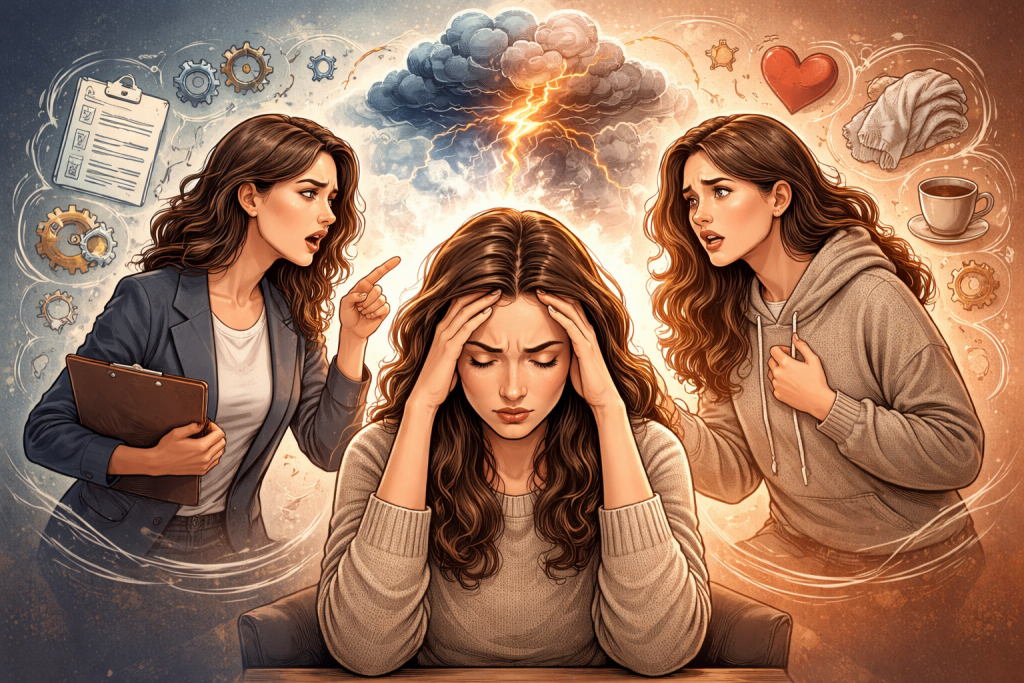
Internal conflicts between parts of self can drain energy and keep people stuck. Learn how IFS and EFT understand and resolve these inner polarities. Internal Conflicts Between Parts of Self…
Trust issues, secrecy, and infidelity can deeply damage relationships. Learn common causes and how therapy helps rebuild trust and emotional safety. Understanding Trust Issues, Secrecy, and Infidelity Trust issues in…
Learn how low self-worth and depression reinforce each other, what low self-worth really is, and how compassionate therapy using CBT, ACT, and IFS can help restore confidence and emotional wellbeing.…
Why Developmental and Complex Trauma Is the Most Complicated and Long-Term Form of Psychological Treatment Developmental and complex trauma are widely recognized as the most challenging forms of trauma to…
Relationship ambivalence—uncertainty about whether to stay in or leave a relationship—is a common reason people seek therapy or couples counselling. While it’s normal for occasional doubts to arise in any…