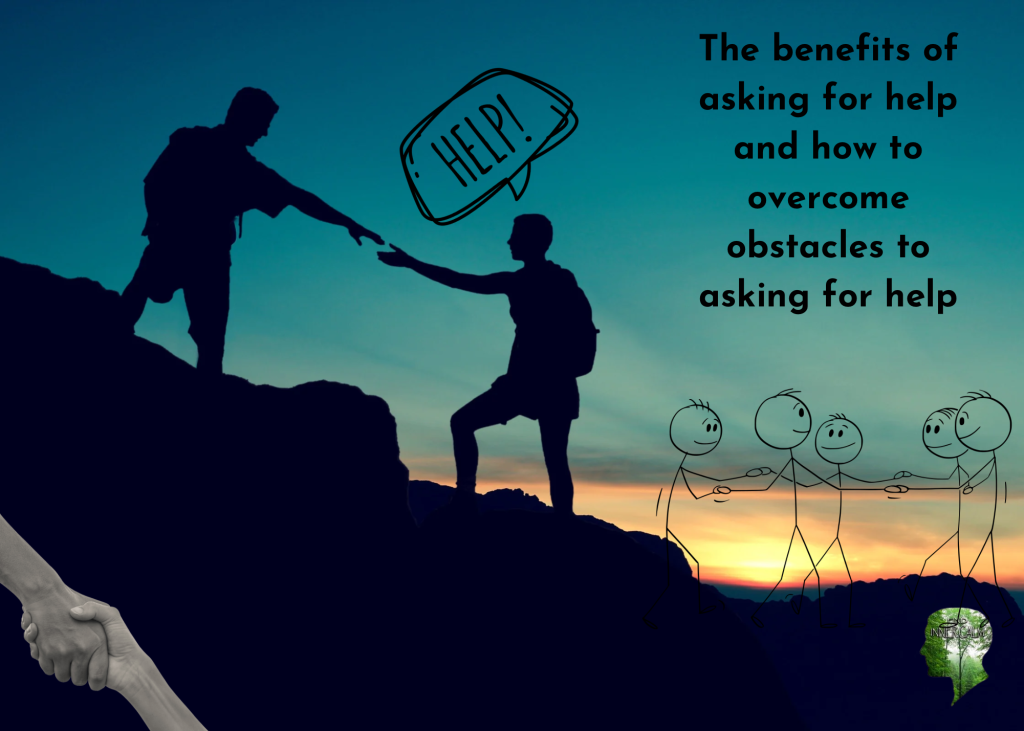
The Benefits of Asking for Help & how to ask for help
Have you ever hesitated to ask for help or counselling, worrying that it might make you seem weak, incapable, or burdensome? You’re not alone. Many people struggle with reaching out for emotional support, professional guidance, or simply a helping hand in everyday life.
The truth is, seeking therapy or support is not a sign of weakness. It shows that you recognize your limits, value connection, and are committed to personal growth. In this blog, we’ll explore why asking for counselling or help can feel so difficult, the mental barriers that hold us back, and strategies to overcome them. We’ll also examine the benefits of allowing others to support you.
When you reach out for mental health support or counselling, you open the door to emotional healing, personal growth, and stronger, more fulfilling relationships.
Here are the main benefits of asking for help:
Reduced Stress and Anxiety: Bottling up emotions or struggling with challenges alone can intensify stress. Talking to a supportive friend, family member, or therapist can provide relief and clarity.
Stronger Relationships: Vulnerability fosters connection. By sharing our struggles, we allow others to support us, deepening our relationships and building mutual trust.
Improved Problem-Solving Skills: Different perspectives can lead to creative solutions. Seeking guidance from someone with more experience or a fresh outlook can be invaluable.
Increased Resilience: Acknowledging our limitations and seeking help equips us with coping mechanisms, ultimately making us more adaptable to life’s challenges.
Barriers to Asking for Help
Most people acknowledge that it is important to ask for help when we need it but that it can be very difficult to do so. Some barriers to asking for help are:
Cultural and Social Norms: Societies often reinforce the idea that self-sufficiency is possible, and admirable. Sometimes we receive negative messages about asking for help that can become self-defeating and prevent us from growing and achieving what we want.
Guilt: We might feel that we are imposing on others or burdening others with our problems. Feeling guilty about asking for help implies that it is something that we really shouldn’t be doing.
Pride: We may feel that we should be able to handle things on our own. We may incorrectly assume that If we ask for help, it is a sign of personal failure and/or others will see it as a sign of personal failure.
Being the Caretaker: This can be especially true for women when it comes to family and relationship issues. It sometimes doesn’t feel like we have permission to ask for help for ourselves. We may not be encouraged to take care of our own needs and it may even be seen as being “selfish” or “self-centred.”
Negative Past Experiences: Sometimes, asking for help can make it hard for us to have a voice in determining the kind of help we get. It can be difficult to say no to someone who has agreed to help us. Sometimes, past help-seeking efforts were rejected or led to disappointment, and we hesitate to try again.
I don’t always know what kind of help I need: It can be difficult to ask for help if you aren’t sure what you need. Sometimes a first step is talking to someone to help identify what you need and/or want.
Overcoming the Fear of Asking for Help
If you struggle with seeking support, consider these steps:
1. Challenge Negative Beliefs – Remind yourself that asking for help is a sign of self-awareness, not failure or weakness.
2. Start Small – Seek assistance in low-risk situations before addressing bigger challenges.
3. Choose the Right People – Identify supportive, nonjudgmental individuals who can provide guidance.
4. Practice Self-Compassion – Understand that everyone sometimes needs help, including you.
5. Keep sight of what you really want and what’s important to you. Then, reflect on the ways that asking for help will help you more readily move towards what you want.
Remember, asking for help is not a weakness- it’s a step toward self-improvement and emotional well-being. By normalizing the act of seeking support, we contribute to a healthier, more compassionate society where people feel empowered to prioritize their mental health.
If you’re struggling, you don’t have to do it alone. Reach out, seek support, and take the first step toward healing. Contact us today to find out ways we can be of assistance.
By Debra Schlegel (Psychology Graduate student).
Edited by Dr. Jennifer Barbera PhD, C. Psych.
References
Bohns, V . K., & Flynn, F. J. (2010). “Why didn’t you just ask?” Underestimating the discomfort of help-seeking. Journal of Experimental Social Psychology, 46(2), 402-409.
Chang, J., Chen, C.N., & Alegría, M. (2014). Contextualizing Social Support: Pathways to Help Seeking in Latinos, Asian Americans, and Whites. Journal of Social and Clinical Psychology, 33(1), 1–24.1
Seamark, D., & Gabriel, L. (2018). Barriers to support: a qualitative exploration into the help-seeking and avoidance factors of young adults. British Journal of Guidance & Counselling, 46(1), 120–131.