
Proven Strategies for Managing Stress
Stress is a normal part of everyday life. However, when stress becomes chronic or unmanaged, it can significantly impact both mental and physical health. Learning how to manage stress effectively…

Sleep is an essential and often undervalued component of our well-being. Research has shed light on how important sleep is for maintaining not only physical health but also emotional and psychological well-being. Yet, as we strive to balance work, social commitments, and personal goals, it’s easy to let our sleep slip down on the priority list.
It is estimated that at least 35% of adult Canadians get inadequate sleep per night (Chaput et al., 2017). Whether you’re struggling with stress, anxiety, or just looking to enhance your overall mental clarity, understanding and improving your sleep can be a powerful tool in your wellness toolkit.
What Happens When We Sleep?
Sleep isn’t just a passive state; it’s an active process that significantly influences our brain function. During sleep, the brain undergoes essential processes, including memory consolidation, emotional regulation, and detoxification. These functions of sleep are crucial for maintaining mental health and overall cognitive performance. The list below explains some of these processes in more detail:
Memory and Learning: Sleep is critical in consolidating memories and processing information. Without adequate sleep, our ability to learn and retain information diminishes. This is because during sleep, particularly during the rapid eye movement (REM) phase, the brain organizes and stores memories, making them easier to recall later.
2. Emotional Regulation: A good night’s sleep helps manage emotions. Lack of sleep can make the brain’s emotional center—the amygdala—more reactive to negative stimuli, which can lead to heightened stress and anxiety. Conversely, sufficient sleep helps moderate emotional responses, allowing for better coping strategies and emotional stability.
3. Mental Health Disorders: Chronic sleep deprivation is linked to an increased risk of developing various mental health disorders, including depression and anxiety. Studies show that people who suffer from insomnia are more likely to experience mood disturbances and even have a higher risk of developing clinical depression (Baglioni et al., 2010).
Strategies to Improve Sleep
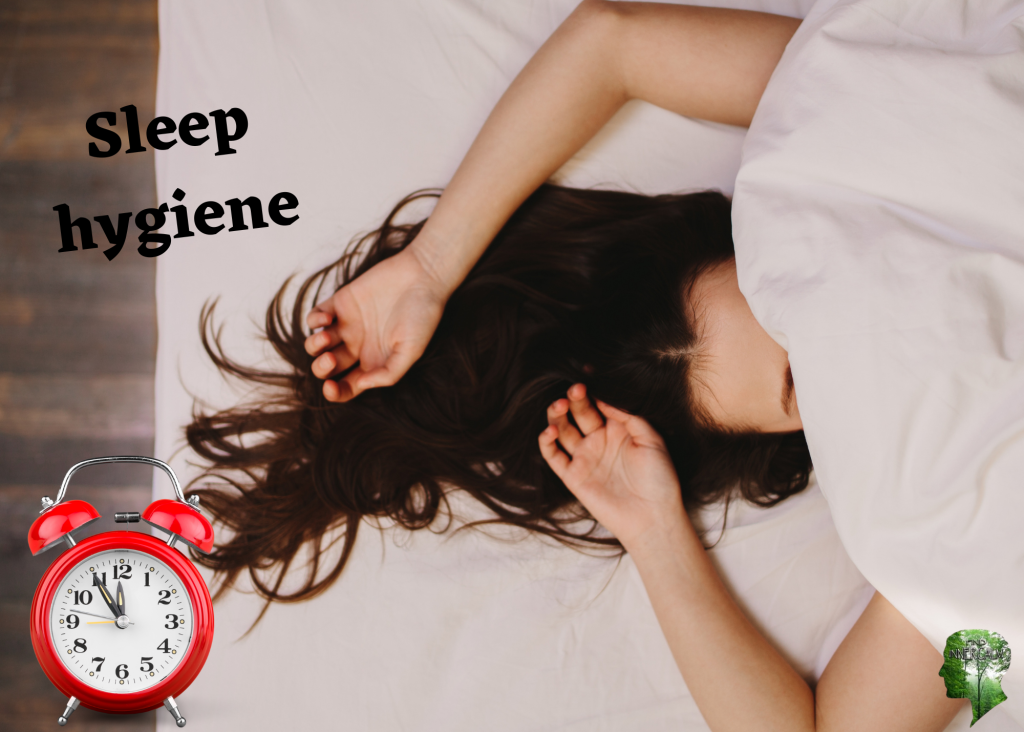
If poor sleep is an issue for you, you might be interested in sleep hygiene tips. Sleep hygiene refers to a set of practices and habits designed to promote good sleep quality and overall health. These practices help regulate your body’s internal clock and create an environment conducive to a restful and restorative night’s sleep.
Some common sleep hygiene tips include (Baranwal et al., 2024):
● Developing a consistent bedtime routine. Try to go to bed at the same time every night and wake up at the same time in the morning
● Avoid stimulating activities in the evening, such as watching television or scrolling on your phone
● Create a dark, cool, and quiet sleeping environment
● Exercise regularly
● Avoid consuming caffeinated beverages in the afternoon and evening
● Avoid using substances, such as alcohol, as an aid to help fall asleep. Alcohol greatly reduces the quality of sleep
● Create a calming routine before bed. This could include mindfulness exercises, doing some light stretching, or reading in bed
● Refrain from using your bed for non-sleep activities.
● Aim to get between 7-9 hours of sleep each night
In the quest for better mental health, sleep is a crucial yet often overlooked component. Prioritizing sleep is not just about feeling rested; it’s about nurturing your mental resilience, emotional stability, and cognitive function.
By embracing the importance of sleep and incorporating healthy sleep habits into your routine, you can support your mental well-being and improve your overall quality of life. So tonight, as you settle into bed, remember that you’re not just getting some rest but investing in your mental health. Sweet dreams!
If you are ready to work on getting better quality sleep, CONTACT US today.
By Debra Schlegel, Mpsy.
Edited by Dr. Jennifer Barbera, PhD, Registered Psychologist
Dr. Jennifer Barbera PhD, C. Psych is a licensed psychologist with over 25 years of counselling experience. She has extensive clinical expertise supporting individuals and couples with anxiety, trauma, depression, addiction, and relationship challenges. Her work combines evidence-based approaches with practical strategies to help clients build resilience and improve well-being.
References
Baglioni, C., Nanovska, S., Regen, W., Spiegelhalder, K., Feige, B., Nissen, C., Reynolds, C. F. III, & Riemann, D. (2016). Sleep and mental disorders: A meta-analysis of polysomnographic research. Psychological Bulletin, 142(9), 969–990.
Baranwal, N., Phoebe, K. Y., & Siegel, N. S. (2023). Sleep physiology, pathophysiology, and sleep hygiene. Progress in cardiovascular diseases, 77, 59-69.
Bin, Y. S., Cistulli, P. A., De Pasquale, C., El Kazzi, M., Shriane, A. E., Sutherland, K., & Vincent, G. E. (2024). Sleep hygiene – What do we mean? A bibliographic review. Sleep Medicine Reviews, 75, 101930–101930.
Chaput, J. P., Michaud, I., & Wong, S. L. (2017). Duration and quality of sleep among Canadians aged 18 to 79. Health Rep, 28(9), 28-33.