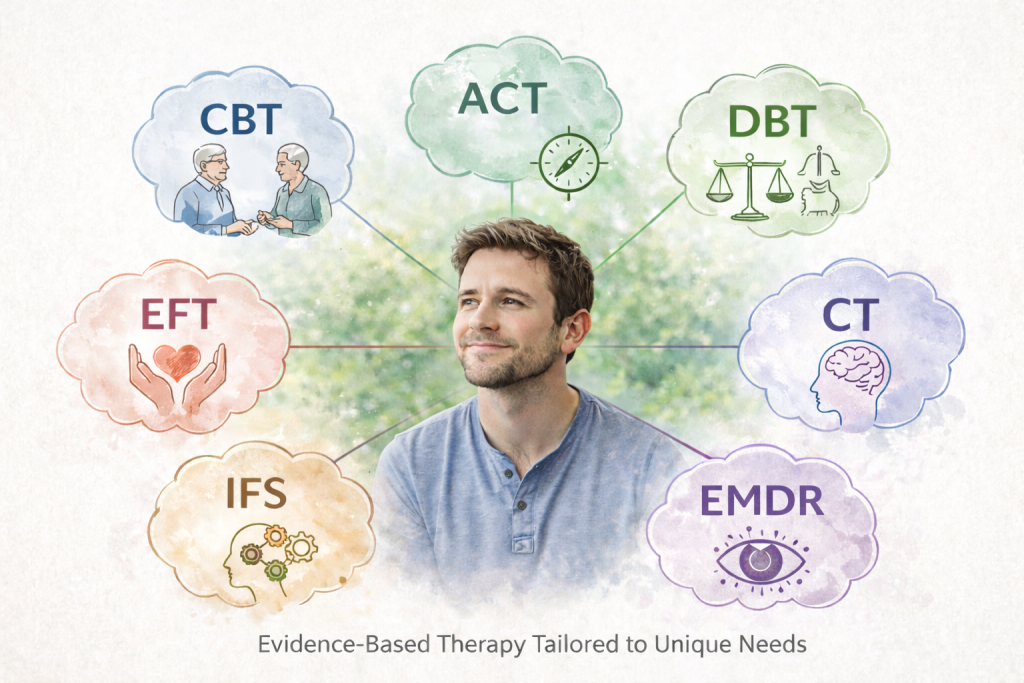
EMDR is a highly specialized therapy that is primarily used to treat trauma and PTSD and work on the restructuring of disruptive core beliefs such as deep-rooted feelings of inadequacy, shame, disrupted abilities to trust others etc.
EMDR is also increasingly being used to assist with other concerns such as anxiety symptoms, depression, and grief.
EMDR involves using of a ‘bilateral stimuli’ (either eye movement, tactile tapping or sound tones) to activate alternating sides of the brain to tax working memory while processing disturbing memory, sensations and emotions. This process allows for the emotional and neurological resolution of upsetting material, with the aim of lowering the distress associated with a memory or image/cue down to neutral or 0/10 (much of the time within 60-90 minutes).
EMDR is not a matter of simply waving a finger in front of someone’s face while talking about their trauma. In fact, EMDR is a highly structured therapy that involves very little talking. EMDR focuses instead on individuals’ internal experiences while working towards emotional and somatic resolution of disturbing memories or experiences that are stuck of fixed within the nervous system.
The advantages of EMDR include not having to talk in detail about the traumatic experience(s), quicker resolution in most instances compared to imaginal exposure or talking about the trauma, and little or no homework.
EMDR is increasingly the modality of choice for complex trauma. EMDR is not only used to target and resolve key memories. EMDR is also used to target and reduce phobias of those memories and other aspects of self (especially dissociated aspects of self or aspects of self that involve internal conflict).
Not everyone can immediately commence EMDR trauma processing. If someone has a history of complex trauma and affect regulation difficulties, we would usually first improve a person’s ability to stay in their ‘window of tolerance’ so that their memories can be adaptively and effectively resolved without re-living or re-traumatization. We do this through other EMDR-oriented interventions such as internal resource development, EMD and ‘tip of the finger’ processing. We also use traditional skill building (e.g., grounding and DBT strategies).
We commonly find that IFS can be incorporated into EMDR to help facilitate quicker processing and resolution of traumatic material in more complex situations where complex trauma has occurred, particularly developmental trauma where disruptions in personality structure or self-soothing abilities occurred.[/vc_column_text]
Videos to learn more about EMDR:
[/vc_column][/vc_row]