What Is Differential Diagnosis and Why It Matters in Therapy
Differential diagnosis through psychological assessment is the clinical process of carefully identifying what is actually driving a person’s distress by considering and ruling out multiple possible diagnostic explanations. Rather than assuming symptoms point to one clear issue, the clinician systematically asks: What else could this be? and What combination of factors best explains what this person is experiencing?
In mental health, many concerns look similar on the surface. Anxiety, trauma responses, ADHD, depression, burnout, attachment injury, or unresolved grief can all present with overlapping symptoms such as restlessness, low mood, emotional overwhelm, irritability, or difficulty concentrating. Without a thorough differential diagnosis, treatment can easily focus on the wrong key issue, leading to limited progress.
How Differential Diagnosis Guides More Effective Treatment
Effective therapy depends on working on the actual problem rather than a suspected or assumed one. Differential diagnosis helps ensure that treatment is aligned with the true underlying issues rather than surface-level symptoms alone.
For example, treating emotional shutdown as “depression” without recognizing an underlying trauma response or attachment injury may result in strategies that do not address the core drivers of the problem. Similarly, treating anxiety without identifying perfectionism, shame-based schemas, or moral injury can lead to short-term coping without meaningful and sustained change.
When the diagnosis is accurate and nuanced, treatment becomes more targeted, intentional, and effective. The therapist can choose interventions that directly address the mechanisms maintaining the distress, rather than applying generic strategies that may miss the mark.
What Does “Effective Treatment” Actually Mean?
Effective treatment is not just about feeling heard or temporarily relieved. While support and validation matter, effective therapy leads to meaningful and lasting change in how a person thinks, feels, relates, and responds to life.
Effective treatment typically includes:
• A reduction in symptom intensity or frequency
• Improved emotional regulation and coping
• Increased self-understanding and self-compassion
• Shifts in unhelpful patterns, beliefs, or behaviours
• Greater flexibility, resilience, and sense of agency
• Changes that generalize beyond the therapy room into daily life
In other words, effective treatment helps people function better and suffer less over time, not just feel supported in the moment.
The Role of the Therapeutic Alliance
A strong, supportive, and collaborative therapeutic alliance is a very important predictor of positive outcomes. Clients need to feel emotionally safe, respected, and understood in order to explore vulnerable material and engage fully in the work.
However, a positive alliance alone is not sufficient. Therapy that remains purely supportive without direction, structure, or skill-building can stall progress, especially when concerns are complex. Effective clinicians balance warmth and validation with active guidance, thoughtful challenge, and purposeful skilled intervention.
Going Beyond Symptoms: Addressing Underlying Issues
Many people come to therapy focused on symptoms such as anxiety, panic, low mood, anger, or relationship conflict. While symptom relief is important, long-term change usually requires addressing the underlying drivers of those symptoms.
This may include:
• Core schemas such as “I am unlovable,” “I am not safe,” or “I am not enough”
• Implicit emotional learnings formed through early relationships
• Trauma responses that keep the nervous system stuck in threat
• Avoidance patterns that maintain anxiety or distress
• Internal conflicts between different parts of the self
Effective clinicians know how to redirect sessions toward these deeper issues when needed, rather than focusing on the same surface-level concerns.
Why Evidence-Based Modalities Matter
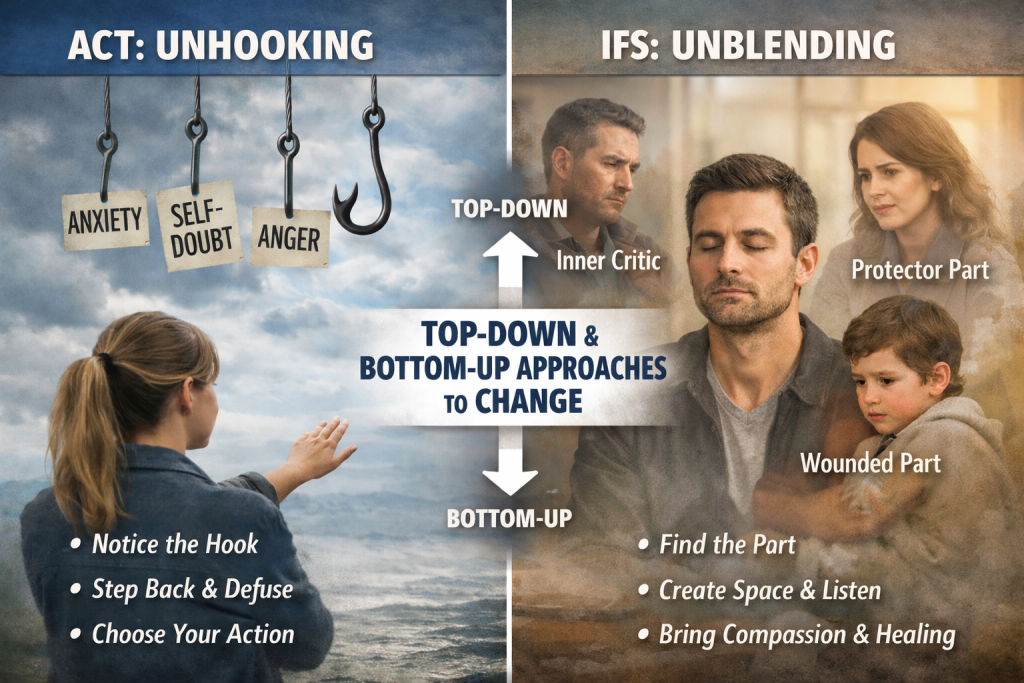
Evidence-based therapies are approaches that have been studied and shown through research to be effective for specific concerns. Modalities such as Cognitive Behavioural Therapy (CBT), Acceptance and Commitment Therapy (ACT), Dialectical Behaviour Therapy (DBT), and Internal Family Systems (IFS) provide structured frameworks for understanding distress and facilitating change.
These approaches go beyond supportive conversation by offering:
• Clear models of how problems develop and persist
• Specific strategies for change
• Skills that can be practised and applied outside of sessions
• Experiential work that helps clients feel and integrate new learning, not just understand it intellectually
In contrast, unstructured talk therapy or purely supportive counselling may unintentionally reinforce existing patterns if key mechanisms are not identified and addressed. For some people, repeatedly talking about the problem without learning new ways to relate to it can even increase rumination, hopelessness, or emotional entrenchment over time.
Why Support and Good Intentions Are Not Enough
Being caring, empathetic, and well-intentioned is essential but not sufficient for effective therapy. Complex concerns such as complex trauma, co-occurring mood and anxiety disorders, personality patterns, or long-standing relational difficulties require specialized knowledge and clinical skill.
Clinicians trained in evidence-based modalities are better equipped to:
• Recognize when symptoms point to deeper or multiple issues
• Adapt treatment when progress stalls
• Use experiential techniques to access and shift implicit learning
• Teach skills that create real-world change
• Avoid reinforcing avoidance or maladaptive coping
This is particularly important when clients have tried therapy before without success. Often, the issue is not that therapy “doesn’t work,” but that the approach was not well matched to the person’s needs.
Bringing It All Together
Differential diagnosis is a cornerstone of effective mental health care. It allows therapy to move beyond assumptions and surface symptoms toward a precise understanding of what is actually happening. When combined with a strong therapeutic alliance and evidence-based interventions, it creates the conditions for meaningful, lasting change.
Effective therapy is not just about talking. It is about understanding, targeting, and working through the real issues in a way that helps people build healthier patterns, greater resilience, and a more compassionate relationship with themselves. CONTACT US today to schedule an appointment.
Prepared by Dr. Jennifer Barbera, PhD, Registered Psychologist
Dr. Jennifer Barbera PhD, C. Psych is a licensed psychologist with over 25 years of counselling experience. She has extensive clinical expertise supporting individuals and couples with anxiety, trauma, depression, addiction, and relationship challenges. Her work combines evidence-based approaches with practical strategies to help clients build resilience and improve well-being.