meaningful-lasting-change-in-therapy
What Does Meaningful, Lasting Change in Therapy Really Mean?
Meaningful, lasting change in therapy goes beyond short-term relief or feeling better for a few days after a session. It refers to deep, sustainable shifts in how a person experiences themselves, relates to others, and responds to life’s challenges over time.
This kind of change shows up not only in reduced symptoms, but in increased emotional flexibility, confidence, self-trust, and the ability to navigate stress without reverting to old, unhelpful patterns. It is the difference between coping around a problem and actually transforming what drives it.
Why Symptoms Persist Even When We Understand Them
Many people intellectually understand their struggles. They know why they procrastinate, worry, feel low, or lack confidence, yet the patterns continue. This is because symptoms are often maintained by emotional or implicit learning, not conscious thought alone.
Implicit learning refers to deeply ingrained emotional programs shaped by earlier experiences. These learnings operate automatically and outside of awareness. For example:
• Procrastination may have once reduced criticism or protected against failure
• Worry may have created a sense of control in an unpredictable environment
• Emotional numbness may have been necessary to survive overwhelming experiences
• Low confidence may have reduced risk in unsafe or invalidating relationships
When therapy focuses only on insight or surface-level discussion, these underlying emotional programs often remain untouched.
The Importance of Experiential Work
Meaningful change usually requires experiential work, not just talking about problems but actively working with emotions, bodily responses, and internal patterns in the session. Experiential work is a more complex therapeutic skill that comes from advanced therapeutic training and clinician experience where the clinician is observed and receives feedback.
Experiential approaches help uncover:
• Implicit beliefs about safety, worth, or capability
• Emotional memories that still influence present-day reactions
• Internal conflicts between parts of the self
• Learned responses that were once adaptive but are now limiting
By engaging with these experiences directly, clients can update old emotional learnings rather than repeatedly overriding them through ongoing effort and energy.
Two Pathways to Lasting Change
Lasting change tends to occur through one or both of the following pathways:
1. Developing Strong, Flexible Skills
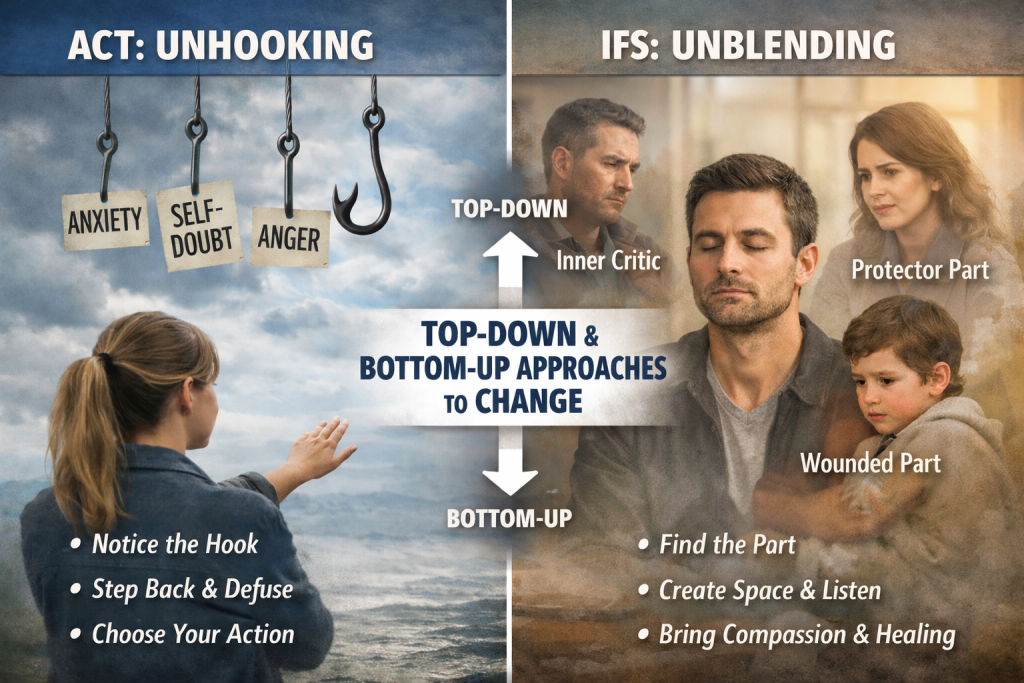
Some patterns improve through the consistent development of skills that gradually override older habits. Skills related to emotional regulation, cognitive flexibility, distress tolerance, assertiveness, or values-based action can significantly reduce symptoms when practised effectively.
2. Addressing Core Schemas and Emotional Programs
For many people, especially when concerns are longstanding or complex, skill-building alone is not enough. In these cases, therapy must address core schemas or emotional programs such as “I am unsafe,” “I am not enough,” or “My needs do not matter.” When these core drivers shift, symptoms may reduce more suddenly because they are no longer needed.
Understanding the Coherence of Symptoms
An important part of effective therapy is recognizing that symptoms are coherent, meaning they make sense when viewed in context. They developed for a reason, often as a form of protection, adaptation, or survival.
When therapy respects this coherence rather than trying to eliminate symptoms prematurely, it becomes possible to understand what the symptom is doing for the person. This understanding helps guide interventions that work with the system rather than against it, leading to deeper and more sustainable change.
Why Evidence-Based Approaches Matter
Evidence-based therapies such as CBT, ACT, DBT, and IFS provide structured, research-supported methods for addressing both symptoms and their underlying mechanisms. These approaches help clinicians:
• Identify the processes maintaining distress
• Choose interventions matched to the client’s needs
• Combine skill-building with experiential and relational work
• Adapt treatment when progress stalls
For complex concerns such as complex trauma or co-occurring mood and anxiety disorders, having a clinician trained in evidence-based modalities is especially important. Support and empathy are essential, but without a clear framework for change, therapy can remain stuck at a supportive level without producing meaningful outcomes.
Support Is the Foundation, Not the Finish Line
Feeling heard, validated, and supported is a crucial foundation for effective therapy. A strong therapeutic relationship creates safety and trust, which are necessary for deeper work.
However, support alone is often not enough for meaningful, lasting change. Without actively addressing core issues, patterns may persist despite years of therapy. Effective treatment balances compassion with direction, structure, and purposeful intervention.
The Role of Progress Monitoring
Progress monitoring is a key but often overlooked component of effective therapy. Regularly tracking symptoms, functioning, and goals helps ensure that therapy is actually leading to meaningful change.
Monitoring progress with a measure such as the CORE 10 allows:
• Early identification of what is and is not working
• Adjustment of treatment strategies when needed
• Increased collaboration and transparency
• Greater confidence that therapy is moving in the right direction
Without this feedback loop, therapy can feel busy without being effective.
Creating Meaningful, Lasting Change
Meaningful, lasting change is not about quick fixes or endless talking. It comes from understanding why patterns exist, addressing the emotional learning that sustains them, and building new ways of relating to oneself and the world.
Our goal is to help create meaningful, lasting change, not just temporary relief. If you are ready to take the first step in that important journey, we invite you to contact us to set up an appointment.
Prepared by Dr. Jennifer Barbera, PhD, Registered Psychologist
Dr. Jennifer Barbera PhD, C. Psych is a licensed psychologist with over 25 years of counselling experience. She has extensive clinical expertise supporting individuals and couples with anxiety, trauma, depression, addiction, and relationship challenges. Her work combines evidence-based approaches with practical strategies to help clients build resilience and improve well-being.