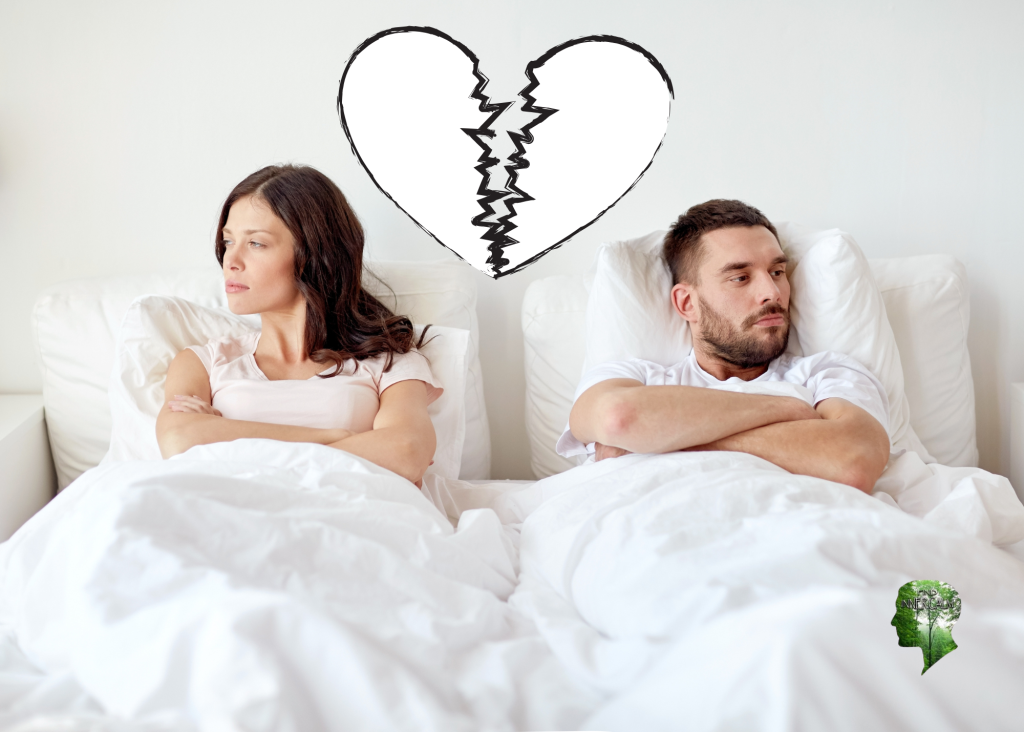
Unhealthy relationships and why some people stay in them:
People commonly come to us with concerns about unhealthy relationships. Concerns with relationships are one of the most common reasons people seek out counselling or therapy.
Some people come in concerned because they believe someone they care about is in an unhealthy relationship. They want help understanding why the person stays or what they can do to convince the person to leave the relationship.
People also come to see us in therapy because they want to determine the extent to which their relationship is unhealthy or they want help deciding whether they want to leave their relationship or not.
What is an ‘unhealthy relationship?’
Every relationship is different, and each person has unique values and desires for their relationship. As therapists, it’s vital that we do our best to avoid making judgements or giving opinions about people’s relationships.
The only potential exception to us initiating an exploration of someone’s relationship is if it is clear that someone is being seriously physically or emotionally harmed by their partner. Even then, we always respect each person’s right to make their own life decisions and will not pressure people to leave or stay in a relationship.
Instead, we help people explore the issues that directly affect them and their relationship to help each person arrive at a decision that they feel is best for their life and well-being.
Unhealthy or not, when it seems important to explore a person’s relationship (either because they ask us to explore their relationship or because they describe serious concerns about their partner) we usually start by helping people explore the following factors and questions.
Do you feel like you can’t be yourself in this relationship?
In a healthy relationship, both people, more or less, feel free to be themselves in terms of their values, lifestyle, preferences and other important factors. In a healthy relationship, people do not feel continually pressured to change how they think. They also do not feel pressured to behave in a way that they do not themselves desire.
Are there times when you feel highly distressed, scared or humiliated in your relationship?
All relationships are marked by occasional stress, disagreement, frustration or even sadness. However, healthy relationships are not characterized by frequent distress or by significant fear or humiliation.
Are there times when you’ve been physically harmed or threatened in your relationship?
In typical relationships, both people may raise their voices from time to time or have moments of resorting to criticizing or minor name-calling, however, healthy relationships never involve violence or threat of violence.
Are you happy with your relationship most of the time, or do you usually feel unhappy, confused or stressed in your relationship?
Another way to reflect on this question is: If you had to rate your overall average (how you feel most days) relationship satisfaction on a scale of 0-10, 0 being no satisfaction at all, would you rate your relationship satisfaction a 4 or lower?
Every relationship has areas of concern; however, if you find yourself overwhelmingly dissatisfied, it is essential to consider what is contributing to the dissatisfaction. It is also important to consider what is keeping you in the relationship.
Relationships that feel largely dissatisfying likely have underlying issues of greater concern (e.g., the relationship does not feel fundamentally compatible or respectful, or arguments do not seem to ever be effectively resolved etc.)
Do you feel like the relationship is mutually beneficial, or do you feel like you are the only one comprising or sacrificing to make the relationship work?
Healthy relationships are mutually beneficial. They involve a balanced level of give and take. To make a relationship work over the long-run, there is usually some level of compromise required of both partners. Unhealthy relationships involve inequitable benefit, where one partner benefits much more than the other or where one partner makes all or the majority of compromises or sacrifices.
Although there are many other dimensions or factors to also consider (e.g., is there a lack of privacy in the relationship or too much privacy?, is there pressure to change things you don’t want to change?, are you becoming more and more isolated?), the above questions can at least start to sort out the extent to which a relationship is healthy or not.
When someone indicates that many of these concerns are relevant to their relationship, they are likely in an unhealthy or even abusive relationship.
Why do people stay in unhealthy or abusive relationships?
Relationships are complicated. Although someone may feel dissatisfied or even very unhappy in a relationship, there are many reasons that a person may choose to stay in the relationship. To better understand these reasons, consider the following:
Break-ups are stressful
Relationship ambivalence, or confusion about whether to stay or leave a relationship, is a harrowing experience for people. Although someone can be very unhappy or even distressed by a relationship, the person may feel concerned about the potential drawbacks of leaving the relationship. For instance, they may feel worried about having to move or support themselves. They may question whether they have the emotional energy to get through a stressful break-up with the person.
Cultural or familial pressure
Many people come from cultural or religious backgrounds where there is enormous pressure to stay married or “keep the family together”. It can be difficult for people not from that background to understand the extent of that pressure. People’s values are extremely important and should not be discounted. At the same time, survival and well-being are of utmost importance, and these issues need to be balanced somehow.
Kids
Many people contend that regardless of how unhappy they feel, they must stay in the relationship for the sake of the children. They may intend to stay at least until the children have grown and left home. Kids are an extremely important consideration for may people as some people are convinced that leaving would be worse for the children. Whether this is true is complicated and depends on many factors.
People need to know that often children will usually suffer more growing up in an unhappy or conflictual home environment. The extent to which this is occurring needs to be carefully considered and explored if the intent is to do what is best for the children.
Fear
Aside from fear of disrupting their children’s lives, or fear of having to support oneself or go through the stress and adjustment of separating, some people fear that if they leave, the conflict will escalate further, or that they may even be harmed. If this is occurring, these issues need to be understood and addressed before a decision is made.
Abuse often evolves slowly
It’s important to remember that abusive dynamics often evolve slowly over time. Often people describe their abusive partner as charming, thoughtful and romantic at the beginning of a relationship (and periodically throughout the relationship). Because of this, it may be less apparent to the person that certain behaviours have become clearly abusive.
Think of the frog in the pot analogy, where they say a frog put into a pot will not easily notice the water becoming extremely hot if the temperature slowly rises compared to if they were to be put immediately into a pot of hot water. This idea may also apply to abusive relationships where things are harder to see clearly when they evolve slowly over time.
People are multilayered and complicated
People commonly have parts of them that view things one way, and parts of them that view things another way. When a person is in an abusive relationship, they often have parts of them that will minimize and excuse unhealthy or abusive behaviours away. The minimizing serves to reduce awareness of or to reduce contact with other parts of themself that feel extremely hurt, dissatisfied, angry or even afraid or terrified.
If a person spends most of their time blended with the part of themselves that minimizes their partner’s behaviours in order to maintain the possibility of attachment and staying in the relationship, the person is more likely to feel out of touch with the reality of just how abusive things have actually become.
People only know what they know
People only know what they know, have grown up with or have been exposed to. Often people who are in an abusive relationship, have had other abusive relationships in their life. An abuse history leads to the relationship context of unhealthy or abusive feeling ‘normal,’ ‘routine’ or ‘expected.’ The harmful behaviour or abuse from their partner doesn’t get labelled or seen as “abusive” or problematic in the way that it would in another person who has experienced healthier relationships or less conflict, control or abuse from others.
Some people feel unworthy
People in abusive relationships often have lower self-worth and may believe that they do not deserve happiness or favourable treatment from others. This can lead to the question of what came first- low self-worth or an abusive relationship?
Often people with lower-self-worth are more likely to tolerate a less healthy or balanced relationship. At the same time, an unhealthy relationship tends to lead to lower self-worth and an increased tendency to remain in the relationship over time.
People may also cope with an abusive situation by feeling embarrassed or ashamed, especially if they experienced abuse while growing up. Shame actually can become a defense that allows children to maintain attachment to abusive caregivers. This defense pattern then gets carried over to adult relationships.
As an adult the feelings of shame, and underlying perceptions that one deserves bad treatment, lead the person to misperceive the abuse as somehow reasonable or justifiable. The result is that the person may stay in a relationship that is detrimental to their happiness and well-being.
If this feels familiar, the critical thing to know is that regardless of how you feel right now, you actually do deserve to feel safe, valued and loved in a relationship.
If you are concerned about someone you know remaining in a difficult relationship, it’s important to understand the complexity of the issues that may prevent a person from leaving an abusive or unhealthy relationship. To help with the stress and concern you feel, consider the following:
Remember that you cannot control another person’s decisions or actions and that trying to do so will likely backfire. The person may become defensive and come up with reasons to stay. Your relationship with the person will also likely be negatively impacted.
Instead of trying to convince the person to leave the relationship, try to ask questions more openly and explore with them some of the questions suggested above. It will be best if the person comes to their own conclusions so that they feel internally motivated to make a decision.
If you have difficulty making space for how you feel about the situation or accepting that the person is entitled to make their own decisions and live their life the way they chose to, consider support for yourself. It may be helpful to learn about acceptance-based strategies and psychological flexibility either through ACT-based resources or through counselling or therapy.
In the meantime, be sure to express how much you care for the person and genuinely want what is best for them. Suggest that you have concerns about their well-being or happiness and encourage them to reach out for counselling to at least explore the impacts of the relationship on their well-being. Be sure to suggest a therapist that is client-centered and will not be forceful or judgmental about the relationship so that the person if not put off of counselling.
If you feel very concerned and upset about the person staying in an unhealthy or abusive relationship, consider letting the person know that you can’t continue to watch them accept that treatment in their life. Let them know that you will need to have a greater distance from them, but will be there for them 100% to provide support should they decide to leave.
As a last resort, if you believe that the person’s life is at risk, call the police. Calling the police may hurt the relationship you have with the person, but this will be worth it if they are indeed at risk, and your actions prevent harm.
Consider the following resources in Hamilton Ontario:
Hamilton Police Services Domestic Violence Unit:
905-546-3852
Catholic Family Services of Hamilton- Violence Against Woman Counselling
905-527-3823
Good Shepherd Centres, Woman’s services
905-528-5877
This post was written by Psychologist Dr. Jennifer Barbera who has worked in a counselling capacity with individuals since 1999 and with couples since 2007.
For assistance with coping with an unhealthy relationship or making a decision that is right for you, feel free to reach out to us any anytime.