The Perfectionism Paradox: How Striving For Perfection Harms You
In this article, we will explore the intricate relationship between perfectionism and mental health and the reasons why perfectionism can be a double-edged sword.
Perfectionism, a term often seen as a virtue in our achievement-oriented society, paradoxically has a dark side. While setting high standards and striving for excellence can be admirable traits, the unrelenting pursuit of perfection can have detrimental consequences, including depression and anxiety (Kawarmura et al., 2001).
The Perfectionism Spectrum:
Perfectionism is not a one-size-fits-all concept. It exists on a spectrum ranging from healthy to maladaptive (Ayearst, Flett, & Hewitt, 2012; Hewitt & Fleet, 1991).
At one end of the spectrum lies adaptive or positive perfectionism, characterized by setting realistic goals, striving for excellence, and using mistakes as opportunities for growth.
However, at the other end lies maladaptive or negative perfectionism, where unrealistic standards, fear of failure, and a constant need for validation prevail. It is in the extreme of this spectrum that we find the triggers for depression and anxiety.
The Roots of Perfectionism:
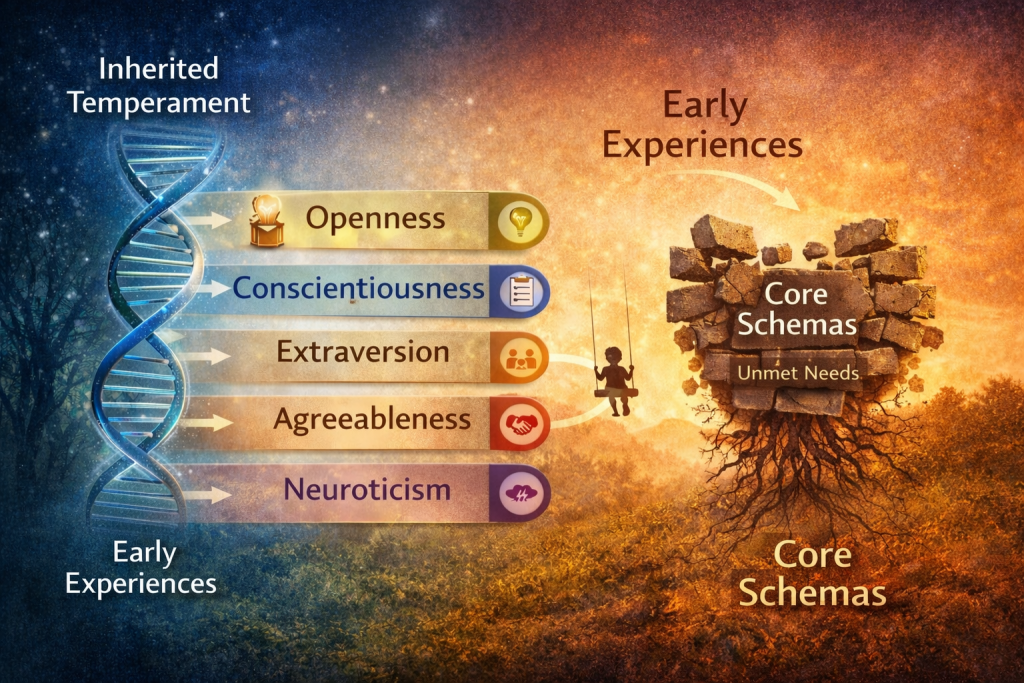
Understanding why perfectionism can lead to depression and anxiety requires delving into its origins. Several factors contribute to the development of perfectionistic tendencies (Flett et al., 2002; Brown, 2021):
• Early Childhood Experiences: Perfectionism can stem from early childhood experiences, such as excessive criticism, constant pressure to excel, or conditional love and approval based on achievements. Children raised in such environments may internalize the belief that they must be flawless to be loved or valued or that the love they are given is dependent on the quality of work they produce.
• Cultural and Societal Influences: Societal and cultural factors also play a significant role in promoting perfectionism. In a world driven by social media and comparison, the pressure to present a perfect image to the world has intensified, exacerbating perfectionistic tendencies.
Three Types of Perfectionism: (Hewitt & Flett, 1991; Stoeber, 2014):
• Self-Oriented Perfectionism: This involves setting exceedingly high standards for oneself and the self-motivated belief that striving for perfection and being viewed as “perfect” is important for themselves. This type often leads an individual to be highly self-critical towards themselves when they are unable to meet their unrealistic perfectionistic standards.
• Other-Oriented Perfectionism: The belief that others need to strive for perfection and be “perfect,” this type often leads to dissatisfaction with the performance of those around you.
• Socially Prescribed Perfectionism: Driven by the belief that others expect perfection from you, this type can create immense pressure to conform to external standards.
The Vicious Cycle of Perfectionism:
Perfectionism often sets off a vicious cycle that perpetuates depression and anxiety:
• Setting Unrealistic Standards: Perfectionists tend to set impossibly high standards for themselves (Overholser & Dimaggio, 2020; Smith et al., 2022). Whether in academics, work, relationships, or personal appearance, these standards are often unattainable.
When unattainable expectations consistently go unmet, the unmet standards can lead to a pervasive sense of failure, inadequacy, and self-criticism. Over time, this can give rise to depressive symptoms.
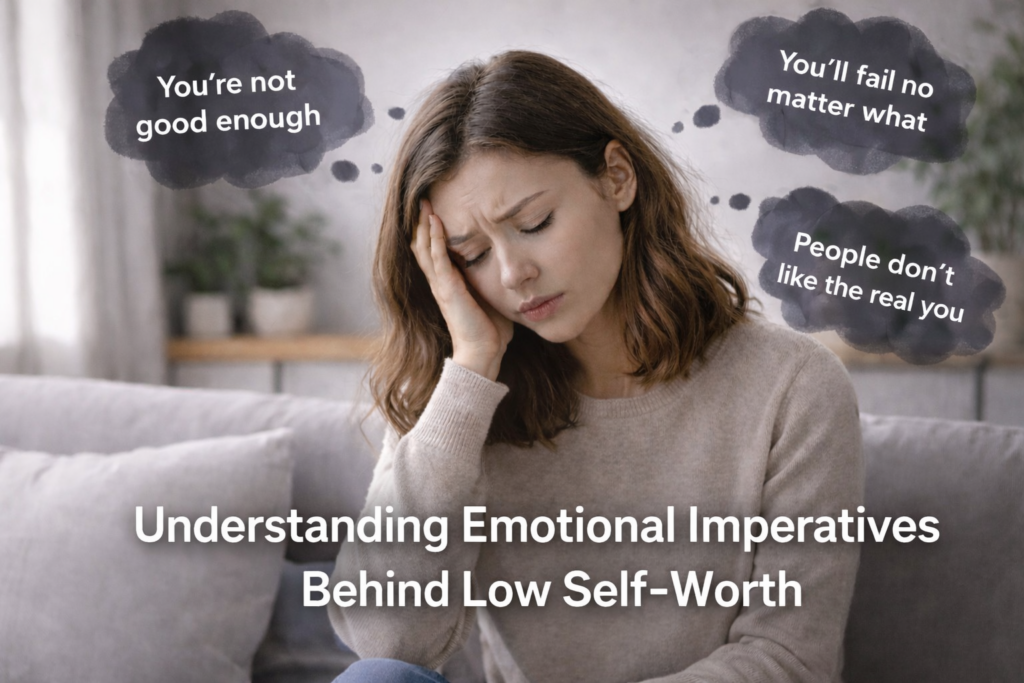
• Fear of Failure: Perfectionists often equate any form of failure or mistake with personal worthlessness (Overholser & Dimaggio, 2020). This intense fear of failure can trigger anxiety or feelings of hopelessness and despair, which are core elements of depression.
• Self-Criticism: When perfectionists inevitably fall short of their expectations, they respond with harsh self-criticism. They perceive their mistakes as personal failures and flaws (Overholser & Dimaggio, 2020).
• Avoidance and Procrastination: To avoid the risk of making mistakes, perfectionists may procrastinate or avoid tasks altogether (Smith et al., 2020). This avoidance behaviour can lead to increased anxiety as deadlines loom, exacerbating the cycle of anxiety and perfectionism.
• Depression and Anxiety: This cycle of setting unattainable goals, fearing failure, self-criticism, and avoidance can culminate in depression and anxiety disorders (Shafran & Mansell, 2001; Harper et al., 2020; Smith et al., 2020). The constant stress and emotional turmoil take a severe toll on mental health.
• Inflexibility: Perfectionists may impose their unrealistic standards on others, leading to strained relationships and isolation.
• Constant Comparison: Perfectionists often compare themselves to others, fostering jealousy, insecurity, and feelings of inadequacy.
• Perfectionism as a Barrier to Social Connection: Excessive perfectionism can hinder the formation of meaningful relationships. Perfectionists may struggle with vulnerability and fear that revealing their imperfections will lead to rejection. This social isolation can be a significant contributing factor to depression and anxiety (Harper et al., 2020).
• Constant Worry: Perfectionists worry excessively about making mistakes or falling short of their impossibly high standards (Smith et al., 2020). This chronic worry can lead to an anxiety disorder.
Strategies for Overcoming the Perfectionism- Depression- Anxiety Cycle:
Overcoming perfectionism is essential for preserving mental health and well-being. Some strategies include:
• Self-awareness: Recognizing perfectionistic tendencies and their negative impact is thefirst step toward change.
• Adjusting Expectations By Setting Realistic Goals: Replace unattainable standards with achievable, healthy goals using the S.M.A.R.T. Goals framework.
• Self-Compassion: Practice self-compassion and treat oneself with the same kindness and understanding as you would a friend. Self-compassion interventions can be useful strategies to lessen the link between perfectionism and depression (Ferrari et al., 2018).
• Acceptance of Self and Others: Learning to accept oneself and others with all imperfections and limitations is a crucial step in breaking the cycle of perfectionism.
• Seeking Support: In severe cases, therapy, particularly cognitive-behavioural therapy (CBT), can be highly effective in helping individuals address perfectionism and its related mental health challenges, such as anxiety and depression (Egan & Shafran, 2017).
While the pursuit of excellence is commendable, it is crucial to strike a balance between setting high standards and maintaining mental health. Perfectionism is strongly associated with depression and anxiety, which makes recognizing the signs of perfectionism vital for individuals to maintain their mental health.
By fostering self-acceptance, adjusting unrealistic expectations, and seeking support when needed, it is possible to overcome the debilitating effects of perfectionism and lead a healthier and more meaningful life.
Recognizing perfection as an unattainable ideal can be the first step toward achieving a more balanced and fulfilling life. If you want to learn more or are ready to seek assistance on working on perfectionism, we are here to help- Contact Us.
By Raechel Hamill, Graduate Psychology student.
Edited by Dr. Jennifer Barbera, PhD, Registered Psychologist
Dr. Jennifer Barbera PhD, C. Psych is a licensed psychologist with over 25 years of counselling experience. She has extensive clinical expertise supporting individuals and couples with anxiety, trauma, depression, addiction, and relationship challenges. Her work combines evidence-based approaches with practical strategies to help clients build resilience and improve well-being.
References
Ayearst, L. E., Flett, G. L., & Hewitt, P. L. (2012). Where is multidimensional perfectionism in DSM-5? A question posed to the DSM-5 personality and personality disorders work group.Personality Disorders: Theory, Research, and Treatment, 3(4), 458.
Brown, B. (2021). Atlas of the heart: mapping meaningful connection and the language of human experience. First edition. New York, Random House.
Egan, S. J., & Shafran, R. (2017). Cognitive-behavioral treatment for perfectionism. The psychology of perfectionism, 284-305.
Ferrari, M., Yap, K., Scott, N., Einstein, D. A., & Ciarrochi, J. (2018). Self-compassion moderates the perfectionism and depression link in both adolescence and adulthood. PloSone, 13(2), e0192022.
Flett, G. L., Hewitt, P. L., Oliver, J. M., & Macdonald, S. (2002). Perfectionism in children andtheir parents: A developmental analysis. In G. L. Flett & P. L.
Hewitt (Eds.), Perfectionism: Theory, research, and treatment (pp. 89–132). American Psychological Association. https://doi.org/10.1037/10458-004
Harper, K. L., Eddington, K. M., & Silvia, P. J. (2020). Perfectionism and loneliness: The role of expectations and social hopelessness in daily life. Journal of Social and Clinical Psychology,39(2), 117-139.
Hewitt, P. L., & Flett, G. L. (1991). Perfectionism in the self and social contexts: conceptualization, assessment, and association with psychopathology. Journal of personality and social psychology, 60(3), 456.
Kawamura, K. Y., Hunt, S. L., Frost, R. O., & DiBartolo, P. M. (2001). Perfectionism, anxiety, and depression: Are the relationships independent?. Cognitive therapy and research, 25, 291-301.
Overholser, J., & Dimaggio, G. (2020). Struggling with perfectionism: When good enough is not good enough. Journal of Clinical Psychology, 76(11), 2019-2027.
Shafran, R., & Mansell, W. (2001). Perfectionism and psychopathology: A review of research and treatment. Clinical Psychology Review, 21, 879–906.
Smith, M. M., Sherry, S. B., Ge, S. Y., Hewitt, P. L., Flett, G. L., & Baggley, D. L. (2022). Multidimensional perfectionism turns 30: A review of known knowns and known unknowns. Canadian Psychology/Psychologie canadienne, 63(1), 16.
Stoeber, J. (2014). How other-oriented perfectionism differs from self-oriented and socially prescribed perfectionism. Journal of Psychopathology and Behavioral Assessment, 36, 329-338.