Proven Strategies for Managing Stress
Stress is a normal part of everyday life. However, when stress becomes chronic or unmanaged, it can significantly impact both mental and physical health. Learning how to manage stress effectively…

Feeling Lonely?
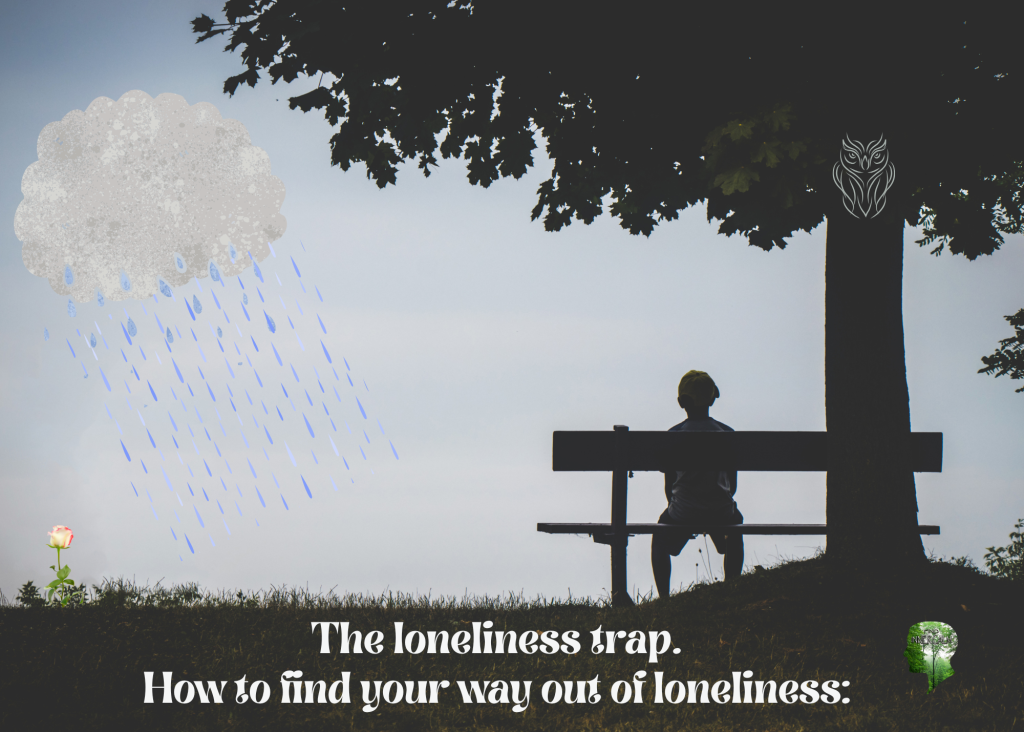
Loneliness can be deeply uncomfortable—and often confusing. If you’re feeling lonely, it’s important to know that this experience is far more common than many people realize. In fact, research suggests that nearly half of adults report feeling alone some or most of the time (Novotney, 2019). Despite how isolating loneliness feels, it does not mean there is something wrong with you, nor does it mean you are truly alone in this experience.
Loneliness is not simply about being physically alone. It is a subjective emotional experience shaped by how connected—or disconnected—we feel from others. Psychologists generally describe two forms of loneliness:
Situational loneliness arises when external circumstances increase social isolation, such as life transitions, relationship changes, illness, or relocation.
Internal loneliness, on the other hand, occurs when a person perceives themselves as emotionally disconnected, unseen, or unwanted by others—even when people are physically present (Tiwari, 2013).
While both forms of loneliness matter, internal loneliness is often more distressing because it affects a person’s sense of belonging, self-worth, and emotional safety. This helps explain why someone can feel profoundly lonely in a crowd or within a relationship. Ultimately, loneliness has less to do with how many people are around us and more to do with whether we feel genuinely understood, valued, and emotionally connected.
Loneliness is a concern because it often leads to increased risk for mental health concerns and even physical illness (Mushtag et al., 2014). In particular, loneliness often contributes to depression, lower self-worth and substance use. Increased loneliness can also make existing mental health concerns harder to treat. On the flipside, perceived social support can act as a buffer against depression and anxiety disorders.
Because of its prevalence and impacts on well-being, loneliness was already an important issue before 2020. In 2021, with pandemic-driven lock-downs and social distancing, loneliness is more important than ever to address. More needs to be done to ameliorate people’s lonely feelings in the service of improving the quality of living and health for people.
What are the top 10 things people can do to ease loneliness?
1: Check-in regularly. Notice your level of connection VS disconnection from others. Catching loneliness early can help before despair and depression sets in and makes it more challenging to take action.
2: When you notice feeling lonely, get out and be around people- either outside or somewhere like a mall or coffee shop or a library if one is open in your area. Focus on being around others to help shift the focus from yourself and your lonely feelings.
3: What can you do if you feel caught in a situation where your feel very lonely but don’t feel like reaching out or being around others? Remember: to get to a different place; you have to increase your willingness to do something different.
Think about being in a river where the current pushes you your usual way (e.g., withdrawing). To get somewhere different, you have to swim against the current. It’s hard, but you can do it!
4: If connecting with others socially is very difficult for you (remember most of us struggle with this sometimes), seek out clinical help. A Psychologist or psychologist-supervised therapist can screen you for interpersonal trauma, social anxiety, and ASD traits. They can also help you develop social skills, which may help you feel more confident in connecting with others.
5: To help prevent feeling lonely, or when you already feel lonely, call someone such as a relative or a friend. A video call may be more helpful than you think.
6: Find other people with similar interests through a group such as those listed on Meetup.com or search for community FB groups. Groups that match your interests (e.g., outdoors, sports, board games, movies, food, parenting etc.) can help you connect with other people who have the same or similar interests. Consider starting a group if you can’t find one that is already available.
7: Remember that loneliness is an inner feeling, and our inner feelings can sometimes convince us that how we feel is a fact. Even though we may feel lonely, this does not necessarily mean that we are alone. Try to catch yourself making assumptions or discounting the positives. Instead, reality test your feelings by reaching out to others. Make more effort to establish and maintain social connections.
8: Join a therapy group made up of people with similar concerns as you (e.g., a depression mood menders group, social anxiety group, trauma group, bereavement group, substance use group etc.).
9: When you feel lonely, consider that you might be blended with a part of yourself that carries lonely feelings from the past. These feelings can increase in intensity when we are triggered. For instance, we can be triggered by spending time alone or by someone cancelling plans or seeming disinterested in us.
Focus on connecting to this lonely part of yourself (find the lonely feeling in your body and focus there). Then focus on bringing compassion and kindness to this part of yourself to help ease back lonely feelings. If you have difficulty doing this (connecting to younger or more vulnerable parts of yourself with compassion), consider reaching out to a counsellor or therapist trained in IFS (internal family systems).
10: If the above approaches are not enough to reduce feelings of loneliness, consider reaching out to a therapist. A therapist may immediately reduce feelings of isolation or loneliness because you will then have someone to talk to. An effective therapist can help you further by assisting you to identify contributing factors to your loneliness. They can also actively work with you to increase social support and/or social connections and or work further on underlying contributors to your loneliness.
If loneliness is affecting your well-being and you would like support in understanding or addressing it, you are welcome to reach out through our contact page so we can assist you.
References:
Mushtaq, R., Shoib, S., Shah, T., & Mushtaq, S. (2014). Relationship between loneliness, psychiatric disorders and physical health ? A review on the psychological aspects of loneliness. Journal of clinical and diagnostic research : JCDR, 8(9), WE01–WE4.
Novotney, A. (2019). The Risks of Social Isolation. Monitor on Psychology 50(5), 33-37.
Tiwari S. C. (2013). Loneliness: A disease?. Indian journal of psychiatry, 55(4), 320–322.