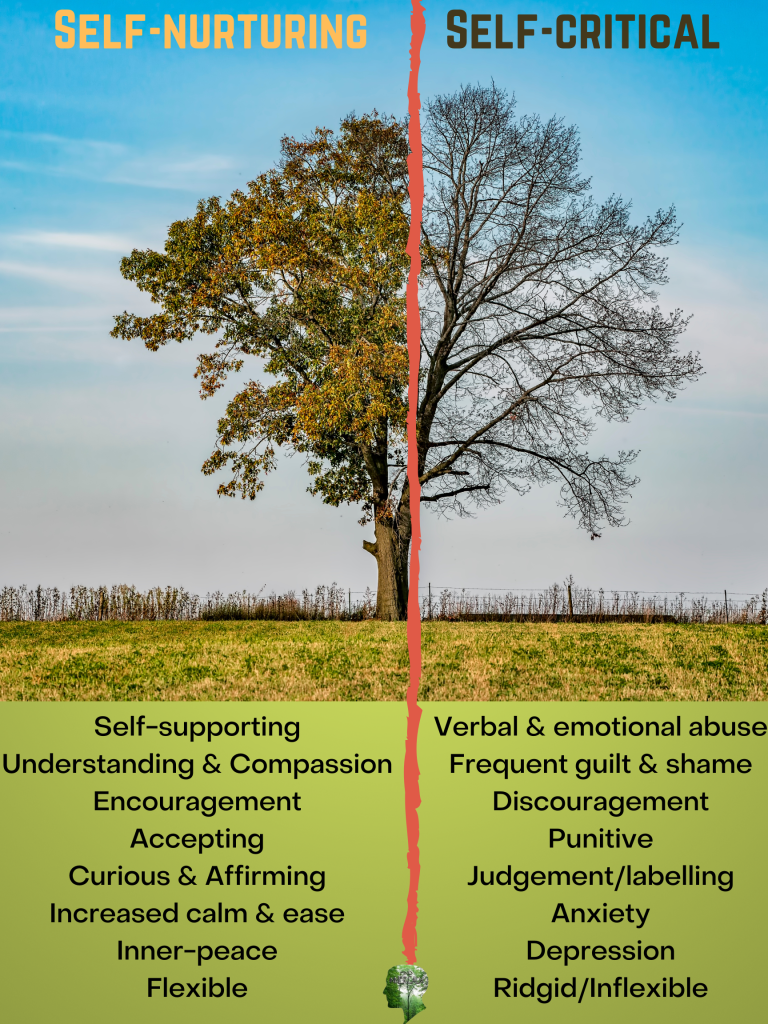
Self-compassion is the practice of responding to your own pain, mistakes, and struggles with kindness rather than criticism.
Instead of judging yourself for being imperfect or having difficult emotions, self-compassion involves treating yourself with the same care, understanding, and patience you would offer a close friend or someone you care about.
At its core, self-compassion has three key elements:
1) self-kindness (being warm and supportive toward yourself),
2) common humanity (recognizing that suffering and imperfection are part of being human),
3) mindful awareness (noticing your experiences without exaggerating or suppressing them).
Together, these elements help create a healthier relationship with yourself, especially during times of stress or failure.
Self-compassion is very important because harsh self-criticism activates the nervous system’s threat response, increasing stress, shame, and emotional reactivity.
In contrast, self-compassion supports emotional regulation, resilience, and motivation.
Research shows self-compassion is linked to lower anxiety and depression, greater well-being, and a stronger ability to cope with challenges. Importantly, self-compassion does not mean letting yourself off the hook—it means supporting yourself in ways that actually promote growth and healing.
Practising self-compassion can start with small, intentional steps. You might notice your inner dialogue and gently replace self-critical thoughts with more supportive language. You can pause during moments of difficulty to acknowledge, “This is hard,” and remind yourself that you are not alone in struggling.
Simple practices such as placing a hand on your chest, slowing your breathing, or writing yourself a compassionate note can also help signal safety and care to your nervous system.
Over time, self-compassion becomes less about doing something “right” and more about relating to yourself differently—meeting your experiences with curiosity, warmth, and respect rather than judgment.
Egan SJ, Rees CS, Delalande J, Greene D, Fitzallen G, Brown S, Webb M, Finlay-Jones A. A Review of Self-Compassion as an Active Ingredient in the Prevention and Treatment of Anxiety and Depression in Young People. Adm Policy Ment Health. 2022 May;49(3):385-403.
Sleep is one of the most essential foundations of mental health and overall well-being. During sleep, the brain and body carry out critical restorative processes that support emotional regulation, cognitive…
Psychological flexibility: The key towards enhancing emotional and psychological well-being Psychological flexibility is the capacity to fully contact the present moment and all of one’s experiences—including thoughts, emotions, and bodily…
Values are the directional core of psychological flexibility. They answer a deceptively simple question: What kind of person do I want to be, and how do I want to show…