Schemas: the hidden emotional programs that guide you
Understanding Early Maladaptive Schemas (EMS) and Their Impact on Mental Health
Early Maladaptive Schemas (EMS) are deeply held beliefs and emotional patterns about oneself and the world that develop early in life. These psychological schemas shape our self-concept and influence how we relate to others. While some schemas are adaptive and help us navigate life effectively, EMS can lead to psychological distress, self-defeating behaviours, and challenging or unsatisfying relationships.
Jeffrey Young, in Cognitive Therapy for Personality Disorders: A Schema-Focused Approach, describes schemas as ingrained cognitive and emotional frameworks that function like emotional programs, guiding our responses to life experiences.
Similar to a computer operating system running in the background, schemas in psychology influence how we interpret reality, react to stress, and interact with others—often outside our conscious awareness. When schemas are maladaptive, they create rigid thought patterns that interfere with emotional well-being, personal growth, and overall mental health.
How Do Early Maladaptive Schemas Develop?
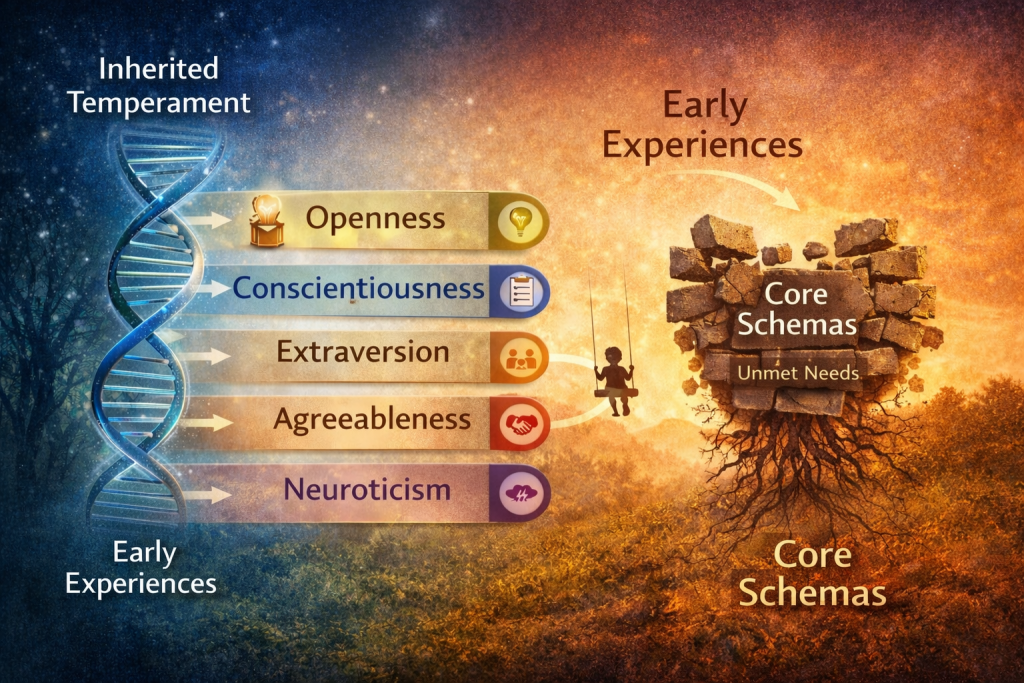
EMS emerge from the interaction between an individual’s innate temperament (e.g., agreeableness, neuroticism) and negative or dysfunctional early life experiences, including interactions with parents, siblings, and peers. Even if the original experiences do not recur, their emotional impact remains, influencing thoughts, feelings, and behaviors in adulthood.
Young emphasizes that EMS develop as a survival mechanism in childhood, allowing individuals to cope with unmet emotional needs. However, these same patterns become maladaptive in adulthood, as they are often based on outdated assumptions and exaggerated fears.
The Consequences of Early Maladaptive Schemas
Maladaptive schemas contribute to mental health issues such as depression, anxiety, relationship struggles, addictions, emotional dysregulation, and avoidance behaviors. Because activating a schema can evoke intense negative emotions, individuals often avoid situations that challenge their schema, thereby reinforcing the belief system and maintaining the cycle of distress.
Young’s model highlights that schemas tend to be self-perpetuating, meaning they filter perception in ways that confirm their own validity, leading individuals to engage in behaviours that further strengthen maladaptive patterns.
The 18 Early Maladaptive Schemas
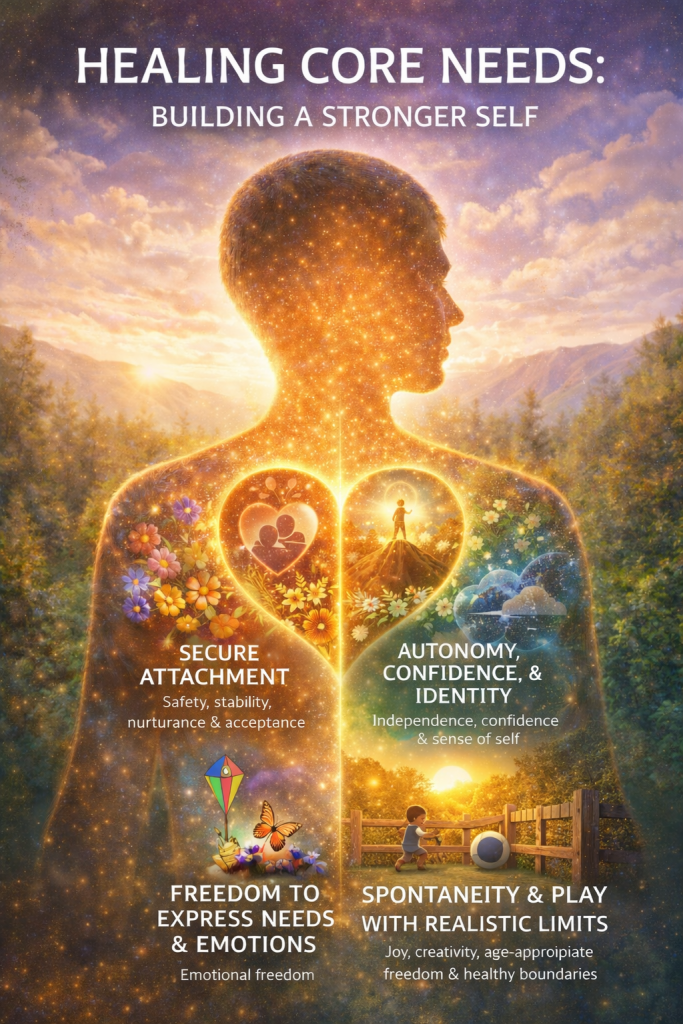
Schemas are grouped into five broad domains, each reflecting unmet core emotional needs from childhood.
1. Disconnection and Rejection
(Expectation that basic needs for security, stability, acceptance, and empathy will not be met.)
Abandonment/Instability: Fear that loved ones will leave, be unreliable, or die.
Mistrust/Abuse: Expectation of harm, manipulation, or exploitation by others.
Emotional Deprivation: Belief that emotional support and nurturance will be lacking.
Defectiveness/Shame: Feeling inherently flawed, unworthy, or unlovable.
Social Isolation/Alienation: Feeling fundamentally different, disconnected, or excluded from groups.
2. Impaired Autonomy and Performance
(Beliefs that undermine self-confidence, independence, and success.)
Dependence/Incompetence: Belief that one cannot manage daily life without help.
Vulnerability to Harm/Illness: Exaggerated fear of catastrophe (medical, emotional, external).
Enmeshment/Underdeveloped Self: Over-involvement with others, leading to a weak sense of identity.
Failure: Feeling inadequate and doomed to fail compared to peers.
3. Impaired Limits
(Difficulty setting realistic goals, respecting boundaries, or taking responsibility.)
Entitlement/Grandiosity: Belief in superiority, special rights, or exemption from normal social rules.
Insufficient Self-Control/Self-Discipline: Struggles with frustration tolerance and impulsivity.
4. Other-Directedness
(Prioritizing others’ needs over one’s own to gain approval or avoid conflict.)
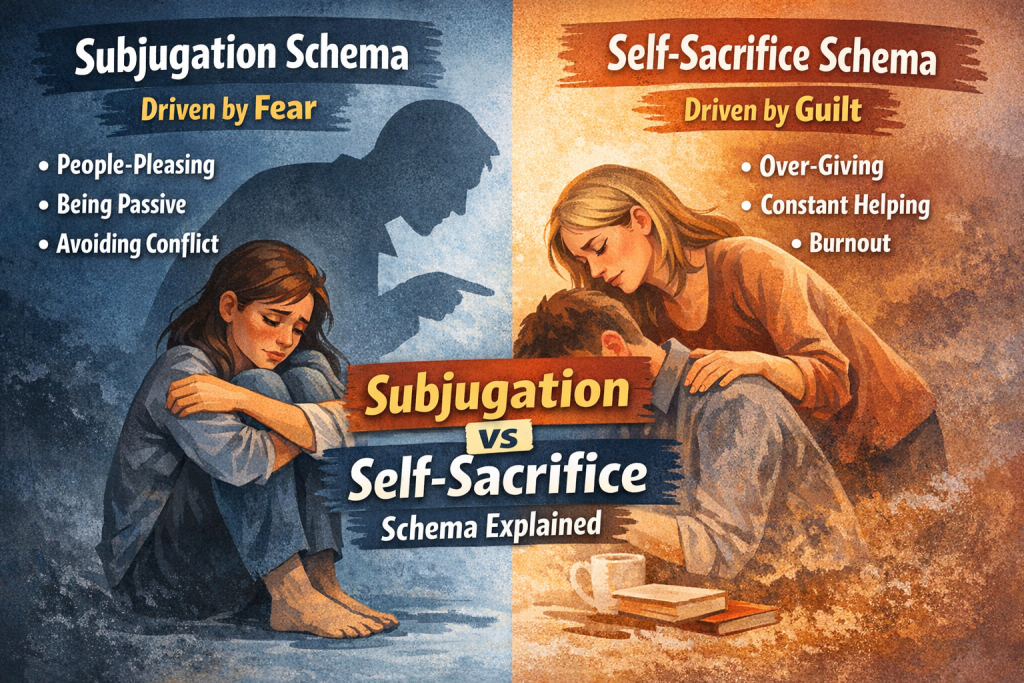
Subjugation: Excessive surrendering of control to avoid conflict or rejection.
Self-Sacrifice: Over-focus on meeting others’ needs at personal expense, often leading to resentment.
Approval-Seeking/Recognition-Seeking: Dependence on external validation for self-worth.
5. Overvigilance and Inhibition
(Excessive focus on suppressing emotions, rigid standards, and avoiding mistakes.)
Negativity/Pessimism: Chronic focus on worst-case scenarios and minimizing positives.
Emotional Inhibition: Suppressing emotions to avoid disapproval or loss of control.
Unrelenting Standards/Hypercriticalness: Perfectionism and pressure to meet unrealistically high standards.
Punitiveness: Harsh self-judgment and intolerance of mistakes, both in oneself and others.
Why Understanding Schemas Matters
Schemas shape how we interpret the world and engage in relationships. When left unexamined, maladaptive schemas drive patterns of avoidance, self-sabotage, or conflict that reinforce distress. Young emphasizes that schemas function as deep-seated emotional imperatives, dictating reactions and expectations before conscious thought intervenes. Much like an outdated software program running in the background, these patterns dictate our emotional responses even when they no longer serve our best interests.
Breaking Free from Maladaptive Schemas
Identify your core schemas and the ways they influence your thoughts, emotions, and behaviours.
Challenge and reframe distorted beliefs with evidence from current life experiences.
Engage in therapy to develop healthier coping strategies, build self-compassion and re-process the experiences that directly led to schema formation.
Cultivate relationships and experiences that counteract maladaptive schemas and promote emotional well-being.
Therapy focused on shifting early maladaptive schemas aims to help individuals update these deeply ingrained patterns, much like rewriting an outdated (unworkable) emotional script. By increasing awareness and actively challenging the assumptions behind schemas, individuals can gradually replace maladaptive responses with healthier, more adaptive ways of thinking and behaving.
Schemas have a significant impact on thoughts, feelings and behaviour but schemas are not destiny: Awareness and effort can transform these deeply ingrained patterns, paving the way for personal growth, healthier relationships, and emotional resilience.
Our next blog post in a series on the important topic of schemas will discuss and outline how to work on healing and changing maladaptive core schemas.
References:
Young, J. E. (1999). Cognitive therapy for personality disorders: A schema-focused approach (3rd ed.). Professional Resource Press.
Prepared by Dr. Jennifer Barbera, PhD, Registered Psychologist
Dr. Jennifer Barbera PhD, C. Psych is a licensed psychologist with over 25 years of counselling experience. She has extensive clinical expertise supporting individuals and couples with anxiety, trauma, depression, addiction, and relationship challenges. Her work combines evidence-based approaches with practical strategies to help clients build resilience and improve well-being.