What Is Schema Therapy—and Why Can It Be So Helpful?
Schema therapy is an integrative, evidence-based psychotherapy developed by Jeffrey Young to help people change long-standing emotional patterns that don’t shift with insight alone.
Schema therapy was originally designed for individuals with chronic depression and personality disorders, but it’s now widely used for trauma, attachment wounds, anxiety, relationship difficulties, and entrenched self-criticism.
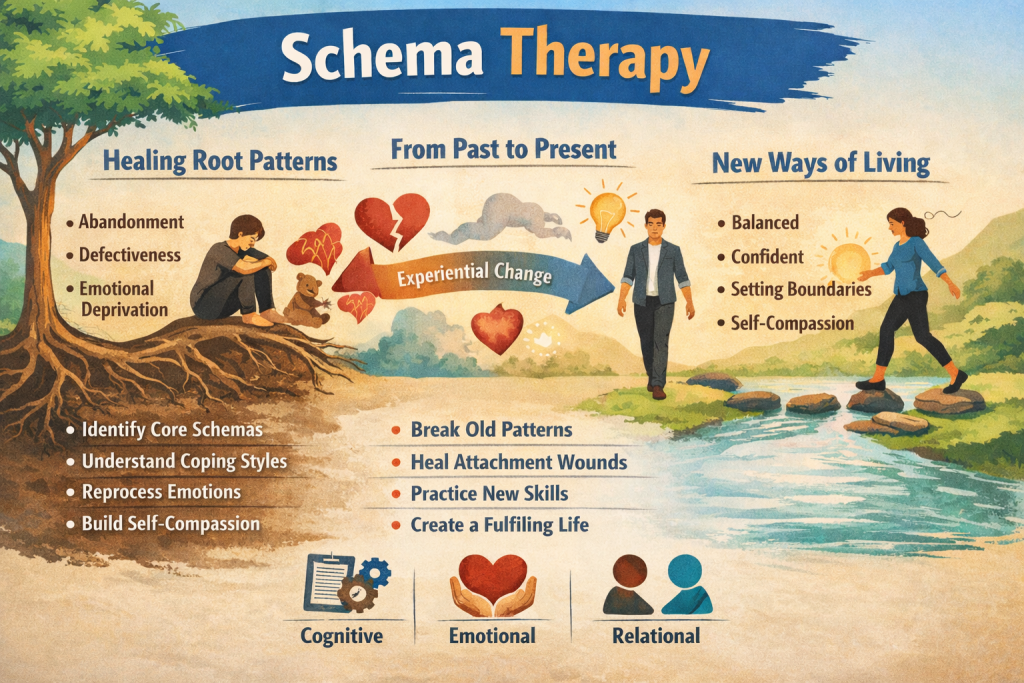
At its core, schema therapy focuses on schemas—deeply rooted emotional and cognitive patterns that develop when core emotional needs in childhood are repeatedly unmet.
These needs include safety, consistency, attunement, autonomy, acceptance, play and realistic limits.
When needs aren’t reliably met, the mind adapts by forming schemas such as abandonment, defectiveness, emotional deprivation, or unrelenting standards. These schemas are not just beliefs; they are felt realities that shape how a person interprets themselves, others, and the world.
How Schema Therapy Works
Schemas tend to operate automatically, especially in moments of stress or emotional closeness. When triggered, they activate familiar coping responses—such as avoidance, emotional shutdown, people-pleasing, self-criticism, or anger—that once helped the person survive but now keep them stuck.
Schema therapy helps by:
• Identifying core schemas rather than focusing only on surface symptoms
• Understanding coping styles that maintain those schemas
• Working experientially, not just cognitively, to update emotional learning
• Strengthening the “Healthy Adult” mode, the part of the self that can respond with clarity, boundaries, and self-compassion
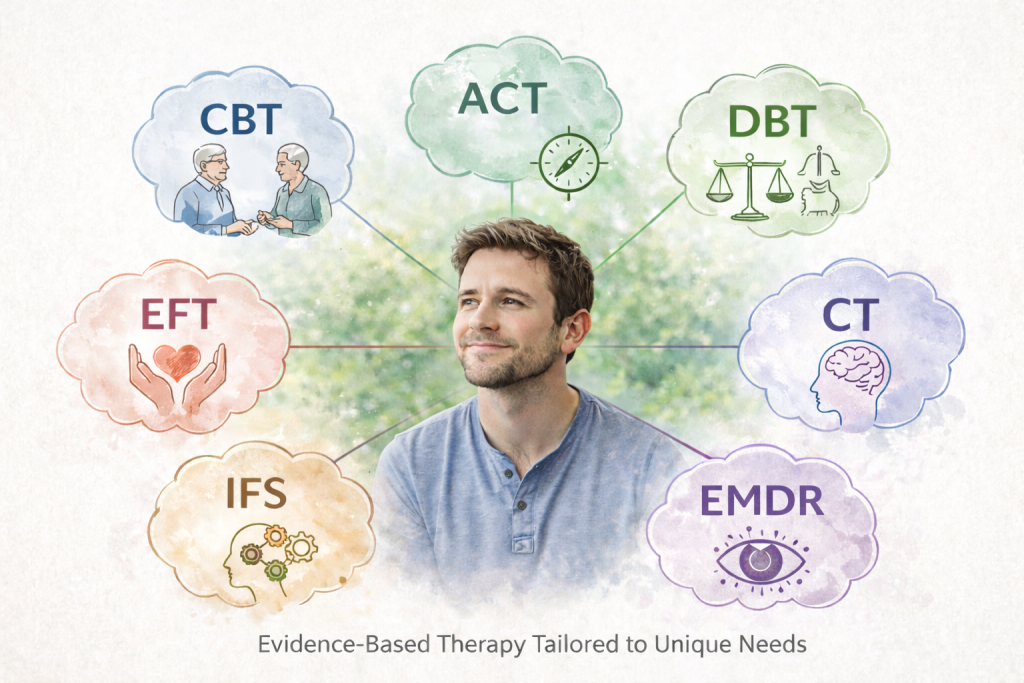
Therapists use a blend of approaches, including cognitive techniques, imagery, emotion-focused work, behavioural pattern change, IFS, and a strong therapeutic relationship. The relationship itself is key: the therapist provides consistency, validation, and emotional safety—sometimes described as limited reparenting—to help repair attachment injuries in a safe, boundaried way.
Why Schema Therapy Is Especially Helpful
Schema therapy is particularly effective when people say things like:
• “I understand why I feel this way, but it doesn’t change.”
• “I keep repeating the same patterns in relationships.”
• “I’m very hard on myself, no matter what I do.”
• “Talk therapy helped a bit, but something deeper feels untouched.”
This is because schema therapy targets emotional memory, not just insight. Many difficulties—especially those rooted in trauma or early relationships—are stored in the nervous system and emotional brain.
Schema therapy helps bring those patterns into awareness and gives them a corrective emotional experience, allowing new responses to gradually take hold.
Reasons to Consider Schema Therapy
Schema therapy is helpful because it:
• Goes beneath symptoms to address root causes
• Explains why patterns feel automatic and hard to change
• Integrates attachment, trauma, cognition, and emotion
• Offers a compassionate, structured path toward lasting change
For people who feel stuck in old emotional loops, schema therapy doesn’t ask, “What’s wrong with you?” It asks, “What did you have to adapt to—and how can we help you update that now?”
If you are interested in schemas therapy, reach out to us and let us know.
Learn More About Schemas:
[/vc_column_text][/vc_column][/vc_row]