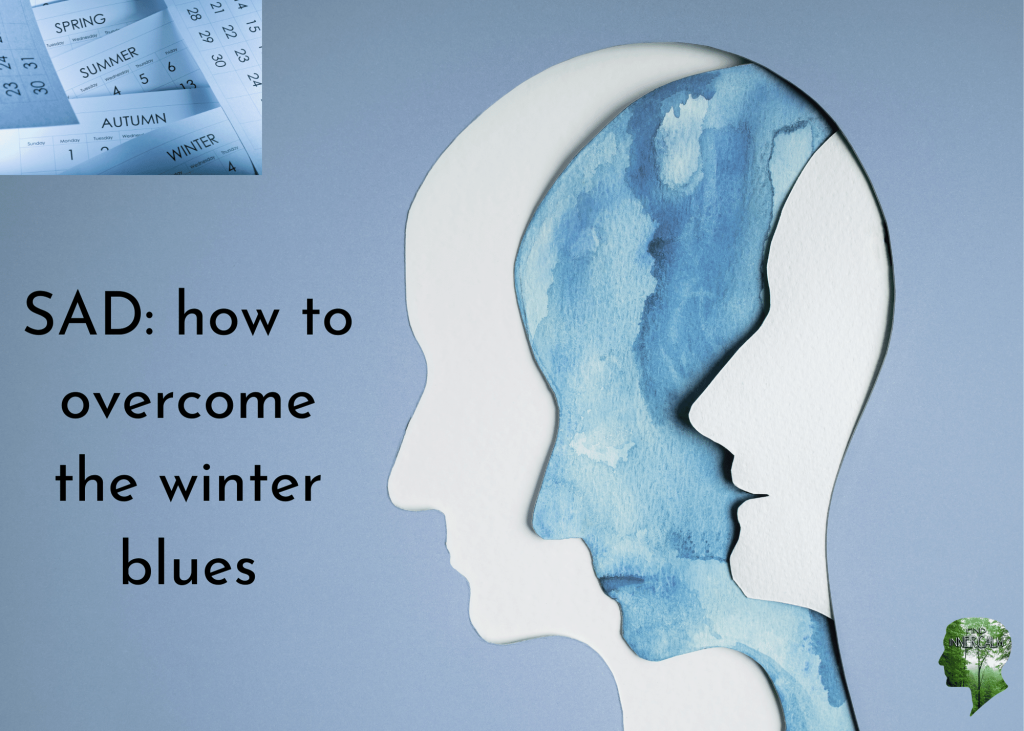
SAD: what is SAD and what can you do to improve your mood?
Seasonal Affective Disorder (SAD): Understanding Winter Depression
Do you notice your mood dropping as the days get shorter and the temperature falls? You are not alone. Many Canadians experience changes in mood with the seasons, particularly during the fall and winter months. Seasonal Affective Disorder (SAD) affects up to 15% of Canadians, making it a common yet often overlooked form of depression.
What Is Seasonal Affective Disorder (SAD)?
Seasonal Affective Disorder (SAD) is a type of major depressive disorder that occurs at a specific time of year, most commonly during the fall and winter months when daylight hours are shorter (Wirz-Justice et al., 2018). Symptoms may include persistent sadness, low energy, irritability, changes in sleep or appetite, and difficulty concentrating.
People with SAD typically notice their mood improving during spring and summer, when daylight increases. The severity of symptoms can vary widely: some individuals experience mild seasonal “winter blues,” while others may face major depressive episodes that significantly impact daily life.
Understanding SAD is the first step toward managing its effects. In this article, we will explore common symptoms, causes, and evidence-based strategies to cope with seasonal depression and maintain well-being throughout the year.
What are the symptoms of SAD?
SAD differs from regular depression as it is brought on and diminished by a change in seasons (Young et al., 2015). Much like the seasons come and go, so does the depression symptoms. Unlike regular depression, an increase in sleep and appetite is much more common with SAD.
Why is it important to address SAD?
Aside from affecting a person’s mood and enjoyment of things, people with SAD often report increased difficulty performing daily tasks. This increase in sleep, appetite, and lowered energy is generally seen first. Second to these symptoms comes a decline in cognitive and emotional symptoms, such as a lack of concentration, sadness, hopelessness, and a decreased interest in activities that once brought joy or satisfaction.
Who does SAD affect?
SAD is more common in women, with 60-90% of people with SAD being women (Young et al., 2015). Symptoms of SAD increase with age, usually beginning in childhood and then showing a decline in older age. SAD affects 2-3% of Canadians in their lifetime, and another 15% will experience a milder form of SAD (CMHA, 2022). SAD has also been shown to run in families, with 13-17% of people who develop SAD having a family member with SAD.
What can I do if I have SAD?
Light therapy: Involves sitting near a special kind of light for around 30 minutes a day that mimics the benefits of sunlight (CMHA, 2022). This treatment has been shown to relieve SAD symptoms by causing a chemical change in the brain. Ensure to consult with your doctor before trying this, as there can be side effects.
Prioritize time outdoors: As the weather gets colder, we tend to avoid going outside. It is important to prioritize outdoor time in the fresh air, such as going for walks, working outdoors or engaging in outdoor winter activities (CMHA, 2022). Just make sure to bundle up! You can also maximize sun exposure by rearranging your living spaces to maximize sunlight (opening curtains, moving your desk or couch near a window).
Self-care: As your mood drops, so does your motivation to care for yourself. Ensure you exercise regularly, eat a healthy diet, practice good sleep habits, and stay connected to others through the colder months (Homewood Health, 2022).
Vitamin D: Take vitamin D supplements or eat nutritious foods that contain it (cow’s milk, soy or rice beverages, orange juice, salmon, eggs, or fortified yogurts) (Homewood Health, 2022). Vitamin D is a key nutrient we get from the sun; reducing this in the winter can impact our mood. So, change your diet accordingly. Consider consulting a naturopath for other recommendations.
Medication: Consult with your doctor to determine if medication could be right for you. Medication effectively treats many kinds of depression (CMHA, 2022).
Address any other contributors to your low mood: Since there may be other contributors to your lowered mood, it can be helpful to address issues such as social withdrawal, low activity levels, inadequate diet, a tendency to be self-critical (this is a really important one), and lack of meaningful roles and relationships. Addressing these issues can help to improve mood and counter-balance the effects of a change in season.
Counselling: If you find it challenging to identify the factors contributing to your low mood, or are not sure how to address some of the concerns mentioned above, reach out and talk to a therapist. Therapy can be helpful to have someone to talk to and work on ways of managing and treating symptoms of SAD. An approach known as cognitive-behavioural therapy (CBT) has shown to be effective in treating depression (CMHA, 2022).
References
Dealing with seasonal depression. Homewood Health. (n.d.). Retrieved October 3, 2022,
Seasonal Affective Disorder. CMHA British Columbia. (n.d.). Retrieved October 3, 2022,
Wirz-Justice, Ajdacic, V., Rössler, W., Steinhausen, H.-C., & Angst, J. (2018). Prevalence of seasonal depression in a prospective cohort study. European Archives of Psychiatry and Clinical Neuroscience, 269(7), 833–839.
Young, Hutman, P., Enggasser, J. L., & Meesters, Y. (2015). Assessing Usual Seasonal Depression Symptoms: The Seasonality Assessment Form. Journal of Psychopathology and Behavioral Assessment, 37(1), 112–121.
By Jena Hattle, Graduate intern.