How to Build a Stronger Relationship:
How to Build a Stronger Relationship: The Actions That Matter Most
A Series on Improving Your Relationship – Part 2A
Learn the key relationship actions that strengthen emotional connection and reduce conflict. A psychologist explains disconnection, reactivity, and how to rebuild closeness.
Introduction
In Part 1 of this relationship series, we explored how beliefs and myths about relationships can quietly undermine intimacy and long-term satisfaction. We examined four common relationship myths and highlighted an essential truth: there is no such thing as a perfect relationship.
Every relationship has challenges—but meaningful, secure, and fulfilling relationships are still absolutely possible.
In Part 2 of this series we shift from beliefs to actions. Specifically, we explore:
• What gets in the way of healthy relationships
• The everyday patterns that drain connection
• Practical actions you can take to strengthen your relationship (including how to reduce avoidance that harms your relationship)
The goal of this relationship series is simple: to help you move toward the kind of relationship you genuinely want.
Reflecting on Your Relationship
Take a moment to reflect on your current relationship:
• Do arguments involve yelling, name-calling, or shutting down?
• Do disagreements lead to avoidance or long periods of emotional distance?
• Do conflicts centre around money, sex, parenting, housework, work stress, communication styles, values, or future goals?
The topics may vary, but the underlying dynamics that damage relationships are often the same.
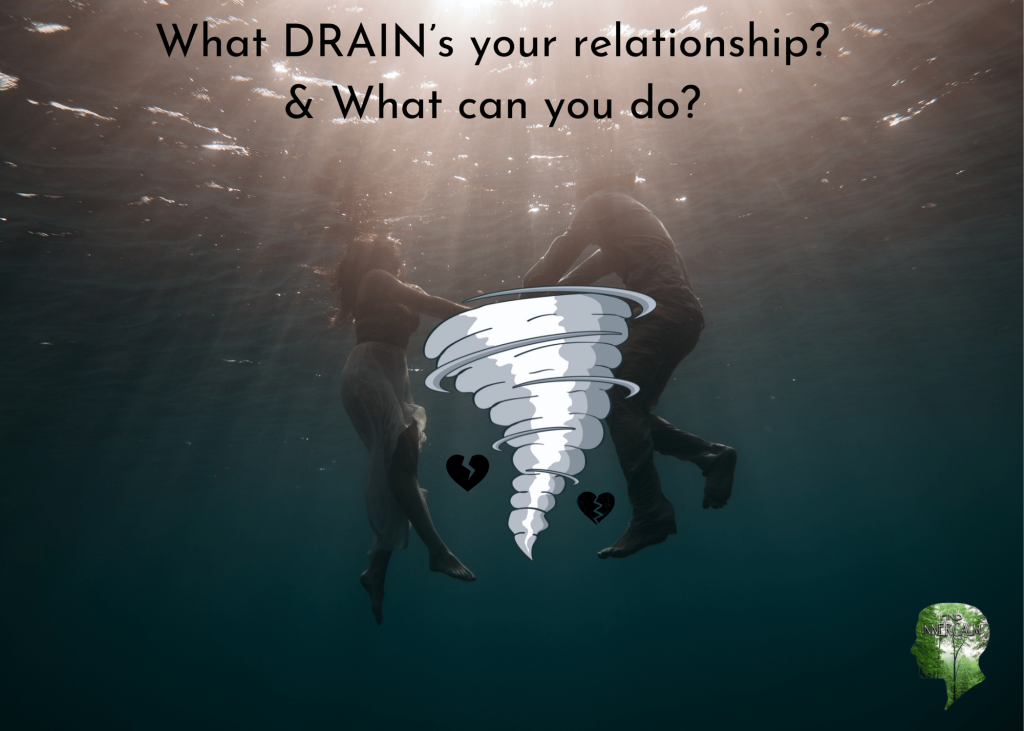
Psychologist Russ Harris developed a helpful framework to identify these hidden dynamics—factors that quietly drain the vitality from relationships.
The DRAIN Framework: What Undermines Relationships
DRAIN represents five core patterns that weaken emotional connection:
• D – Disconnection
• R – Reactivity
• A – Avoidance
• I – Inside Your Mind
• N – Neglecting Your Values
In this post, we’ll focus on the first two: Disconnection and Reactivity.
Disconnection: Rebuilding Emotional Closeness
Disconnection refers to how emotionally close, secure, and connected you feel with your partner.
Connection grows when partners feel:
• Seen and heard
• Appreciated and respected
• Emotionally safe
When couples feel connected, differences feel less threatening. Conflict becomes easier to navigate because the relationship itself feels secure.
When disconnection sets in, conflict often escalates. Attachment fears may be triggered, leading people to withdraw, shut down, or become hostile.
Three Daily Actions to Increase Connection
If your relationship matters to you, small daily actions can dramatically strengthen connection.
1. Be more mindful of your partner
Resist multitasking when greeting or parting. Make eye contact. Put devices away when possible. Help your partner feel noticed and important.
2. Help your partner feel valued
Feeling unappreciated is one of the most common concerns in couples therapy.
Each day, name one thing you genuinely appreciate about your partner—verbally or in writing.
3. Stay curious about your partner
Even long-term partners continue to grow and change. Ask about their day. Ask how they came to a particular viewpoint.
During disagreements, focus on understanding—not fixing or defending.
Reactivity: Responding Instead of Reacting
Reactivity refers to responding to your partner with intense emotion rather than awareness and self-control.
When emotions take over, people often act in ways that are self-defeating or damaging to the relationship.
Ask yourself:
• How quickly do I become defensive?
• How often do I react before pausing?
How to Reduce Reactivity in Your Relationship
1. Notice emotional triggers
Strong reactions often mask more vulnerable emotions such as hurt, fear, or disappointment. Anger can feel easier—but it blocks connection.
2. Express vulnerability instead of anger
Sharing fear or hurt increases the likelihood of comfort and responsiveness. Anger usually leads to withdrawal or escalation.
3. Pause before responding
Take a breath. Accept the emotion without acting on it immediately.
If needed, ask for space—while reassuring your partner that they matter and the conversation will continue.
Important note: Always return to unresolved conversations at a neutral time. Couples Counselling can be an ideal “neutral time” to have effective conversations to address concerns in your relationship. Reach out at any time if we can be of further assistance.
Reference
Harris, R. (2009). ACT With Love. Oakland, CA: New Harbinger Publications.
Prepared by Dr. Jennifer Barbera, PhD, Registered Psychologist
Dr. Jennifer Barbera PhD, C. Psych is a licensed psychologist with over 25 years of counselling experience. She has extensive clinical expertise supporting individuals and couples with anxiety, trauma, depression, addiction, and relationship challenges. Her work combines evidence-based approaches with practical strategies to help clients build resilience and improve well-being.