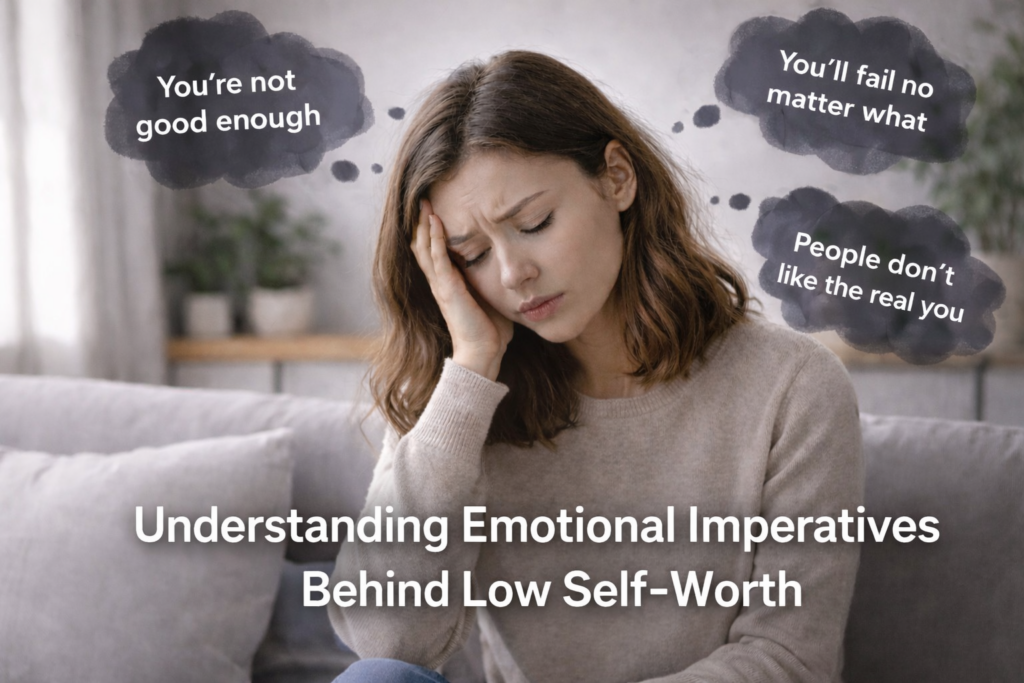
How self-worth affects our vulnerability to depression.
Self-worth refers to the deeply held beliefs a person has about their value as a human being. It reflects whether someone sees themselves as deserving of love, respect, care, and happiness—simply because they exist, not because of what they achieve or how they perform. Healthy self-worth provides a stable inner foundation, while low self-worth often leaves individuals vulnerable to shame, anxiety, people-pleasing, and self-criticism.
Unlike confidence, which can fluctuate depending on circumstances, self-worth is more enduring. It shapes how we treat ourselves, what we tolerate in relationships, and how we respond to setbacks. When self-worth is compromised, people may internalize failure, minimize their needs, or believe they must earn acceptance through perfection or self-sacrifice.
To begin reflecting on your own sense of self-worth, consider how you would describe yourself if no one were judging or listening. What words come to mind first—are they kind, critical, or neutral? What do you value about yourself beyond your roles or accomplishments? And where did these beliefs originate—early relationships, cultural messages, trauma, or life experiences?
Exploring self-worth is not about self-blame; it is about understanding how your inner narrative developed and how it may be shaping your emotional well-being today. With support, self-worth can be strengthened and rewritten in ways that feel more compassionate, grounded, and true to who you are.
Why is self-worth so important?
A person’s self-worth has a direct bearing on their well-being and mental health. People who have a strong sense of self-worth are less likely to think negatively about themselves. People with more positive self-worth are also less likely to stay in hurtful relationships. They may also be less likely to shy away from pursuing the things that they want in life. These impacts may also be why low self-esteem is found to correlate with depression, anxiety and suicidal ideation (Nguyen et al., 2019).
When someone has a stronger sense of self-worth, they are more likely to redirect themselves away from negative thinking. People with stronger self-worth are also more likely to learn from mistakes without berating themselves. They may resist seeing mistakes as a reflection of themselves as a person. The positive impacts may be why improving self-worth and self-esteem has been found to help protect from mental health concerns such as depression (Mann et al., 2004).
People with low self-worth are more likely to criticize themselves and focus on mistakes. As humans, we all make mistakes and have times where we struggle. To help protect our mental health, it’s important to recognize our own value, even when we make mistakes or struggle. When a person has difficulty recognizing their worth, they may be more vulnerable to depression.
What is the relationship between self-worth and depression?
There is a 2-way relationship between self-worth and depression. Low self-worth can lead to increased vulnerability to depression. Depression can also lead to reduced feelings of self-worth.
Low self-worth can lead to depression because low self-worth tends to lead to self-defeating attitudes. Lower self-worth also tends to lead to an increased tendency to dismiss or minimize positive feedback from others. Low self-worth also tends to undermine people’s confidence in their ability to cope with stress or adverse events (Mann et al., 2004). A reduced ability to cope can make people more vulnerable to succumbing to depression.
On the flip side, when someone experiences depression, they may be more likely to experience a decline in their self-esteem and sense of self-worth. Depression can affect people’s self-worth in several ways. Here are three main ways that depression contributes to reduced feelings of self-worth:
1) Depression tends to have a very negative impact on perceptions and thoughts. In particular, the more depressed someone becomes, the more they will tend to ruminate on negative aspects of themselves or negative memories. When people become more depressed, the internal critic part of themselves tends to become more active. A more active inner critic further erodes feelings of self-worth as the person focuses more heavily on perceived flaws and shortcomings.
2) The brain works through associations. This means negative moods and negative memories get paired together. At the same time, positive moods and positive memories are linked together. Because memories tend to match our mood, someone who is depressed will be more likely to recall adverse events where they felt they didn’t succeed or have the outcome they wanted. This can reinforce negative views about themselves and lower their sense of self-worth even further, especially over time.
2)Depression leads to reduced activity and social withdrawal. This means that as someone becomes depressed, they start to pull back from usual activities and responsibilities. They may even withdraw from important relationships. This tends to increase dissatisfaction because of reduced opportunities for fulfillment, which ordinarily helps to bolster self-worth. In addition, when people pull back from other people and activities, they may feel guilty. Increased guilt can negatively impact their self-worth because they feel upset or disappointed with themselves.
So how can someone improve their sense of self-worth and help buffer from depression symptoms?
Here are 7 tips for strengthening self-worth:
1) work on being more aware of your negative thinking through thought monitoring or mindfulness skills. When you notice negative thoughts, especially thoughts focused on self-criticism, focus on noticing the thought and letting the thought go. Using a visual metaphor for letting go of the thought can help. We call this “thought defusion”. For example, picture the thought as background radio noise that you turn down. Or, imagine the thought as a water balloon or a bubble that you pop. You can also think of the thought as a “hook” that shows up. Then, instead of being “hooked” by the hook, you swim or move around it. In this way, you notice the hook, but you don’t engage with it.
2) Use positive affirmations to help balance out any negative things you say or think to yourself. For example, tell yourself every day, “no matter what I have or haven’t done, I deserve love and happiness.”
3) when you notice you are feeling down about yourself, reflect on how you would treat or view someone else in the same situation. We tend to be much more flexible and or forgiving with others than we are of ourselves (especially for those who are self-critical). When you reflect on someone else if you would view things differently or be less harsh or critical- ask yourself, “how is it fair or reasonable to have a higher standard for myself?”
4) Identify tasks or activities that make you feel better about yourself. Commit to doing some of these actions every day if possible or at least a few times a week.
5) When you catch yourself criticizing yourself for something, balance this out with an acknowledgement of something you are proud of or at least feel more neutral about.
6) Consider some self-compassion training. There is a great free workbook on developing self-compassion on the centre for clinical interventions website:
You can also listen to self-compassion mediations which can help develop a more self-compassionate stance towards yourself. This can improve feelings of self-worth and help buffer against depression.
7) The above strategies are “counter-balancing” strategies meant to help override negative views or perceptions of oneself. Sometimes a “transformational approach” may be needed, where the aim is to heal and shift the original learning or programming that leads to low self-worth. If you tend to be chronically self-critical, consider seeking a therapist to engage in IFS (internal family systems work). This approach can help you to work on your inner critic by exploring its function, by reducing inner tension between your inner critic and other parts of yourself, and by identifying and healing what fueled the development of an inner critic in the first place.
How do you know if it’s time to seek out help for depression or low self-worth?
-if you have a challenging time identifying positive attributes or characteristics within yourself.
-if you frequently put yourself down, call yourself negative names such as “stupid” or “pathetic” or view yourself in a negative manner.
-if people tell you that you are too hard on yourself.
-if you feel down in your mood more days than not for longer than a week or two and there is no apparent acute cause such as the death of a loved one or loss of Job or relationship.
-if you find yourself settling for mistreatment from others and you continue to engage in relationships that make you feel very sad, angry, guilty, ashamed etc.
-when you have tried some of the above approaches, and you still don’t think your sense of self-worth is improving.
-you can also try rating your feelings of self-worth. Ask yourself, on a scale of 0-10 (0 = not at all, 10 = truly and fully), “how much do you believe you are worthwhile and deserve happiness?” If you answer lower than a 6 or 7, consider talking to a clinical therapist or psychologist who can help you actively work on improving your sense of self. You really are worth it! Realizing that you deserve positive feelings and experiences can make a world of difference for your life and well-being!
If you would like support in exploring or rebuilding your sense of self-worth, you are welcome to reach out through our contact page to begin the conversation.
References
Mann M, Hosman CM, Schaalma HP, de Vries NK. Self-esteem in a broad-spectrum approach for mental health promotion. Health Educ Res. 2004 Aug;19(4):357-72. doi: 10.1093/her/cyg041. Epub 2004 Jun 15. PMID: 15199011.
Nguyen DT, Wright EP, Dedding C, Pham TT, Bunders J. Low Self-Esteem and Its Association With Anxiety, Depression, and Suicidal Ideation in Vietnamese Secondary School Students: A Cross-Sectional Study. Front Psychiatry. 2019 Sep 27;10
Prepared by Dr. Jennifer Barbera, PhD, Registered Psychologist
Dr. Jennifer Barbera PhD, C. Psych is a licensed psychologist with over 25 years of counselling experience. She has extensive clinical expertise supporting individuals and couples with anxiety, trauma, depression, addiction, and relationship challenges. Her work combines evidence-based approaches with practical strategies to help clients build resilience and improve well-being.