
Proven Strategies for Managing Stress
Stress is a normal part of everyday life. However, when stress becomes chronic or unmanaged, it can significantly impact both mental and physical health. Learning how to manage stress effectively…

Improving Body Image: A Journey to Self-Acceptance
In a world where societal standards often dictate what constitutes an “ideal” body, it’s no wonder that many individuals struggle with body image issues. The relentless bombardment of airbrushed models on magazine covers, filtered social media posts, and unrealistic beauty standards can take a toll on our self-esteem and self-worth (Vandenbosch et al., 2022).
With all these pressures, it’s essential to remember that improving body image is a journey that begins with self-acceptance and self-compassion. In this blog post, we will explore practical ways to enhance body image and cultivate a healthier relationship with our bodies.
Understanding Body Image
Before delving into strategies to improve body image, it’s crucial to understand what body image is and how it influences our perceptions and behaviours.
Body image refers to the mental representation one holds of their physical appearance (Cash, 2012). Body image encompasses thoughts, feelings, and attitudes toward one’s body, including size, shape, and overall appearance. Body image can be influenced by a multitude of factors, including media portrayal of beauty, societal pressures, peer comparisons, and personal experiences (Tylka & Wood-Barcalow, 2015; Cash, 2012).
A negative body image can lead to a range of psychological and emotional issues, such as low self- esteem, depression, anxiety, and even eating disorders (Choma et al., 2009; Guest et al., 2019). Conversely, a positive body image is associated with increased self- confidence, and better mental health (Gillen, 2015).
Improving Body Image: Practical Strategies
• Practice Self-Compassion
Self-compassion involves treating yourself with the same kindness and understanding you would offer to a friend facing a challenging situation (Neff, 2011). When it comes to improving body image, practicing self-compassion can decrease feelings of guilt associated with eating, and body dissatisfaction (Wasylkiw wt al, 2012; Moffitt et al., 2018). Instead of engaging in self-criticism, try to replace negative self-talk with gentle and supportive inner dialogue. Remember that nobody is perfect, and it’s okay to have imperfections and flaws.
• Challenge Unrealistic Beauty Standards
Many people struggle with body image because they compare themselves to unrealistic beauty standards perpetuated by the media and society.
To improve body image, it’s crucial to challenge unrealistic standards and recognize that your physical body does not define your worth.
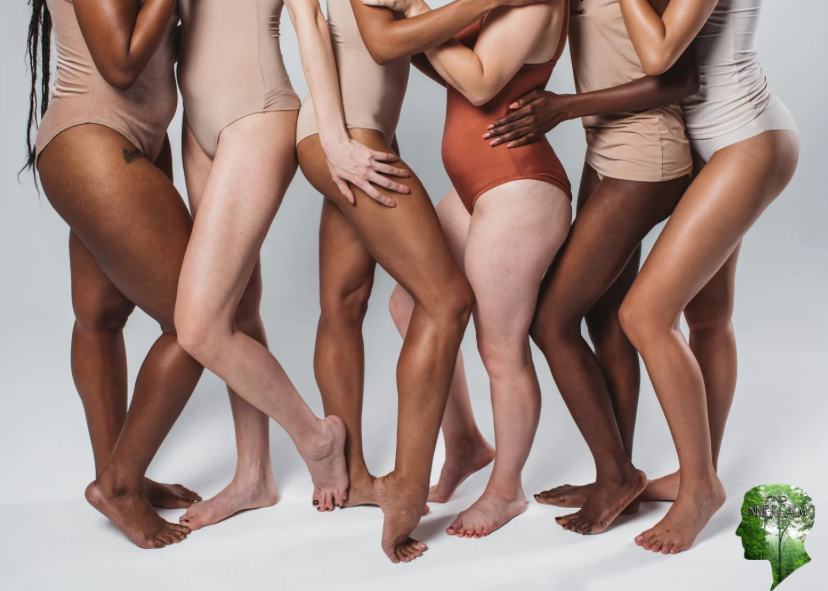
Start by curating your media intake or curating your feeds to include content that promotes body positivity and self-acceptance, unfollowing accounts that make you feel inadequate, and actively seeking diverse representations of beauty (Vandenbosch et al., 2022).
• Cultivate Self-Acceptance
Self-acceptance is the foundation of a positive body image. Embrace the uniqueness of your body and celebrate it. Understand that your body has carried you through life’s challenges, and it deserves love and acceptance.
Focus on what your body can do rather than how your body looks. Engaging in activities that promote self-acceptance, such as journaling or mindfulness, can also be immensely helpful (Smith-Jackson et al., 2011; Guest et al., 2019).
• Surround Yourself with Positive Influences
The people you surround yourself with can significantly impact your body image. Seek out friends and loved ones who promote body positivity and support your journey toward self-acceptance.
Engage in open and honest conversations about body image with those you trust, as sharing your thoughts and feelings can be liberating and comforting.
• Positive Self-Talk
The language we use to talk about our body can reinforce negative self- judgements. Negative self-talk centred around weight and appearance has been associated with higher levels of psychological distress and a more negative body image (Alleva et al., 2015).
Switch negative, judgemental language about oneself with more positive terms and self-acceptance.
• Practice Mindful Eating
Mindful eating, sometimes referred to as intuitive eating, involves paying attention to your body’s hunger and fullness cues, as well as your emotional triggers for eating (Guest et al., 2019).
By practicing mindful eating, you can develop a healthier relationship with food and your body. Mindful eating can lead to more balanced eating habits and a greater appreciation for the nourishment your body needs.
• Exercise for Joy, Not Punishment
Exercise should be a source of joy and well-being, not a punishment for what you eat or how you look.
Find physical activities that you genuinely enjoy, whether it’s dancing, hiking, yoga, or swimming.
Exercise should be about feeling good and taking care of your body, rather than a means to conform to societal beauty standards (Prichard & Tiggemann, 2008).
• Challenge Negative Thoughts
Negative thoughts about your body can become ingrained over time. To break this cycle, learn to challenge these thoughts (Alleva et al., 2015).
When you catch yourself thinking negatively about your body, ask yourself if these thoughts are rational or evidence-based. Often, you’ll find that they are based on irrational beliefs or unrealistic societal pressures, which can be addressed through cognitive-behavioral techniques.
• Focus on Health, Not Weight
Instead of fixating on the number on the scale, shift your focus to health and well-being. Make choices that prioritize your physical and mental health, such as eating a balanced diet, getting regular exercise, and managing stress.
By concentrating on health rather than weight, you’ll adopt a more sustainable and positive approach to your body (Alleva et al., 2015; Prichard & Tiggemann, 2008).
• Engage in Positive Affirmations
Positive affirmations and self compassion writing tasks have been associated with improving body image (Guest et al., 2019; Moffitt et al., 2018). Create a list of affirmations that resonate with you and repeat them daily. For example, “I am more than my appearance,” “I love and appreciate my body for all it does for me,” or “I am confident and beautiful just as I am.” These affirmations can gradually shift your mindset and bolster your self-esteem.
• Embrace Self-Care
Self-care is essential for nurturing a positive body image. Engage in activities that make you feel good, whether it’s taking a warm bath, meditating, practicing yoga, or enjoying a hobby (Smith-Jackson et al., 2011). Self-care helps you reconnect with yourself and reinforces the idea that you are deserving of love and care.
• Seek Professional Help
If negative body image is significantly affecting your mental health or leading to harmful behaviours like disordered eating, it’s essential to seek professional help.
Therapists, counsellors, and dieticians specializing in body image and eating disorders can provide valuable guidance and support tailored to your specific needs. For instance, cognitive behavioural therapy based interventions have been found effective for improvising body image (Guest et al., 2019; Alleva et al., 2015)
Final thoughts:
Improving body image is a journey that requires patience, self-compassion, and conscious effort. It’s important to remember that no one has a perfect body, and the pursuit of perfection can lead to unhappiness and self-destructive behaviours. Instead, focus on self-acceptance and self-compassion, recognizing that your worth goes far beyond your physical appearance.
By implementing the practical strategies discussed in this article, you can embark on a path toward a more positive body image and a healthier relationship with your body. Remember that you are unique, beautiful, and deserving of self-acceptance just as you are. Embrace your individuality, and let self-love be your guide on this transformative journey.
By Raechel Hamill, Mpsy Candidate
Edited by Dr. Jennifer Barbera, PhD, Registered Psychologist
Dr. Jennifer Barbera PhD, C. Psych is a licensed psychologist with over 25 years of counselling experience. She has extensive clinical expertise supporting individuals and couples with anxiety, trauma, depression, addiction, and relationship challenges. Her work combines evidence-based approaches with practical strategies to help clients build resilience and improve well-being.
References
Alleva, J. M., Sheeran, P., Webb, T. L., Martijn, C., & Miles, E. (2015). A meta-analytic review of stand-alone interventions to improve body image. PloS one, 10(9), e0139177.
Cash, T. F. (2012). Cognitive-behavioral perspectives on body image. Encyclopedia of body image and human appearance, 1, 334-342.
Choma, B. L., Shove, C., Busseri, M. A., Sadava, S. W., & Hosker, A. (2009). Assessing the role of body image coping strategies as mediators or moderators of the links between self-objectification, body shame, and well-being. Sex Roles, 61, 699-713.
Gillen, M. M. (2015). Associations between positive body image and indicators of men’s and women’s mental and physical health. Body image, 13, 67-74. https:// doi.org/10.1016/j.bodyim.2015.01.002