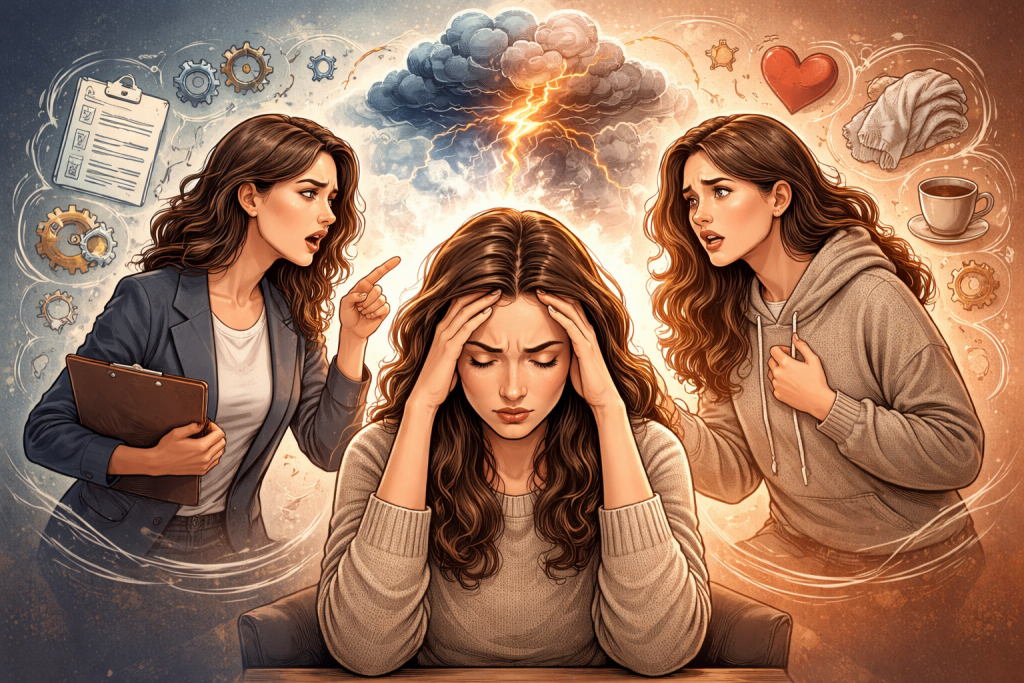
healing-emotional-regulation-through-therapy
How Caregiving Adults Shape a Child’s Capacity for Emotional Regulation
And How Therapy Can Heal What Was Missed
From the very beginning of life, children rely on caregivers not just for physical safety, but for emotional regulation. Infants and young children do not yet have the neurological capacity to manage intense feelings on their own. Instead, they borrow the nervous system of a responsive adult.
This process—known as external regulation—is foundational to healthy brain development. Over time, when caregiving is consistent, attuned, and emotionally available, children gradually develop the ability to regulate themselves. When it is disrupted, emotional regulation difficulties can persist into adulthood, often shaping core beliefs about self, others, and the world.
External Regulation: Borrowing a Calm Nervous System
When a child becomes distressed, their nervous system moves into a state of alarm. A responsive caregiver helps bring that system back to balance by:
• Noticing distress cues
• Responding with warmth, calm, and consistency
• Naming emotions and offering comfort
• Helping the child feel safe enough to settle
Through repeated experiences of being soothed, the child’s brain learns:
• Feelings are tolerable
• I am not alone with my emotions
• Distress can rise and fall
Neurobiologically, these interactions support the development of connections between the limbic system (emotion) and the prefrontal cortex (regulation, reflection, and impulse control). Over time, what was once provided externally becomes internalized.
This is how self-regulation is built—not taught through discipline, but learned through relationship.
When Caregivers Are Struggling Themselves
Caregivers do not need to be perfect. However, when adults are consistently overwhelmed by their own mental health challenges—such as depression, anxiety, trauma, substance use, or unresolved attachment wounds—their capacity to co-regulate can be significantly reduced.
This may look like:
• Emotional unavailability or withdrawal
• Explosive or unpredictable responses
• Dismissal or minimization of emotions
• Role reversal, where the child must manage the adult’s feelings
• Chronic inconsistency in care
In these environments, children may learn that:
• Their emotions are too much
• Comfort is unreliable or unsafe
• They must suppress, control, or escalate emotions to be seen
• They are responsible for others’ feelings
The nervous system adapts to survive—but at a cost.
The Impact on Emotional Schemas
When external regulation is missing or inconsistent, children develop schemas—deeply held emotional and cognitive patterns—that help make sense of their world.
Common schemas linked to disrupted regulation include:
• Emotional Deprivation: “No one will meet my emotional needs.”
• Abandonment: “People will leave when I need them.”
• Defectiveness/Shame: “Something is wrong with me for having feelings.”
• Mistrust/Abuse: “If I show vulnerability, I will be hurt.”
• Subjugation or Self-Sacrifice: “My needs don’t matter.”
These schemas shape adult relationships, emotional reactions, and coping strategies. Emotional dysregulation may show up as intense anger, shutdown, anxiety, self-criticism, or chronic overwhelm—often without clear understanding of why emotions feel so unmanageable.
Why Skills Alone Are Sometimes Not Enough
Approaches like Dialectical Behaviour Therapy (DBT) provide powerful tools for emotion regulation, distress tolerance, and impulse control. For many people, these skills are life-changing.
However, when emotional regulation difficulties stem from early attachment and developmental wounds, skills alone may feel:
• Hard to access in moments of distress
• Invalidating (“Why can’t I just do the skill?”)
• Insufficient for deep emotional pain
This is because the nervous system is reacting from a much younger place—one that never learned safety through relationship.
Healing Through IFS and Schema Therapy
Internal Family Systems (IFS)
IFS understands emotional reactions as coming from parts of the self—many of which developed early in life to manage pain, fear, or unmet needs.
In IFS:
• Dysregulated reactions are seen as protective, not pathological
• Inner child parts often carry unmet needs for comfort, safety, and validation
• Healing happens through building an internal relationship of compassion and care
By helping clients connect with these younger parts, therapy offers something deeply reparative: internal co-regulation.
Over time, clients learn to respond to their own distress with the presence and steadiness they did not receive consistently as children.
Schema Therapy
Schema Therapy explicitly addresses how early emotional needs went unmet and how those patterns persist.
Through:
• Experiential exercises
• Imagery rescripting
• Limited reparenting
• Emotion-focused work
Clients can:
• Soften harsh internal critics
• Meet vulnerable child needs safely
• Develop a stronger “Healthy Adult” mode
• Reduce emotional reactivity and shutdown
This approach helps rewrite emotional learning—not just intellectually, but at a felt level.
Inner Child Work: Rebuilding Regulation from the Inside Out
Inner child work is not about dwelling in the past—it is about repairing developmental gaps.
By acknowledging the younger parts that learned to survive without adequate regulation, therapy helps:
• Normalize emotional intensity
• Reduce shame around dysregulation
• Build emotional safety internally
• Increase tolerance for difficult feelings
When combined with DBT skills, clients gain both:
• Tools for managing emotions, and
• Relational healing that makes those tools usable
Regulation Is Learned Through Relationship—Even in Adulthood
The ability to regulate emotions is not a character trait or a moral failing. It is a developmental skill shaped by early relationships. When those relationships were limited by caregiver mental health challenges, the nervous system adapted in understandable ways.
The good news is that the brain remains capable of change.
Through integrative therapy that includes DBT, Schema Therapy, and IFS, adults can:
• Build the regulation they never received
• Heal emotional schemas at their roots
• Develop a compassionate internal caregiver
• Experience emotions with greater stability, safety, and choice
Healing emotional regulation is not about becoming perfectly calm—it is about learning, often for the first time, that emotions can be met with understanding, steadiness, and care.
Ready to build steadier emotional regulation? Book a consultation today.