
Proven Strategies for Managing Stress
Stress is a normal part of everyday life. However, when stress becomes chronic or unmanaged, it can significantly impact both mental and physical health. Learning how to manage stress effectively…

Clinical psychologist Dr. Jennifer Barbera, C. Psych, is interviewed about a question many people quietly struggle with: Is the endless pursuit of happiness actually undermining our mental health?
In Western culture, happiness is often presented as the ultimate goal—a state we are told we should be striving for at all times. We are surrounded by messages suggesting that lasting happiness can be achieved if we buy the right products, follow the right self-improvement plan, find the right partner, or reach the right milestone. When happiness becomes framed as something to be earned, sustained, or optimized, it can quickly turn into a source of pressure rather than fulfilment.
While it is entirely human to prefer feeling happy over feeling distressed, problems arise when happiness is treated as a permanent emotional state rather than a fleeting experience.
Humans are not wired to feel joyful or excited all the time. Much like the weather, our emotional lives naturally shift—moving through contentment, boredom, unease, joy, anxiety, sadness, and everything in between. Expecting ourselves to feel happy every day is like expecting constant sunshine: it ignores reality and sets us up for disappointment.
This interview explores why the pursuit of happiness can become a psychological trap, how myths about happiness fuel anxiety, shame, and self-criticism, and what people can focus on instead to support long-term mental well-being.
Rather than chasing a narrow emotional ideal, Dr. Barbera discusses how embracing the full range of human emotions—and living in alignment with personal values—often leads to a deeper sense of meaning and psychological resilience.
If you would like support in stepping out of the happiness trap and building a more balanced, meaningful relationship with your emotions, you are welcome to connect with us through our contact page.
Universally people prefer to be happy over sad or upset in some way. Being ‘happy’ is valuable, but the pursuit of happiness can become problematic when our expectations are out of line with reality.
Quite often, the pursuit of happiness is based on the premise that happiness is a natural state of being for humans. In actuality, humans beings naturally flow through a constantly changing array of emotions. Similar to how the weather is constantly changing, humans continually experience a range of emotions. Feelings can range from contentment to uneasiness, to boredom, to anxiety, and even sadness. Sure, it would be nice if every day was bright and sunny, but in reality, some days are less pleasant than others.
Wanting to be happy all the time is like wanting the weather to be warm and sunny every single day. It is not realistic and leads to disappointment, which actually interferes with happiness.
The pursuit of happiness is also often based on the idea that happiness means joyfulness or excitement. The problem with this idea is that humans do not stay perpetually excited or joyful.
Joy and excitement are intense emotions that require increased nervous system activity. This means that feelings of joy and excitement cannot be maintained. If a person expects to stay excited or joyful, they will be disappointed when those feelings wax and wane.
When people assume that happiness is the natural desired state for humans, they tend to believe that if they are not happy, they must be defective somehow.
This means that having unrealistic expectations about happiness leads to increased feelings of inadequacy. Feelings of inadequacy can then increase unhappiness, which further fuels perceptions of inadequacy. This becomes a cycle that can be difficult to break.
An ongoing focus on achieving happiness can become a trap because a person with a strong intention to strive for happiness feels disappointed (and less happy) when they run into the reality that joy and excitement do not last indefinitely.
Again, humans will inevitably experience a wide range of emotions throughout their lifetime. This means that sometimes they will feel joy or excitement, but many times they will also feel other emotions such as disappointment, sadness, hurt etc.
This is problematic because each of these events is subjective. What one defines as success or even wealth may be quite different than how another defines the same concept. This can increase pressure on people to feel a certain way in certain situations.
Another problem is that even idealized events such as marriage and success or wealth come with potential drawbacks. In particular, a marriage requires time and investment. Disagreements and stressors that test the relationship at times are bound to arise. With success and wealth often comes increased responsibility and stress.
Again these issues come back to the idea that humans will naturally experience a range of emotions depending on particular contexts. While marriage can often bring happiness, marriage can also often bring conflict and heartache.
While success can bring excitement and a sense of accomplishment, at other times, success will bring increased pressure and stress. These other naturally arising aspects of the same events will trigger feelings that affect one’s ability to feel ‘happy.’
Comparing our own lives to ‘snapshot’ images of happiness that we see in social media is problematic because these images fuel the illusion that perpetual happiness exists.
These images may also give a false impression that others are inevitably happier than we are. These images usually do not portray the inevitable “ups and downs” of life and fail to keep us realistic about happiness.
Images of happiness in advertising media and on social media are also often crafted by either:
1) advertisers trying to sell us a product or experience, or
2) people who have unmet needs of being loved or admired and who go out of their way to portrait a certain image to others.
If someone does not stay in touch with these realities while viewing specific images on social media, they may assume that others have more than they do or are happier. Unrealistic views of others can fuel a competitive striving to ‘be happier’ or ‘have more.’
Unrealistic pursuits of happiness can affect a person’s mental health in several ways. In particular, pursuits of happiness can put undue pressure on someone that increases their tendency to feel anxious.
Also, pursuits of happiness that go unsatisfied can lead to disappointment. Experiences of disappointment usually increase feelings of sadness, which can cause or contribute to depression.
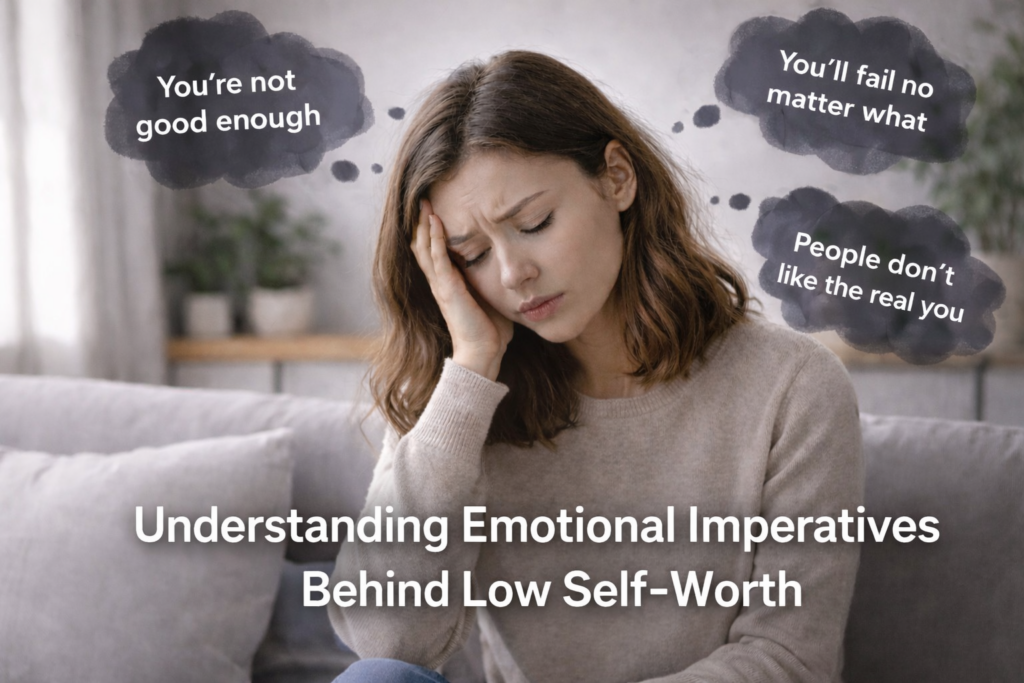
An ongoing focus on attaining happiness can also fuel a person’s inner critic. When unrealistic expectations are not met, a person can feel inadequate and/or blame themselves for not feeling a certain way. Feelings of inadequacy are a significant contributor to depression and anxiety.
1) First and foremost, it’s important to remember that humans are meant to experience a range of emotions. This includes happiness, sadness, anger etc.
2) Try and remind yourself to approach life as a journey that will include a range of experiences ad accompanying emotions. When positive moments and feelings of joy or excitement come, savour those moments. Try to approach other moments with openness and acceptance.
3) Remember the weather metaphor for approaching life. Don’t expect every day to be bright and sunny, even though a part of you wishes it was.
4) In line with the weather metaphor, no storm lasts forever. In moments where you feel far from happy, remember that moment, and those feelings will pass.
5) Catch yourself using “should thinking.” This is where you judge yourself for how you feel or how you think you “should feel.”
6) When you catch yourself thinking in “should” terms, try a defusion technique. For example, the “coulda shoulda woulda” technique can help you let go of the “should “thoughts. In addition, ask yourself if you would ever tell someone else you care about how they should or shouldn’t feel? If not, how does it make sense to do this with yourself?
7) If you find yourself comparing yourself to others or focusing on thinking that others are happier than you, remember: things are not always as they seem. Don’t accept what you see in the media without further reflection or inquiry.
Instead of worrying about how they feel, I suggest that people focus on living a rich and meaningful life that is in line with their values as much as possible.
This means embracing a range of emotions from joy and excitement to boredom, disappointment, sadness, fear, anxiety and even embarrassment or shame.
This also means being willing to choose meaningful actions even in the face of discomfort or hardship. As much as possible, this means staying true to behaving like the kind of person, partner or parent that you genuinely want to be.
Reflect on your life up until now. What moments stand out most to you? Are they only happy moments, or are there moments that were very difficult at the time but that led to important life lessons, connection with others, or important changes within yourself?
The irony is that often when people stop trying so hard to feel a certain way, it helps to create more space for positive or more peaceful feelings to arise naturally. Also, if one embraces the continual ebb and flow of their emotions, it can help make joyful feelings all the more precious and enjoyable when they do arise.
If you would like help figuring out how to improve your tolerance for difficult experience and feelings, as well as improve overall life satisfaction, CONTACT US today.
Prepared by Dr. Jennifer Barbera, PhD, Registered Psychologist
Dr. Jennifer Barbera PhD, C. Psych is a licensed psychologist with over 25 years of counselling experience. She has extensive clinical expertise supporting individuals and couples with anxiety, trauma, depression, addiction, and relationship challenges. Her work combines evidence-based approaches with practical strategies to help clients build resilience and improve well-being.