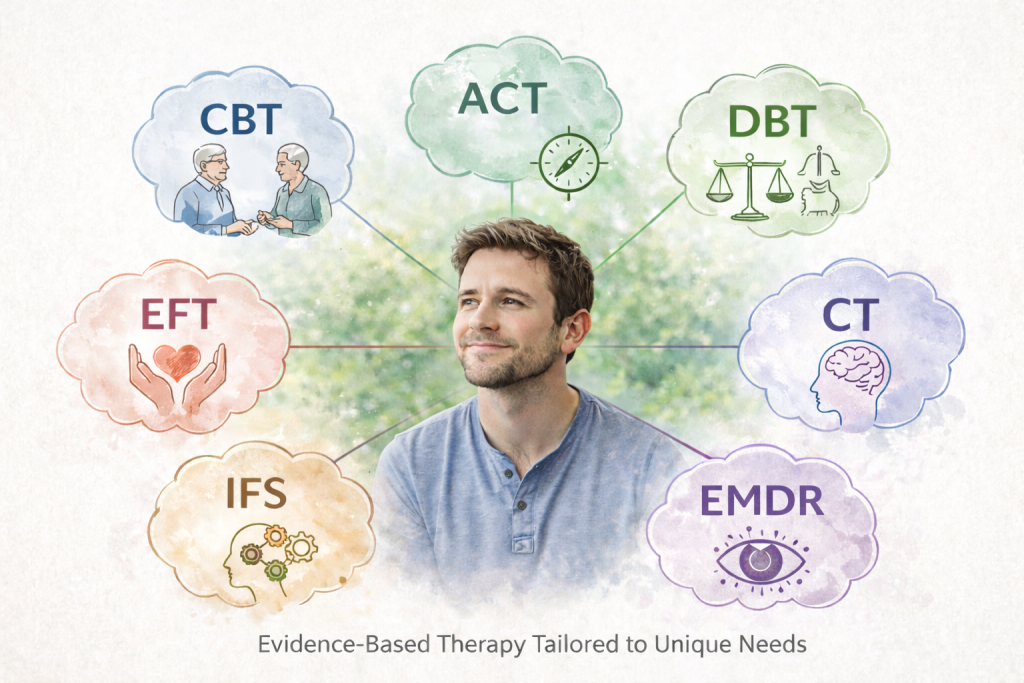
We offer EFT therapy (for individuals & couples) in Hamilton and online across Ontario. Our services are led by a PhD Psychologist was over 25 years counselling experience.
EFT stands for ’emotion-focused therapy and is used with both individuals and couples to resolve surface emotions (e.g., often anger, frustration, anxiety, depression) and disruptions in attachment by uncovering and processing underlying primary emotions such as fear, sadness and shame or inadequacy.
The abbreviation ‘EFT’ is also sometimes used to refer to ’emotional freedom techniques’, which is unique and different from ’emotion-focused therapy’.
EFT is a widely-used humanistic psychotherapy or counselling approach developed in the 1980s and has an evidence-based research base for a variety of concerns such as trauma, anxiety, depression, anger and relationship conflict. Well known advancers of the EFT model include Les Greenberg and Sue Johnson.
Many (perhaps even most) people enter therapy because of concerns with how they feel and/or behave in response to their emotions. EFT focuses on helping individuals and couples to access, accept, express, regulate, make sense of and transform emotion. Some examples of EFT interventions include ‘two-chair’ and ’empty chair’ work, where experiential exercises are used to access material not normally accessing through talking.
EFT is based on the premise that it is not enough to only learn and understand more about our emotions. EFT proposes that individuals also need to access and experience their emotions in the presence of someone who can provide positive open acceptance of their feelings and guide them to achieve greater flexibility in accessing, experiencing and expressing of their emotions.
This process involves helping people to become aware of and experience aspects of themselves that they were not previously fully aware of because those aspects and/or feelings were previously pushed away, dismissed or disallowed.
EFT for couples:
EFT for couples is based on attachment science and focuses on repairing the attachment bound within the couple. An important part of this process involves helping couples to uncover their ‘negative interaction pattern’, a recurring negative cycle that the couple engages in throughout their relationship.
Once this pattern is identified, it can help the couple externalize their conflict and start to repair the ruptures in their attachment bond so that both can feel more secure in the relationship.
Emotional security within the relationship is key to reducing conflict and promoting attachment, communication and intimacy. EFT argues that attempts in couples therapy to improve communication and problem-solving will be much less effective without first addressing and strengthening the attachment bond.
EFT couples sessions focus on helping each partner to see the more vulnerable feelings (e.g., hurt, helplessness, fear and sense of inadequacy) underlying surface emotions (e.g., anger, frustration, resentment & contempt).
As couples are guided to uncover those underlying emotions in a supportive environment, those emotions can be worked through and responded to in more adaptive ways. Experientially accessing deeper emotion promotes healing and strengthening of the relationship in ways that just talking about ‘problems’ does not.
If you are interested in EFT therapy Contact Us today.
[/vc_column_text]
Videos to learn more about EFT:
[/vc_column][/vc_row]