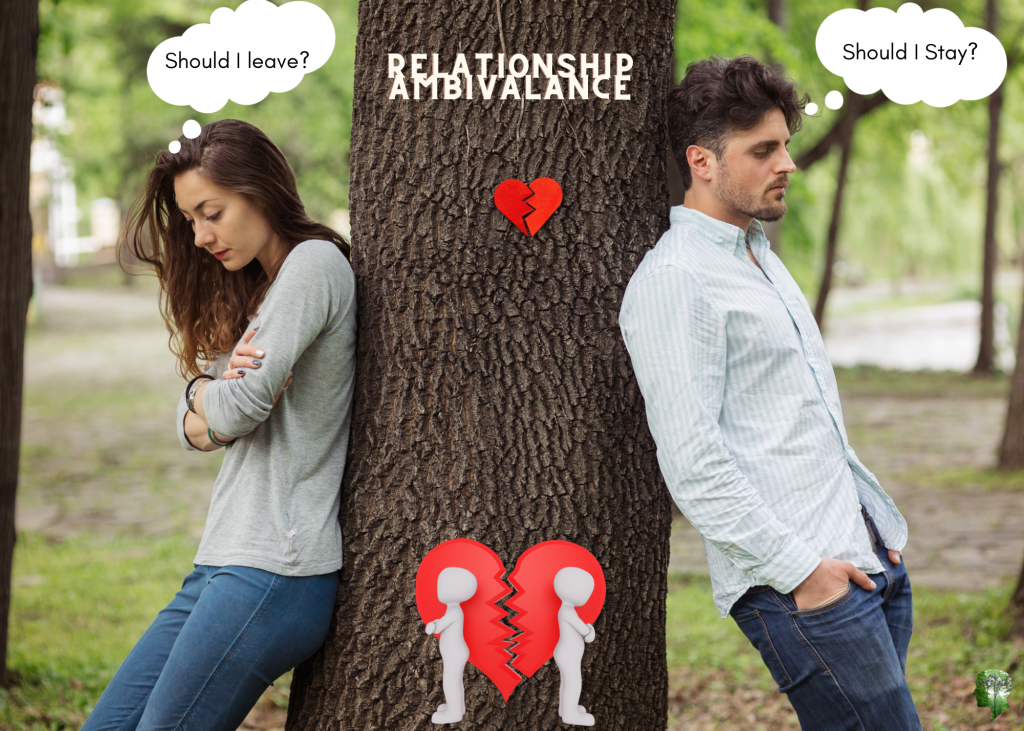
Many people know the quiet agony of feeling uncertain about a relationship. Feeling unsure about whether to stay in your relationship or leave can be deeply distressing, emotionally draining, and isolating. Relationship ambivalence—the ongoing experience of doubt, indecision, or inner conflict about a partner or relationship—is one of the most common reasons people seek relationship counselling or therapy.
For some, talking through the relationship with a neutral, experienced therapist can bring greater clarity and emotional relief. However, many people arrive at counselling after months or even years of thinking, analysing, and discussing their relationship with friends or family—yet still feel stuck, conflicted, or increasingly confused. In these situations, simply “talking it through” may not be enough, and a more structured, evidence-based approach is often needed to resolve relationship ambivalence.
While occasional doubts in a relationship are normal, consistently questioning whether to stay or leave a relationship is a sign that something important needs attention. Persistent ambivalence can create significant emotional distress, anxiety, guilt, and exhaustion. Except in situations involving abuse or harm, there is rarely a simple or obvious answer about whether staying or leaving will lead to greater well-being.
If you find yourself frequently asking, “Should I end this relationship?” or “Why can’t I decide?”, it may be an indication that something is not aligned—either within the relationship itself or within your own needs, values, or attachment patterns. People differ in their attachment styles and comfort with closeness, commitment, and uncertainty, all of which can influence relationship doubt.
If questioning your relationships is new for you, it may be especially important to pause and thoughtfully evaluate what has changed. Even if you tend to overthink or second-guess relationships, developing more effective ways to gain clarity and self-trust can be both empowering and relieving.
Consider these questions to help you decide whether to stay or go:
🌱 Has there ever been physical violence in your relationship? If there has been physical violence in your relationship and you are contemplating leaving, consider that you will likely be much happier (and safer) if you leave the relationship, no matter how difficult.
🌱 How does your relationship make you feel? If you frequently feel hurt or stressed or torn about the relationship, that may be a sign you would be happier leaving the relationship.
🌱Consider whether there are very significant impasses or conflicting values between you and your partner that are unlikely to change. For instance, do you continually disagree about things and have very different preferences in terms of lifestyle or values? If so, consider that you may be happier leaving the relationship.
🌱 Looking back at the happiest or best time in your relationship, were you truly happy and satisfied? If you weren’t, consider that it will require a lot of effort to make significant changes to your relationship.
🌱 Have you seriously tried to resolve differences in the relationship? For instance, have you attempted to discuss concerns at a neutral time (not when you are already arguing)? Have you sought couples counselling? If you honestly have given it your very best effort and you continue to feel the same or even more uncertain, consider that you may be happier leaving the relationship.
🌱 What do very close friends and family members say about your partner and relationship? It’s important to feel free to make your own decisions, however, consider that family and friends know you well. From a more neutral perspective they may see the situation in a clearer way because they are not as emotionally attached to your partner. Consider that your family and friends tend to want what’s best for you.
What can I do if I reflect on the above questions and still feel uncertain?
1) Consider rating your level of ambivalence (e.g., 50% want to stay and 50% want to leave, or 70% want to stay and 30% want to leave etc).
Use this rating to monitor your ambivalence over time.
2) Consider giving yourself a timeline to make a decision (e.g., two months, six months or a year). Establishing a timeline can help reduce day-to-day turmoil over feeling ambivalent. Let go of the need to make Decision until then and focus your energy in a more productive way.
3) Consider therapy or counselling. A therapist can help you by exploring to gain clarity. Therapists can also offer techniques that help you resolve feelings that are preventing you from moving forward.
Sometimes just talking about your feelings and concerns is not enough. It is also possible to experientially work through your ambivalence or indecision through two-chair work, parts dialogue and/or EMDR. These specialized approaches target and work through feelings of ambivelance. Contact us for more information.
4) View the book resources on relationship indecision below for additional assistance.
If you are struggling with indecision about your relationship, and you want to finally figure out what you really want, you are welcome CONTACT US to explore relationship counselling options. We are experienced in using skilled approaches above and beyond regular talking to help you make a decision without any added stress or pressure.
References:
Kirshenbaum, M. (1997). Too good to leave, too bad to stay: A step‑by‑step guide to help you decide whether to stay in or get out of your relationship. Plume.
Semanko AM, Hinsz VB. Intending to Break Up: Exploring Romantic Relationship Dissolution from an Integrated Behavioral Intention Framework. J Gen Psychol. 2025 Oct 13:1-37. doi: 10.1080/00221309.2025.2572560. Epub ahead of print. PMID: 41082858.
Stone, B. (2012). Stay or leave: Six steps to resolving your relationship indecision. Watkins Publishing.
Prepared by Dr. Jennifer Barbera, PhD, Registered Psychologist
Dr. Jennifer Barbera PhD, C. Psych is a licensed psychologist with over 25 years of counselling experience. She has extensive clinical expertise supporting individuals and couples with anxiety, trauma, depression, addiction, and relationship challenges. Her work combines evidence-based approaches with practical strategies to help clients build resilience and improve well-being.