How to Achieve Lasting Emotional Change: The Role of Core Schemas
Learn why identifying and updating your core schema leads to deeper, longer-lasting emotional change than focusing on thoughts, feelings, or behaviours alone.
Stop Chasing Symptoms: Why True Change Starts With Your Core Schema
We’ve been trained to think that change happens by fixing what we see on the surface—our behaviours, our thoughts, our feelings. Got anxiety? Calm yourself. Procrastinate? Make a schedule. Feel unworthy? Repeat positive affirmations.
It works… sometimes. But often, it doesn’t last. Because here’s the catch: you aren’t your symptoms. They’re just signals pointing to something deeper—your core schema, the invisible programming running your life.
Think of your mind like a smartphone. Behaviours, thoughts, and emotions are the apps. They’re what you notice and interact with. But underneath, your operating system—your specific schemas—are what dictates which apps open automatically, which notifications you get, and how smoothly everything runs.
If the OS is outdated or glitching, no amount of app-level tweaking will make the phone run like new.
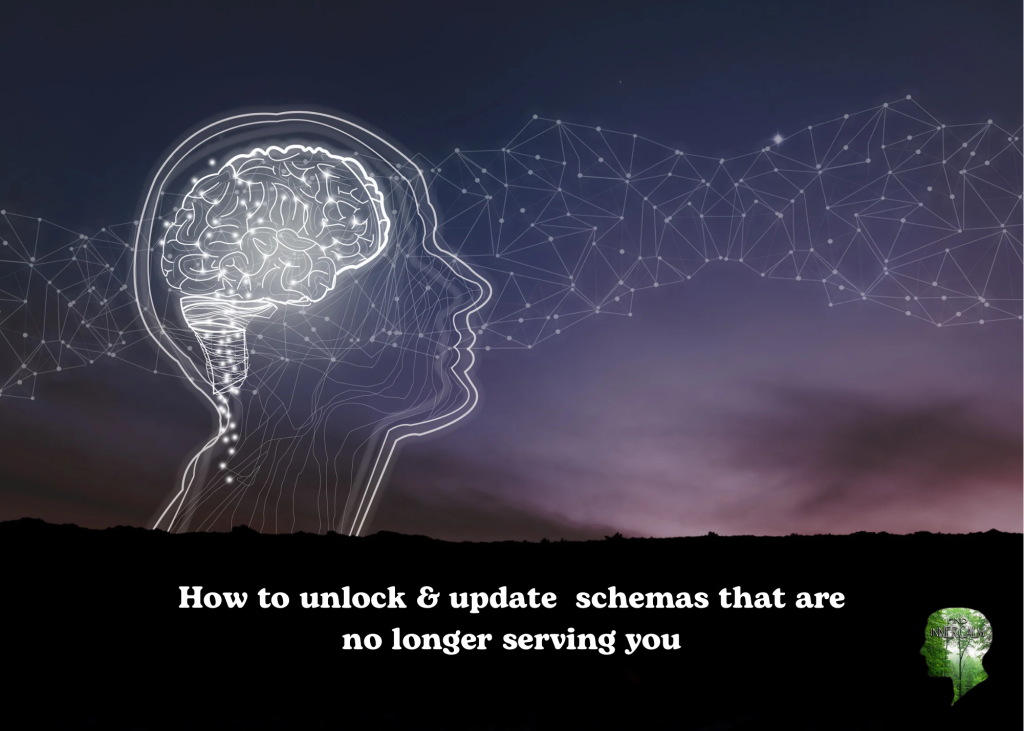
Your core schema is your emotional operating system. These are the deeply held core beliefs you learned early in life—about yourself, others, and the world. “I am unlovable,” “I have to be perfect to be accepted,” “The world is unsafe.” They shape every decision, reaction, and habit you have, usually without you even noticing.
When we chase symptoms such as anxiety or low mood, we’re essentially trying to stop notifications without updating the OS. It’s exhausting, temporary, and often frustrating. But when we focus on underlying schemas, something revolutionary happens: change cascades naturally from the inside out.
Your thoughts adjust, your emotions stabilize, and your behaviours start reflecting a new baseline you actually want—without constant struggle. Coherence therapy talks about this difference in terms of transformational change instead of continually counterbalancing old patterns.
Here’s why uncovering and addressing schemas works better:
• Neuroscience backs it up. Neural pathways are formed by repeated emotional experiences. A schema is a superhighway in your brain. Working at the schema level rewires those pathways, creating new, healthier defaults.
• It’s systemic. Treating surface symptoms is like patching leaks in a dam. Updating your schema fixes the foundation.
• It’s durable. Changes stick because they aren’t imposed; they’re integrated into your core sense of self.
How it looks in real life:
• Instead of trying to “just stop procrastinating,” explore the belief driving it: “I’m not capable of success.” Once that belief softens, action becomes effortless.
• Instead of suppressing anxiety, uncover the hidden fear it signals: “I’ll be abandoned if I show my true self.” When this fear is recognized and processed, the anxiety itself loses its grip.
• Instead of challenging negative thoughts in isolation, trace them back to the emotional blueprint that created them, then rewrite the script.
The result isn’t just relief. It’s transformation. Your mind stops fighting itself. Your nervous system stops reacting automatically in ways that no longer serve you. And behaviours, thoughts, and feelings—all the stuff we usually chase—start aligning naturally with the life you actually want.
Surface-level fixes are like trimming branches. Schema-level work rebuilds the roots. And when the roots are healthy, everything else grows stronger, faster, and more resilient.
If you want change that lasts—real, deep, unstoppable change—don’t only focus on what you feel or do. Get to the bottom of who your mind thinks you are at its core.
If you would like to learn more about what your core schemas are- contact us today.
Prepared by Dr. Jennifer Barbera, PhD, Registered Psychologist
Dr. Jennifer Barbera PhD, C. Psych is a licensed psychologist with over 25 years of counselling experience. She has extensive clinical expertise supporting individuals and couples with anxiety, trauma, depression, addiction, and relationship challenges. Her work combines evidence-based approaches with practical strategies to help clients build resilience and improve well-being.