How to Tell the Difference Between Feeling Down and Clinical Depression Feeling down from time to time is normal. Most people experience temporary low moods that last hours or a…
Are you getting enough sleep? Do you have sleep problems? For some people this is a simple question. For other people the issue is a lot more complex so we…
Why Break-Ups Are So Painful and How to Cope Psychologist Dr. Jennifer Barbera explains why break-ups can be emotionally devastating and shares strategies to cope and move forward. The end…
[vc_row][vc_column][vc_column_text]Understanding Problematic Alcohol Use: When Use Becomes a Concern, and Compassionate Paths to Change Alcohol is a common part of many social and cultural settings, which can make it difficult…
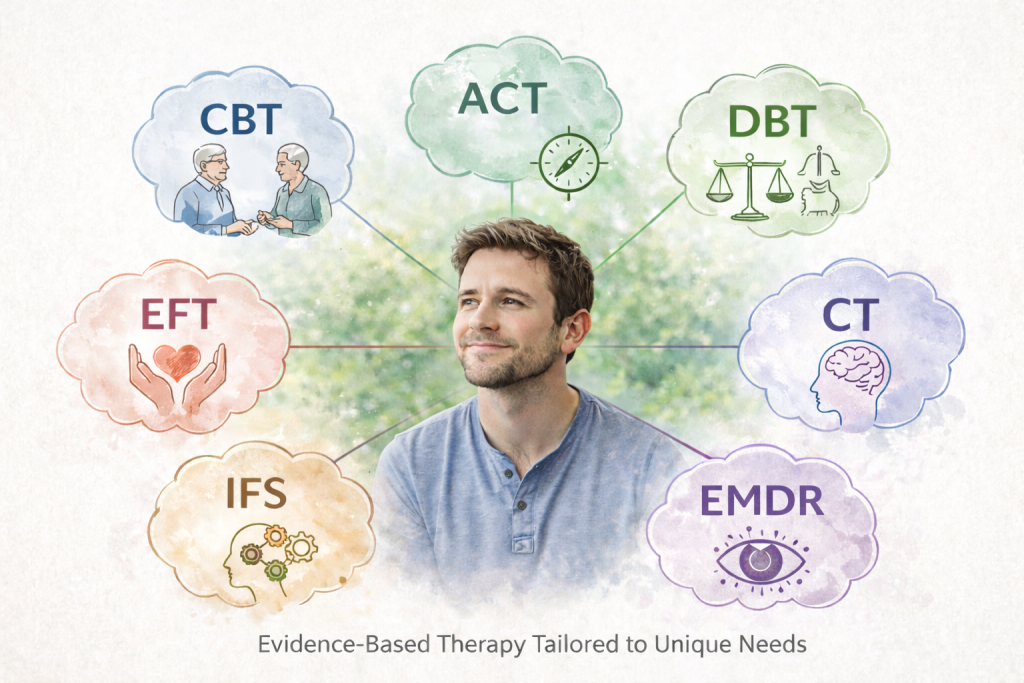
Understanding Evidence-Based Therapeutic Modalities When considering therapy, you might hear the term evidence-based. This means that the approach has been rigorously studied and shown to be effective for particular mental…
ACT stands for Acceptance and Commitment Therapy. ACT originated in the 1980s with Steven Hayes and is considered a 'new wave' therapy approach that takes a non-pathologizing view of human…
CBT was developed in the 1960s to help treat mood and anxiety symptoms. CBT is a structured treatment that focuses on the role of thoughts and behaviour on psychological and…
Cognitive Behavioural Therapy for Insomnia (CBT-I): Treating the Root Causes of Sleep Problems Difficulty sleeping is one of the most common reasons people seek mental health support. Insomnia can affect…
EFT stands for 'emotion-focused therapy and is used with both individuals and couples to resolve surface emotions (e.g., often anger, frustration, anxiety, depression) and disruptions in attachment by uncovering and…
IFS was developed by Dr. Richard Swartz in the 1990s and is quickly becoming a modality of choice by an increasing number of psychologists, psychotherapists, and counsellors because of its…